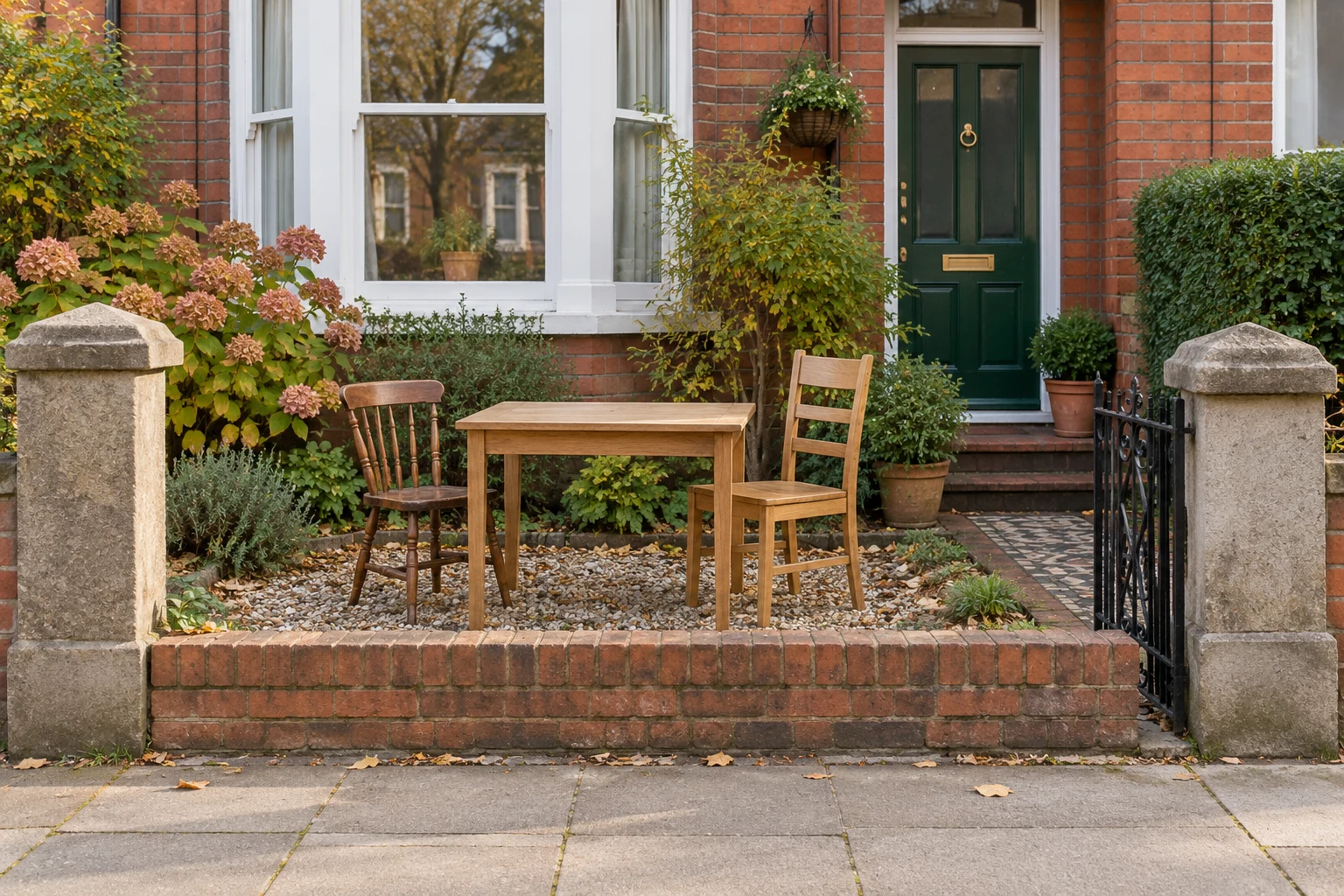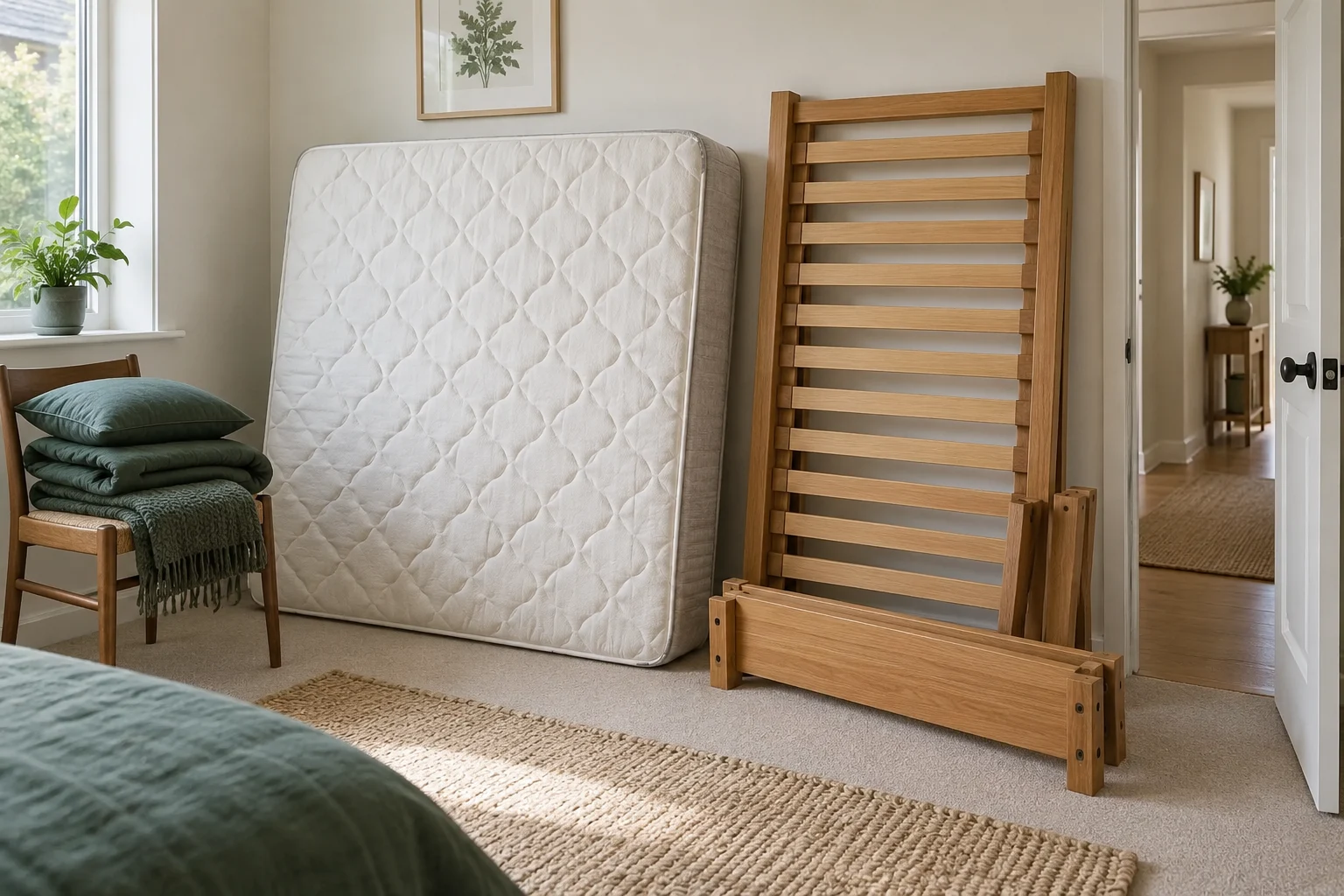
Choosing waste removal in West Yorkshire: a household planning guide
Compare reuse, council bulky collections, recycling centres and private waste removal in West Yorkshire. Plan your items, access and quote before booking.
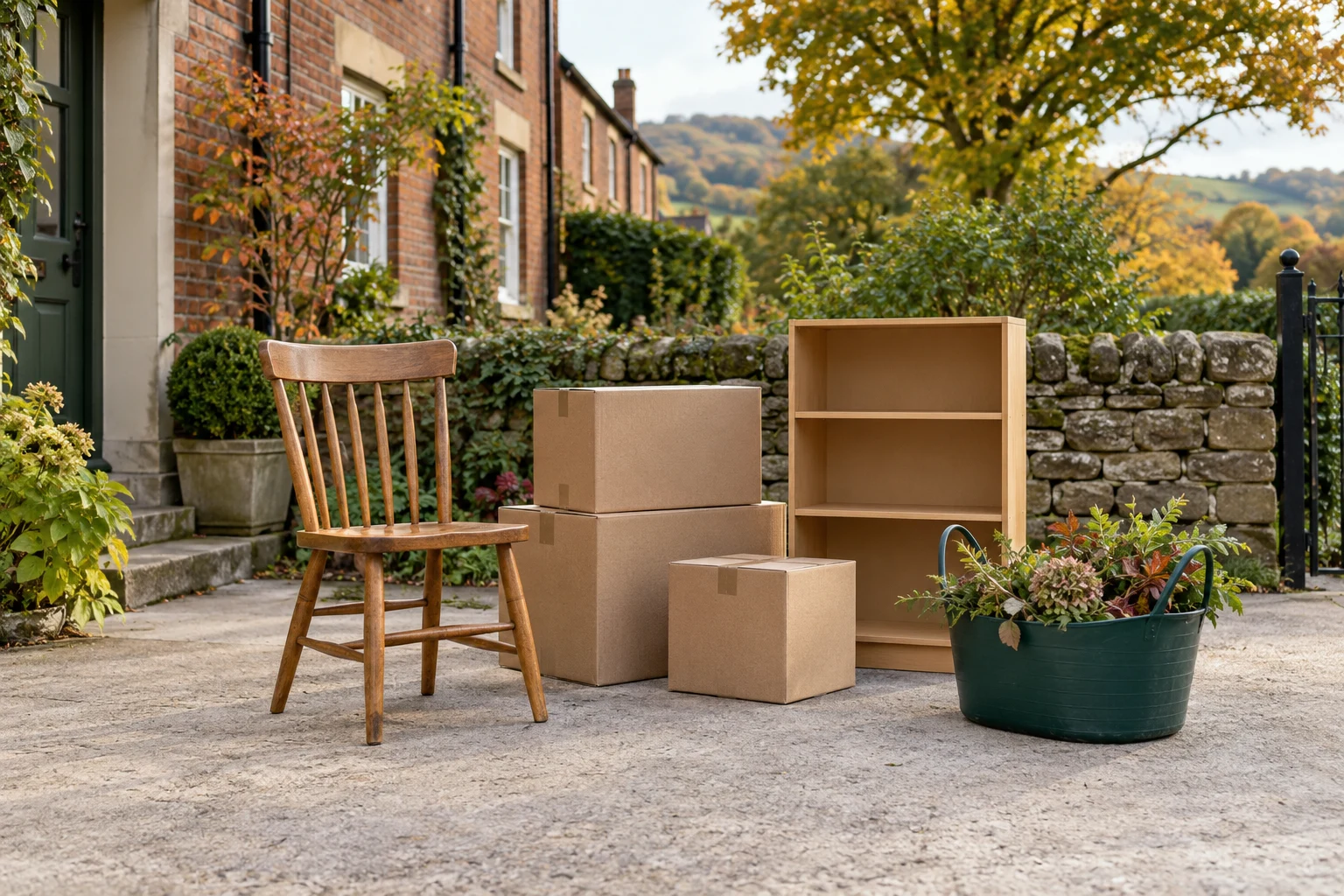
Waste removal in West Yorkshire starts with choosing a suitable route for the things you actually have. A reusable dining table, a worn sofa, garden cuttings and bags left after decorating may need different arrangements. Before comparing prices, list the items, identify what could be reused and check your local council’s options. Then decide whether a recycling-centre trip or an agreed private collection fits the job.
This guide helps households in Leeds, Bradford, Kirklees, Calderdale and Wakefield prepare that decision. It covers scope, photographs, access and quote questions rather than promising a universal price. A collection that works for a single chair can be unsuitable for a whole garage. Good preparation makes the difference visible before you commit to a date or payment.
Start with the outcome you need
Write one sentence describing what should be different when the work is finished. For example: “The spare room needs to be empty, except for the fitted cupboard and the boxes marked keep.” That is clearer than asking for a general house clearance. It also prevents a misunderstanding about fixtures, retained possessions or an adjoining room that was never included.
Next, decide whether your main constraint is time, lifting, transport or available space. Someone with suitable transport and a few small items may choose self-delivery. Someone who cannot move a large item may need loading assistance expressly included in the service. A move with a fixed handover date creates a different problem from a gradual weekend clear-out.
Keep the scope modest and precise. “Collect these listed items” is easier to price and verify than “take anything we no longer want.” If decisions are still being made, finish the sorting first or request an assessment that acknowledges the uncertainty. Do not turn an incomplete inventory into an apparently fixed-price job.
Make four decisions before requesting a quote
Use four headings on a sheet of paper: keep, reuse, ordinary waste and needs assessment. Put every substantial item under one heading. The last category is useful for unidentified containers, unusual equipment or materials whose origin you cannot explain. It gives you somewhere to record uncertainty without disguising it as normal rubbish.
Start with the keep list, especially when relatives or housemates are involved. An old cabinet might contain documents, keys or photographs that someone else expects to recover. Label retained objects and agree who has authority to approve the final collection. Where a room contains both retained and unwanted belongings, a separate keep area is helpful.
The result should be a collection list that another person can follow. Give repeated items a quantity: three dining chairs, two small bookcases, four closed boxes. Identify anything still connected, installed or attached to the building. Collection and removal work are not automatically the same service. Ask about that distinction before taking anything apart or assuming a crew will disconnect an appliance.
Consider reuse while the items are still usable
A clear-out can start with a donation or sale rather than a waste booking. GOV.UK includes reuse among the available options for unwanted household items. Charity acceptance depends on the organisation and the item, so a promised collection is more useful than an assumption that every piece of furniture will be welcomed. See the official household waste guidance.
Describe condition honestly when approaching a recipient. Share measurements and photographs, including visible damage, rather than only a flattering front view. Ask whether the item must be taken outside and whether the recipient can collect it within your timetable. If the arrangement depends on you delivering it, decide whether you can do that safely and practically.
Do not book disposal of an item that is simultaneously promised to someone else. Put a deadline on the reuse decision, then update the remaining collection inventory. This is particularly useful during a move, when uncertain promises can leave furniture behind at the last minute. Keep items intended for reuse protected from avoidable damage while arrangements are being confirmed.
Check the council area rather than assuming from the postcode
West Yorkshire has several council services, each with its own eligibility and arrangements. Start with the council responsible for your property. A postcode prefix, a nearby town or an estate agent’s area description is not a substitute for checking the authority. The useful questions are which service applies, whether your items qualify and how they must be presented.
Leeds residents can check the unwanted-item collection page. At the review date, its standard household offer included one free collection per financial year, then up to three further collections at £30 each, with up to five items per collection. This is for eligible private residents, not landlords or businesses. The full page explains exceptions and presentation rules; check it again before booking.
For other areas, use Kirklees bulky household waste, Bradford’s recycling-centre finder, Wakefield’s recycling-centre information or Calderdale waste services. These links help you check the actual local offer; they are not evidence that every listed material is accepted everywhere.
For an item-count worksheet and a more detailed local comparison, read our Leeds council and private bulky-collection guide.
Compare the whole council service, including presentation
A council bulky collection can be a sensible option when the item and household meet the requirements. Read beyond the price. Confirm the allowed item count, how dismantled parts are counted, where the items must be placed and whether the available date works for you. Keep a copy of the items you submitted.
Leeds says its unwanted-item service does not collect from inside a property, garages, outhouses or communal areas. Kirklees also specifies outdoor presentation within the property boundary. That matters if your main difficulty is moving an item out of a room. A council booking should not be treated as an indoor loading service unless the council expressly says so.
Different materials may also require separate arrangements. Do not assume one booking means everything will leave together. Read the confirmation for dates and exclusions, then plan around the actual service. For a household with a few suitable items and no loading difficulty, the council option may be enough. Recognising that is part of making an informed choice, even when a private collection is also available.
Decide whether self-delivery is genuinely practical
A household recycling-centre trip requires more than knowing the nearest location. Before loading, check current residency requirements, vehicle restrictions, booking or permit rules and acceptance of each material. A general site listing does not establish that your particular load can be received. Save the relevant instructions so you can check them again before leaving.
Think about the load itself. Can the objects fit without unsafe projection or obstructing the driver? Can you load and unload without relying on unexpected assistance? If these questions are unresolved, the apparent saving may depend on work you cannot actually undertake. Split trips only where the centre’s current rules allow your intended use.
Keep different materials identifiable. A box containing mixed loose objects is harder to explain than a small appliance and a separately packed bag of clothing. Do not open unknown containers to create a better description. Set them aside for assessment. If the waste came from a business or a tradesperson’s work, check the appropriate route rather than relying on household eligibility.
Know when private collection may fit better
Private collection is worth considering when the agreed job includes loading, several material streams or a collection arrangement that suits your timetable. The value lies in the confirmed scope. An advertised collection service does not automatically include entry into every room, carrying from a loft, dismantling furniture or clearing a whole building.
Ask for those details in writing. Identify the number of items, where they are located and what access is available. Request confirmation of exclusions as well as inclusions. If an item needs specialist assessment, it should remain outside the ordinary approved scope until the provider confirms a suitable route. A quote that explains that boundary is easier to trust than one that appears to accept everything.
You can register with YWG and save collection details, photos and access information in a private listing draft. YWG is opening soon. Live collection booking and payment are not yet available. Live availability, accepted materials and operational prices must be confirmed when the service launches. The platform features explain the intended assessment process.
Prepare photographs that answer real questions
Take one wide photograph showing the whole proposed load, then closer views of items that are easy to underestimate. Include large objects separately rather than hiding them behind bags. A collection provider needs to understand the number, size and condition of the objects; an attractive photograph is less important than an accurate one.
Add measurements where scale is unclear. State the approximate height, width and depth of a cabinet, and whether the photograph shows all of the waste. Photograph the carrying route separately if steps, narrow doors or a long approach affect loading. Avoid suggesting that a picture proves the composition or safety of an unfamiliar material.
Check the background before sending. Remove visible letters, personal documents and unnecessary images of people. Share only the information needed to assess the collection. If the load changes after the photographs were taken, send an updated inventory rather than assuming the original quote covers it. Photographs support a description; they do not replace the final agreement about what is being collected.
Describe access as carefully as the waste
Access can change the work involved even when the item list stays the same. Record the floor, whether there is a suitable lift, any steps and the approximate carrying distance. Explain gates, shared corridors and whether someone will be present to provide entry. Do not describe a building simply as “easy access” when the crew has no way to verify that.
Parking and loading arrangements should be discussed without assuming that a vehicle can stop wherever convenient. Ask the property manager about permissions where applicable. If you are uncertain about a loading location, say so. The provider should assess the practical route before offering a confirmed job rather than discovering a major constraint on arrival.
Consider the other people using the space. A clear-out should not leave a shared entrance obstructed while you wait for a collection. Agree when items may be moved, where they can be held and who will oversee the handover. If loading assistance is essential, make it an explicit part of the quote rather than an expectation hidden inside the address.
Compare quotes using one consistent inventory
Send the same inventory and access description to each provider you are comparing. Otherwise, a lower figure may simply cover fewer items or less work. Ask whether the amount is an estimate or an approved fixed quote for the listed scope. Check the total payable, any applicable VAT and which circumstances would trigger a change.
Look for clarity about loading, transport and disposal. Separate unusual items from the ordinary load and ask how they will be assessed. If a quote uses a volume allowance, ask how that allowance relates to your photographs and measurements. Dense material can create a different collection constraint from light, bulky furniture, even when both occupy a similar space.
Any planning estimate must be checked against an eligible collector's offer for your actual job. The industry research describes published offers and cost drivers, with important limits on comparisons. Your own collection needs an approved scope and route. A useful quote should let you explain, in plain language, what is included and what happens if the description changes.
Check the person or business taking your waste
GOV.UK says householders using a private waste business must check the waste-carrier register and select the upper-tier category. Match the registered entity to the business carrying out the collection; a company number or a professional-looking website is a different kind of information. Use the official checking guidance, which links to the relevant registers.
Ask the provider to identify itself clearly on the quote and collection record. If the job is assigned to a partner, find out who will attend and whose details you should check. Keep the accepted item list, the price and the provider’s contact details together so that you can refer to the same information throughout the booking.
This check should be part of a normal purchasing decision. It need not involve a confrontation or an assumption that every low-priced offer is dishonest. A reliable provider should be able to explain who is doing the work, the approved scope and the destination arrangements. If essential details remain unclear, resolve them before handing over the waste.
Keep unfamiliar materials outside the ordinary load
A household clear-out can uncover items you were not expecting: labelled or unlabelled containers, a cylinder or a material whose history is unclear. Record their presence and request appropriate assessment. Do not disguise them inside bags of general rubbish or assume that a quote for household clearance includes them.
Describe what you know without guessing. A label, existing product documentation or the circumstances in which the item was found may help a competent provider decide what information is needed. A photograph cannot certify chemical contents or rule out asbestos. If something may be hazardous, keep the collection scope provisional until a suitable specialist route is confirmed.
The practical rule is to make uncertainty visible early. A provider may need additional evidence, a separate quotation or a specialist referral. That can take longer than an ordinary furniture booking. This guide does not provide handling or treatment instructions. It helps you avoid turning an unknown item into an incorrectly described load and an avoidable collection-day dispute.
Use a simple handover checklist
If your household needs more than one route, make a small departure plan before accepting appointments. Give each item one destination and one status: confirmed reuse, booked collection, planned site trip or awaiting assessment. Add the contact and expected date where known. This is a practical organising method, not a claim that an enquiry guarantees acceptance. Review it when an arrangement changes so the same chair is not promised to a charity and a private collector. It also shows which items will still be present after the first visit, helping you plan the remaining space without assuming the whole clear-out is complete.
Before collection, read the accepted scope one final time. Check that the items match the agreed inventory, retained possessions are clearly separated and access is as described. Follow the provider’s instructions on presentation rather than borrowing rules from another service. Tell the provider about changes before the vehicle arrives.
Have the booking reference and a contact number available. If somebody else is overseeing the collection, give them the actual item list and any approved changes. Agree what they may authorise. A relative should not have to decide unexpectedly whether an extra room is included or whether a revised amount is acceptable.
Afterwards, check the agreed area and retain the collection and payment records provided. Report any unresolved scope issue through the stated contact route. A few clear records are more useful than a vague memory of a phone conversation. They also make repeat enquiries easier: you can explain what worked, what was difficult and what the next collection will need.
Choose the route that solves your particular problem
There is no single best waste-removal option for every West Yorkshire household. Reuse may suit an intact table. A council booking may suit eligible bulky items you can present as instructed. A recycling-centre trip may suit an accepted load with suitable transport. A private collection may suit an agreed loading job that the other routes do not cover.
The strongest starting point is a clear inventory, realistic access information and a confirmed disposal route. That preparation helps you compare costs fairly and prevents an apparently simple booking becoming a different job on the day. You can save the same information in a free YWG listing draft. Your final service choice should follow verified availability and an accepted quote.
Sources & editorial note
- GOV.UK: disposing of household waste and checking a carrier
- Leeds City Council: unwanted-item collection
- Kirklees Council: bulky household waste
- Bradford Council: household recycling-centre finder
- Wakefield Council: household waste recycling centres
- Calderdale Council: waste and recycling services
Official legal/council claims source-checked 3 October 2026. Practical planning recommendations are original editorial guidance. Coverage and prices require operational confirmation. Not a live booking offer.
AI-assisted original editorial content, checked against the sources above. No professional qualification or firsthand YWS job experience is claimed.