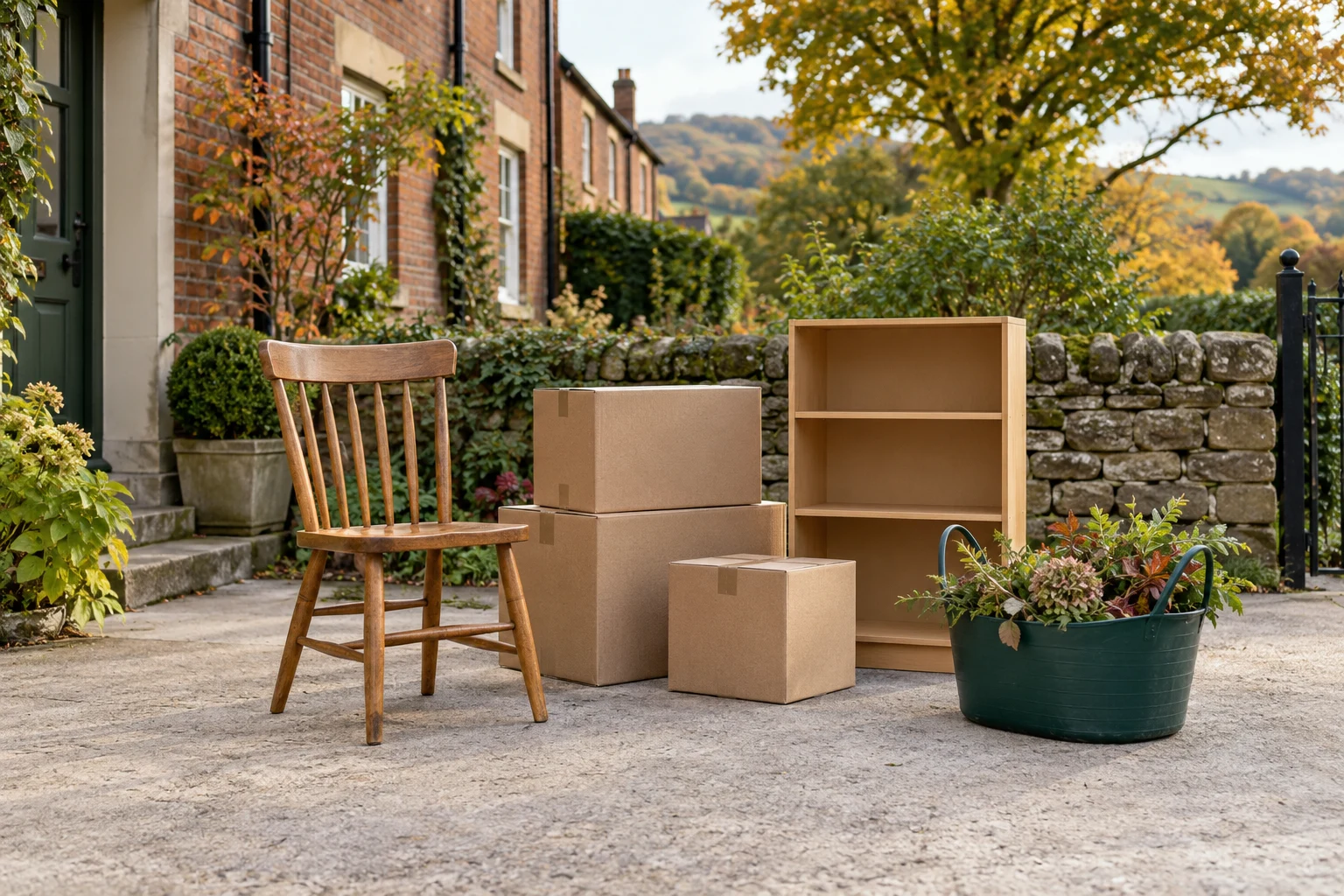
Washing machine disposal: collection after professional disconnection
Plan washing machine disposal around competent preparation, retailer take-back, local collection conditions, access and replacement timing.
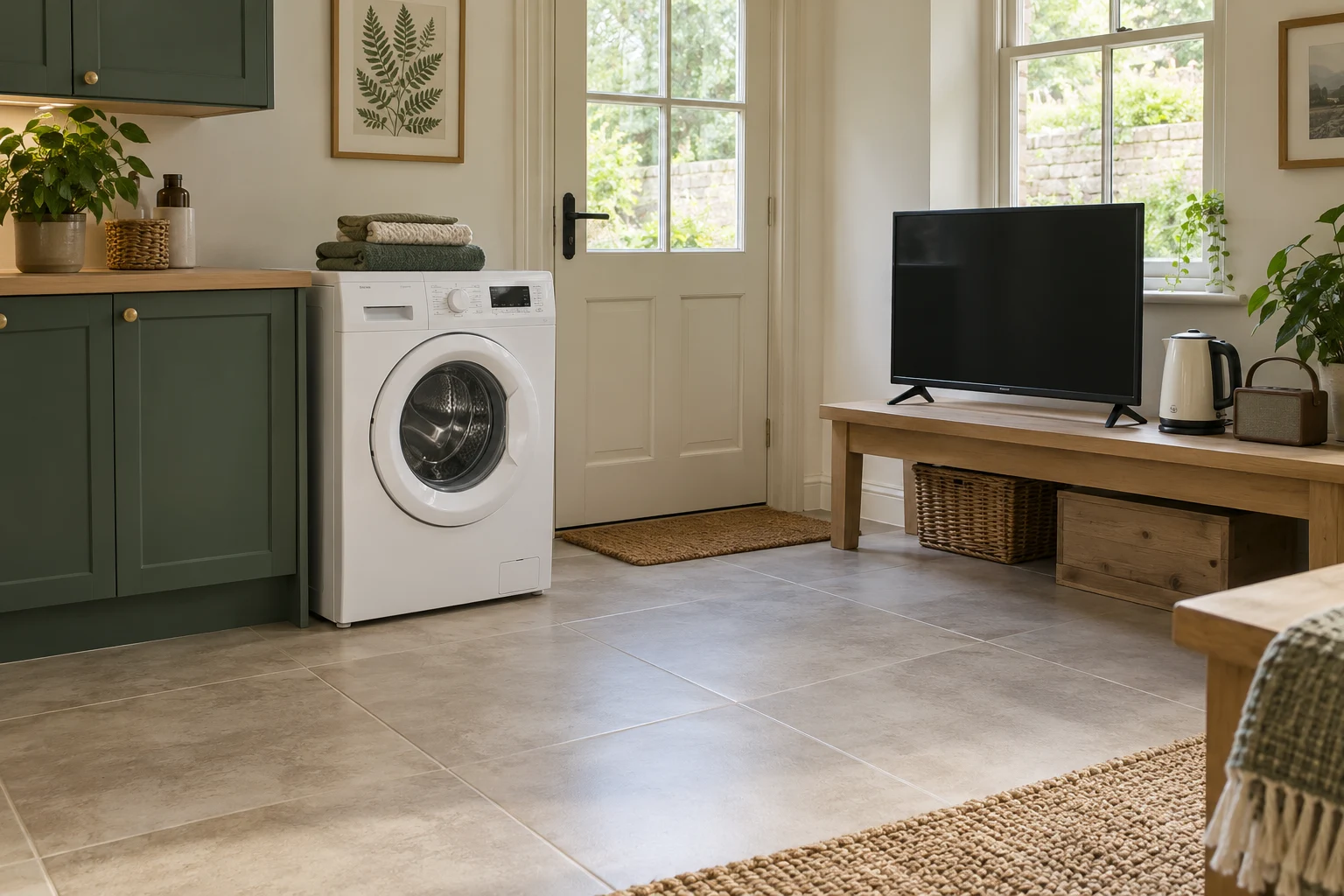
Washing machine disposal should be planned around the appliance's readiness, not just the delivery date of its replacement. A collector needs to know whether the old machine remains connected, whether it is freestanding or built into cabinetry and how it will reach the agreed collection point. Arrange the appropriate competent preparation separately unless the provider explicitly includes it in the assessed service.
This guide helps households in Leeds, Bradford, Huddersfield, Wakefield and the wider West Yorkshire area write a clear appliance enquiry. It offers an original preparation-to-collection checklist and a way to compare retailer, council and private options. It does not explain plumbing, electrical disconnection or lifting techniques. Nor does the title mean that every household must buy a particular professional service under a universal rule.
Record the machine's present state
Start with what exists now. Is the machine still connected and in use, no longer used but connected, prepared by the responsible competent person or already at an agreed collection point? Use that status in the enquiry. The phrase ready to go can hide a power connection, plumbing work or a fitted panel that the collector has not agreed to handle.
Identify the appliance type, make and model if these can be read normally. Distinguish a washing machine from a washer-dryer and an integrated model from a freestanding one. Include visible condition and any known fault without diagnosing the appliance yourself. A description of the actual unit is more helpful than a photo from the replacement retailer's website.
Keep related components identified. A fitted front panel may belong to the kitchen and be retained, while another accessory may leave with the machine. Resolve that decision through the household and the competent preparation provider. Do not detach parts because a generic collection checklist suggests that every machine is assembled in the same way.
Agree preparation responsibility before booking
Ask the proposed collector exactly what its service begins with. Collection of a professionally prepared appliance at ground level differs from a service including assessed removal from a fitted space. If disconnection or preparation is offered, ask what is included and who performs it. Do not assume it follows automatically from the words appliance removal.
Arrange necessary plumbing or electrical work through an appropriately competent person using the relevant appliance and site information. This article provides no instruction for isolating supplies, disconnecting hoses, draining internal parts or testing connections. Give the responsible person the collection requirements so preparation can be coordinated, without asking the collection crew to inherit unfinished technical work.
Record who confirms readiness and what that confirmation covers. An appliance no longer running is not necessarily prepared for transport, and an owner saying it is empty does not establish the condition of every internal part. The practical control is a clear handover from the preparation task to the collection task, with unresolved points reported before attendance.
Distinguish integrated appliances from loose units
Explain if the machine sits within fitted cabinetry, behind a panel or beneath a worktop that affects removal. A collector viewing only the front may not see those constraints. Provide a normal overview without attempting to pull the appliance out for a photograph. Describe any preparation still required and who has agreed to perform it.
State what remains in the property. A kitchen panel, adjacent cabinet, hose arrangement or accessory can have a separate ownership and preparation decision. Avoid a vague instruction to remove everything connected to the machine. The confirmed scope should identify the appliance and any components included, rather than delegate household fixture decisions to the crew.
If a new machine is being fitted, ask the installer how its work connects to the old appliance's removal. Does the installation service include preparation, movement to a handover point or take-back transport? Clarify each part in the actual offer. A replacement delivery does not prove that the old unit will be removed from an integrated space.
Check retailer take-back before choosing another route
GOV.UK's electrical recycling guidance describes like-for-like retailer take-back when a new electrical product is purchased, including online purchases. Ask your retailer how its arrangement works for the machine you are replacing. Acceptance of an old appliance and the practical service for getting it there need to be understood separately.
The retailer responsibilities guidance distinguishes free in-store acceptance from possible charges covering transport from customers' homes. Do not interpret a free take-back obligation as a promise of free upstairs removal, plumbing work or collection at the replacement delivery time. Confirm those service boundaries and any charges before comparison.
Ask what readiness the retailer requires, when the old unit will be taken and what happens if it is not prepared at that time. Keep the answer with the replacement order. If its transport service does not fit your situation, investigate another accepted route without assuming the retailer's obligation has defined every logistical part of the household's project.
Read the local council offer for the actual item
Leeds' unwanted-items collection page lists washing machines within its electrical items. Read the current eligibility, preparation and presentation instructions before considering a booking. A listed item does not mean the council removes it from any room or performs connection work. Ask about the actual household circumstances and service boundary.
Kirklees' bulky household page also lists washing machines within white goods and describes its household collection conditions. Check those current conditions separately. Do not copy a Leeds preparation assumption into a Huddersfield enquiry or treat one council's item list as proof of another authority's offer.
For Bradford, Wakefield or Calderdale, use the relevant authority's current information and describe the actual machine. Household recycling centres may be another route to investigate, but material acceptance, access, vehicle and household eligibility need checking. The household planning guide compares wider options without promising a universal West Yorkshire appliance service.
Explain faults and unusual condition before acceptance
Tell the provider about visible damage, an unsecured component, known leakage or another unresolved concern. Describe observations rather than diagnose them. Do not run the appliance, open internal panels or manipulate damaged parts to make a more confident statement. The collector can ask for appropriate information or refer the issue for competent review before accepting the job.
Keep a readiness problem separate from an access problem. A prepared machine may still be difficult to reach, while an accessible one may remain connected. Both need answers. If preparation identifies an issue, update the quote brief rather than assuming the original description remains adequate. A change does not disappear because a delivery deadline is approaching.
Ask what to do if the appliance's condition changes before collection. The agreed provider or responsible competent person should give instructions suited to the situation. This guide does not offer a leak response procedure or electrical safety certification. Its role is to ensure the uncertainty reaches the people assessing the job before ordinary movement is expected.
Map the movement route without moving the machine
Record the present room, floor level and route to the agreed collection point. Include stairs, tight turns, thresholds, shared passages and any relevant lift arrangement. A machine in a basement utility space is a different job from one already presented at an approved ground-level point. State that distinction in every request for a price.
Provide available dimensions and identify their source. Product information may help describe the appliance, while measurements of doors and routes describe the property. Neither alone guarantees a workable movement method. The collector should review the combination and decide whether a survey is needed. Do not move the unit to prove that it fits before the task has been assessed.
Explain vehicle arrival and loading constraints too. A rear access lane, limited parking window or managed-building entrance can affect attendance even when the appliance is ready. Ask the appropriate property contact about the arrangements rather than assume a collector can use any nearby space. Give the confirmed provider one clear arrival instruction and an available contact.
Avoid an assumed household lifting task
A plan should not depend on friends carrying the appliance upstairs or down a flight of steps because the quoted collection begins outside. The HSE handling guidance discusses assessment of unavoidable hazardous handling and reducing risk; it does not set one universal safe weight. The actual load, route and people involved matter.
Ask whether removal from the present location is included and what assessed preparation the provider expects. If the household cannot provide an assumed carrying step, say so before confirmation. A differently scoped service may be needed. Do not describe the appliance as presented outside merely because moving it there would make the online offer cheaper.
Keep preparation and handling instructions with the relevant responsible person. The household's contribution can be an accurate description, normal access coordination and a clear decision about what leaves. That does not require opening the machine or improvising lifting equipment. Any specialist task should be expressly agreed and remain outside this general collection planning article.
Coordinate replacement, readiness and collection
Use three dates in the project notes: replacement arrival, completion of agreed preparation and old-machine collection. They may coincide, but do not assume they must. If the collection depends on the installer completing a task, state that dependency and ask how the timing is confirmed. A broad request for same-day removal needs a workable sequence.
Allow for the replacement order changing. Ask the relevant providers about notice and rescheduling terms instead of assuming a missed delivery automatically moves every related booking. Identify who can approve changes and tell the collector promptly when readiness is affected. A machine still connected on collection morning is not ready because the original plan expected otherwise.
Decide where the prepared old unit can remain under the agreed arrangements if there is a gap. Do not leave it in a shared doorway or on the pavement as an automatic fallback. Ask about a suitable presentation position and avoid unassessed movement just to free the kitchen. The holding plan should fit the property and confirmed service instructions.
Use photographs that show the collection question
Take an ordinary whole-appliance image and a view of its current setting. Include relevant access constraints and an accessible model label if useful. Do not remove panels, pull out the unit or expose connections for the quote. State in the written brief whether the machine remains connected, since a front photograph cannot answer that readiness question.
Keep household paperwork, people and information on screens out of the photo set. Match the images to the inventory and date them. If the preparation or location changes, send a current description and appropriate update. Our quote photography guide explains how overview, detail and access images answer different questions.
Photographs do not certify that preparation has been carried out correctly or that the appliance is suitable for reuse. Keep any readiness confirmation and recipient assessment separate. A tidy image of a machine in a kitchen is evidence of its visible setting, not proof that the whole collection task can proceed without further decisions.
Compare the full offer
Ask the quote to specify the appliance, current location, accepted route, carrying responsibility and preparation boundary. Confirm VAT wording, access assumptions, collection window and the process for variations. A price for ready material outside cannot be directly compared with removal from a fitted kitchen. The quote comparison guide helps make that distinction visible.
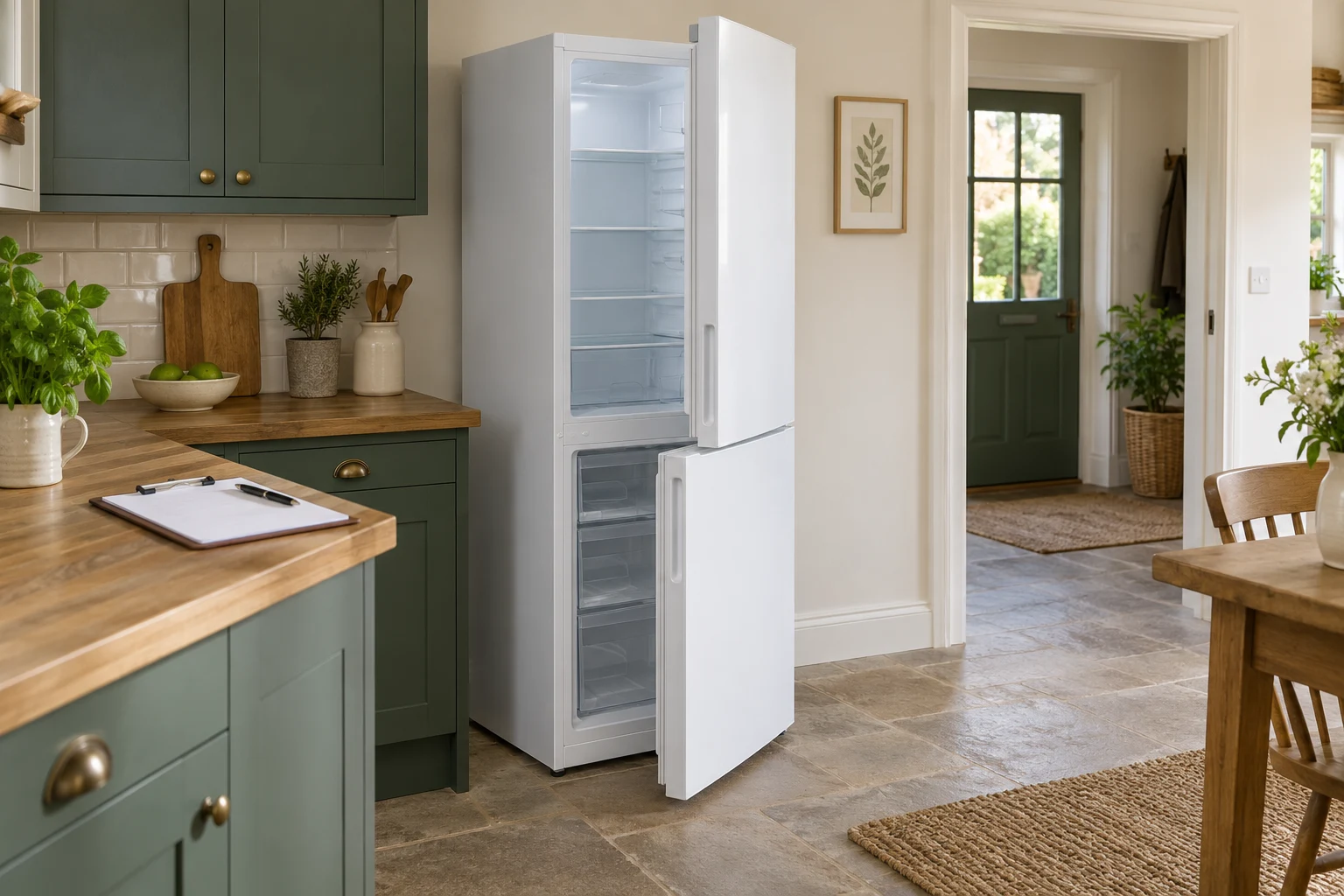
If several items are included, keep each identifiable. A washing machine, fridge and cupboard may have different preparation and acceptance questions. Do not assume an appliance category covers every unit in one visit. The existing fridge and freezer guide explains why refrigeration deserves its own description rather than being treated as another washing machine.
Check the private collector and receiving arrangements appropriate to the job. Household waste guidance explains an appropriately authorised route, and our carrier checking guide gives practical detail. No YWS licence, washing machine tariff or guaranteed recycling outcome is claimed here. A provider needs to accept the actual unit and service scope.
A fictional replacement sequence
Keep a short appliance readiness card for the people coordinating the job. It can state the authorised machine, present location, preparation owner, latest readiness confirmation, collection contact and excluded fixtures. The card should not describe plumbing steps or invite somebody else to complete technical work. Its purpose is to communicate the agreed boundary. If a helper will meet the collector, they can use it to identify the correct unit without guessing which adjacent panel or accessory is meant to leave.
Use an exception entry if preparation is incomplete. Record the unresolved issue, who is considering it and whether it prevents the confirmed collection scope from proceeding. A delay to one task may require a reviewed date or service, but the response should be explicit. Do not substitute a verbal reassurance that somebody will sort it before arrival. The household and provider need to know which actual readiness condition the booking depends on.
If continued use is being considered
A machine that is unwanted by one household may be offered for continued use, but the recipient needs accurate information and its own acceptance process. Describe known faults, visible condition and what has not been assessed. Do not call it tested or safe without evidence. A recipient's interest does not settle preparation, transport or whether the item is suitable for its intended use. Keep those questions separate from the wish to avoid disposal.
Agree who receives the appliance, what is included and how the prepared unit will be handed over. Do not treat a free offer as permission for an unknown person to perform connection work or improvise movement. If the recipient declines after reviewing condition, update the route decision rather than leaving the machine in an ambiguous reuse status. The collection enquiry should reflect the actual intended route at the time it is confirmed.
Keep personal details out of public listing images and quote photographs. An appliance label, delivery document or photograph of the surrounding kitchen may contain information that is unnecessary for the recipient's decision. Provide useful model and condition information through an appropriate channel, without sharing unrelated household paperwork. The collection inventory can retain the relevant reference without reproducing every document supplied when the machine was originally purchased.
Close the appliance task honestly
After the agreed handover, record the machine and included accessories that left, any excluded item and the next action for remaining material. A replacement installation and old-machine collection are separate completion events even when they occur on the same day. Check the relevant confirmations rather than assume one receipt proves both tasks happened. Keep provider details and the agreed scope retrievable, so a later question can be answered without reconstructing the sequence from several people's memories.
Imagine a household in Leeds replacing an integrated washing machine. Its first enquiry requests collection on delivery day, but preparation and fitted-panel responsibilities have not yet been agreed. The household records the unit as connected and asks the installer and proposed collector to explain their separate boundaries. These details are illustrative, not an actual YWS job or a universal installation requirement.
The installer confirms its assessed preparation scope, while the collector reviews the machine's release point and hallway access. The household gives each provider the relevant timing information. If replacement delivery changes, the readiness date is reviewed before attendance. The plan does not rely on the family pulling out the machine or interpreting plumbing instructions from a waste collection article.
At handover, the available contact confirms the authorised unit and any included accessory against the agreed instruction. An unresolved component stays visible in the record rather than being added without acceptance. The useful result is a coordinated sequence and an accurate collection brief, without an assumed price saving or promise of a particular final treatment outcome.
Prepare a readiness-based enquiry
Gather the machine type, present state, condition, agreed preparation responsibility, route, photographs and timing dependencies. Make unconfirmed tasks visible before seeking a date. The YWG dashboard lets you save collection details, photographs and access information in a private listing draft. It does not confirm a live appliance collection, disconnection service or payment. Obtain explicit acceptance of the machine and the actual service boundary before treating the job as booked.
Sources & editorial note
- GOV.UK: consumer electrical waste recycling
- GOV.UK: electrical retailer take-back responsibilities
- Leeds unwanted items collection
- Kirklees bulky household waste
- HSE: manual handling at work
- GOV.UK household waste responsibilities
Official current source snapshots reviewed 3 October 2026. Readiness card separating connected/prepared/access states. Professional preparation title is not a universal legal requirement. No DIY plumbing, electrical or lifting method. Free retailer acceptance distinguished from possible home transport charges. Original methods and explicitly fictional example, no invented price, licence, coverage, treatment outcome or live service. AI assets visually inspected. Parent build/browser/publication review pending.
AI-assisted original editorial content, checked against the sources above. No professional qualification or firsthand YWS job experience is claimed.