Fridge freezer disposal: ask about appliance handling and collection
Prepare a fridge freezer collection in West Yorkshire: compare retailer and council routes, record the appliance, agree handling and confirm readiness before removal.
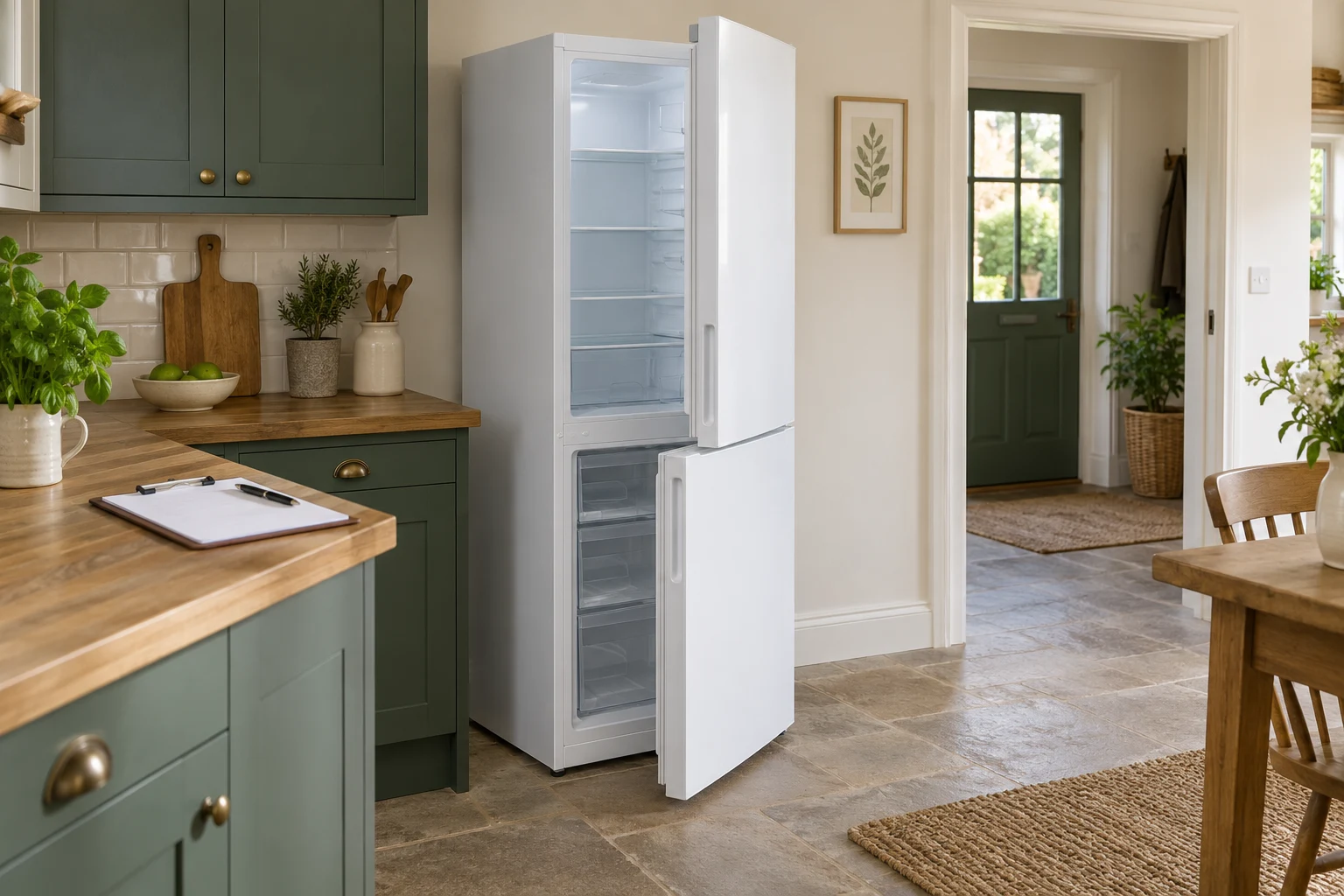
An old fridge freezer is not just another large box to move out of the kitchen. It is an electrical appliance with a cooling system, a substantial footprint and a collection route that needs to accept the actual item. For a household in West Yorkshire, the most useful first step is to identify the appliance and ask the right questions before arranging removal. A vague request for “some scrap metal” leaves too much unexplained.
This guide helps you prepare a fridge or freezer collection request, compare the available routes and coordinate removal with a replacement. It concentrates on the household decisions: describing the item, finding the right recipient, agreeing who handles it and avoiding a rushed handover. It does not provide electrical disconnection instructions, refrigerant handling advice or a guaranteed disposal price. Work involving the appliance's connections or cooling system needs an appropriate professional, not an improvised collection-day solution.
Identify the whole appliance before choosing a service
Begin with the type of appliance. Is it a freestanding fridge, a separate freezer, a combined fridge freezer, a chest freezer or an integrated appliance still fitted into kitchen furniture? Explain whether you want one appliance removed or several. A small under-counter unit and a large side-by-side model can create quite different access and handling questions, even though both are described casually as a fridge.
Give approximate height, width and depth if you can obtain them safely, or provide the model details from paperwork you already have. Tell the provider when dimensions are estimated. A product description is helpful, but it does not replace a view of the appliance's current position. The collector needs to understand the real job, including any surrounding kitchen furniture or route through the property.
State whether the item is still installed, already made ready by an appropriate person, or in a separate storage area. Do not imply it is ready for loading if preparation remains unresolved. Collection, removal from a fitted kitchen and work on connections are different tasks. Ask what the proposed service includes and arrange suitable help for anything outside that scope before confirming the handover.
Your description should also distinguish the appliance from unrelated kitchen waste. Cupboards, packaging, a broken microwave and bags of food do not automatically form part of a fridge collection. List additional items separately and ask whether they are accepted. This lets the provider assess the collection accurately rather than discovering a mixed load when they arrive.
Understand why the receiving route matters
The government's consumer electrical recycling guidance explains that unwanted electrical products belong at appropriate collection points rather than in ordinary household rubbish. Fridges and freezers need a route suitable for the appliance, not merely a promise to take away something bulky. Ask the receiving service whether it accepts your particular type and what preparation information it needs.
Some cooling appliances contain fluorinated greenhouse gases. GOV.UK's fridge and freezer guidance tells owners to check the appliance information and describes council collection with gas recovery arrangements. If you do not have the relevant paperwork, tell the collection service what you know and ask how they will assess it. Do not open the cooling system, release gas or remove components to answer that question yourself.
This is also why a photograph alone should not become a confident declaration about the appliance's chemical contents. An image may show its model, size or visible damage, but it cannot establish every feature of its construction. Give the provider useful information without inventing a technical classification. Where the condition or acceptance route is uncertain, resolve that uncertainty before the item leaves your property.
The practical goal is a confirmed chain of acceptance. Who is collecting, what appliance are they accepting, and what route do they say it will enter? You do not need to manage a treatment facility yourself, but you should not be satisfied with an unexplained “we take anything” response. A clear answer helps you distinguish an appropriate appliance service from an offer that has not considered the item.
Check retailer arrangements before paying for separate removal
If you are buying a replacement, ask the retailer about its electrical take-back arrangements. Government guidance describes like-for-like take-back, but that should not be read as a promise of free removal from every kitchen. The more detailed retailer responsibilities guidance distinguishes free in-store acceptance from transport costs that can be charged for collection from a customer's home. Check the actual arrangement offered to you.
Ask whether the removal takes place during delivery or on another appointment, and whether it includes carrying the old unit from its current position. A delivery service might have conditions about readiness, access or the item accepted. Get those conditions before selecting the option, particularly if your old appliance remains fitted into a kitchen or cannot be moved to a handover point by the household.
Confirm that the booking actually includes the old appliance. A receipt for a new fridge freezer is not, by itself, a collection agreement for the old one. Keep the service confirmation with the delivery details and make sure the contact person knows what is expected. If the retailer's route does not fit your circumstances, you can then compare another suitable service using the same appliance description.
Avoid arranging two providers to remove the same item without a clear cancellation plan. Duplicate appointments can create unnecessary cost and confusion. Once you choose a route, record who is responsible for removal and what happens if the replacement delivery changes. The appliance should not be left in an uncertain position simply because the two services each assume the other will deal with it.
Compare council, site and private collection options
Council bulky collection and household recycling-centre routes have their own eligibility, item and presentation rules. Read the current instructions for your district and chosen site, rather than applying one council's conditions across West Yorkshire. A Leeds address, a Bradford address and a Kirklees address can have different arrangements. A service being listed online does not establish availability at your property on your preferred date.
For example, Leeds' unwanted-items collection page lists fridges and freezers with a size condition and requires food to be removed. Check the live requirements before booking. Our Leeds collection guide covers the broader household choices. This appliance guide focuses on the additional information needed when the unwanted item contains electrical and cooling components.
For a private collection, ask directly whether the provider accepts the identified fridge or freezer. Do not assume a business that collects furniture also has the right appliance arrangements. Explain the current location and whether any preparatory work remains. Request a written description of the service, including the agreed handling, rather than accepting a price that does not say what the team will do.
If you intend to take the appliance to a site yourself, check acceptance and vehicle access before making plans. An accepted destination does not make loading or transport suitable for every household. Do not improvise a method of carrying or securing a large appliance because a site appears nearby. Choose an arrangement that fits your ability and the receiving service's conditions, with appropriate help where needed.
Build an appliance record that the collector can use
Create a short record with five fields: appliance type, approximate size, current location, known condition and outstanding preparation. For condition, explain what you actually know. “Stopped cooling last month” is a useful observation; “safe for reuse” is a conclusion you may not be qualified to make. Mention visible damage or concerns honestly, and allow the receiving service to decide what it can accept.
Add the access details that affect removal. Include the floor, stairs, narrow turns and whether the route goes through shared areas. If an integrated unit is still fitted, say so clearly. The point is not to turn a simple enquiry into technical paperwork. It is to give the provider enough information to ask sensible follow-up questions before offering a service or appointment.
Keep uncertainty visible in the record. Write “not yet confirmed” beside preparation or access questions that remain open. This is better than leaving a blank that someone might interpret as a completed task. Once a suitable person has dealt with the preparation, update the record and tell the collector. A current description makes the booking more reliable than a series of disconnected messages sent over several days.
Where several household members are involved, share the same record with them. The person answering the door may not be the person who requested the quote. Make it easy for them to identify the appliance, show the agreed route and explain which nearby belongings are staying. That can prevent a driver being asked to resolve a disagreement that should have been settled before arrival.
Take useful photographs without moving the appliance
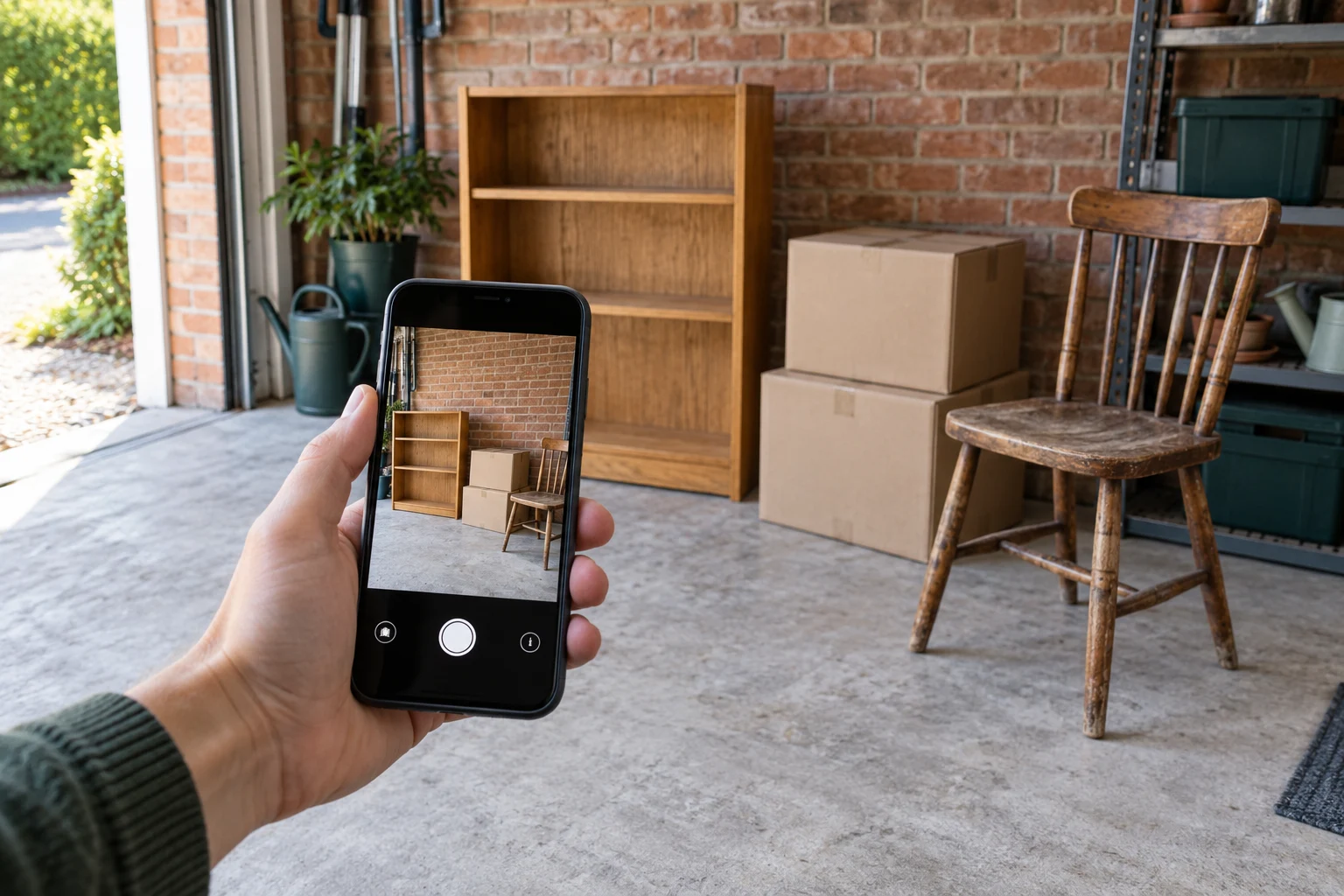
Start with a photograph showing the whole appliance in its present position. Add a view of the surrounding access where that helps explain the job. If the model information is already visible and can be photographed safely, include it, but do not pull the unit out, climb behind it or disturb connections merely to obtain a label photograph. Explain if that information is unavailable.
Separate the appliance from other items in your message. A photograph of a crowded garage could suggest several appliances are going, while you intend to remove only one. Identify the agreed item and say what remains. Photograph visible condition issues without trying to investigate inside the machinery. Useful collection images should clarify the scope, not encourage unsafe inspection or dismantling.
Our photo quotation guide explains the overview, detail and access approach. For cooling appliances, the extra boundary is important: photographs support the provider's assessment but do not prove the appliance is ready, appropriately disconnected or free of particular substances. Keep those questions separate and obtain confirmation from the right person rather than relying on a visual guess.
Keep food planning separate from waste collection
Arrange what will happen to the food before the collection appointment. The collector is accepting the appliance under agreed conditions; that does not automatically include its contents. If you need time to move food elsewhere, build that into the replacement plan. Avoid promising an empty unit while assuming somebody else in the household will take responsibility at the last minute.
Ask the collecting service what condition the appliance must be in at handover, and consult the manufacturer's instructions or an appropriate professional about preparation. This guide does not prescribe a universal defrosting period or a method of disconnecting equipment. Appliances differ, and the receiving service may have specific requirements. Confirm those requirements early enough to comply without rushing or creating a problem on collection day.
If the appliance has leaked or there is another concern around it, disclose that to the provider and keep people away from an unsafe area. Do not investigate electrical or cooling-system faults to complete a booking form. An unresolved problem can change the appropriate arrangements. It is better to pause the handover and obtain suitable advice than to describe a questionable appliance as ordinary ready-to-load waste.
Decide who will prepare, carry and receive the appliance
Think of the job as three responsibilities: preparation, movement and acceptance. They may be handled by the same service, but they should not be assumed to be. Ask what the collection team will do, what must be completed beforehand, and where the handover occurs. A quote for transport does not necessarily include making a fitted appliance ready or carrying it through a difficult staircase.
Describe the access honestly rather than hoping the team will manage on arrival. If you cannot move the item, say so. Do not drag a heavy appliance over a floor, down stairs or through a tight passage to satisfy a service that expects an outside collection point. Choose a suitable handling arrangement. Damage to the property or injury would not make a cheaper-looking collection good value.
For shared buildings, agree how the team gains entry and identify the contact person. Explain restrictions affecting loading, without promising a parking place you do not control. Keep corridors and exits clear. The collection point should be an agreed location, not an obstruction created because the appointment time is uncertain. Ask what happens if the team cannot access the item as described.
Read the final quote as an appliance service agreement
Before accepting a price, check that the scope names the appliance and its current position. Confirm the agreed handling and any preparation conditions. Ask how additional work or a change in circumstances is dealt with. Our quote comparison guide shows how to compare complete offers. Use it alongside the appliance record so each provider is assessing the same job.
Do not compare a disposal site's published per-item charge with a service that sends a vehicle and staff to your kitchen as though they were identical offers. Equally, a general furniture price should not become an assumed fridge tariff. This article gives no invented average for Leeds, Bradford, Huddersfield, Halifax or Wakefield. Ask for a clear price for the actual appliance, handling and location.
For a private waste business, check the collector's identity through the appropriate official route. Our waste carrier checking guide explains how to record the result and resolve unclear identities. Keep acceptance questions alongside the identity check: a registration record does not, by itself, answer every question about the particular appliance, destination or work included in your appointment.
A replacement example with a clear decision point
When arranging replacement and removal through different organisations, keep their confirmations beside each other and compare the sequence. Does the new appliance arrive before the old one leaves, and is there an agreed place for each during that overlap? Explain any space constraint to both providers rather than assuming one team can wait for the other. Record who should be contacted if either appointment moves. This is scheduling advice, not appliance preparation guidance: it helps the household identify a clash before accepting dates and avoids treating two individually confirmed bookings as proof that the combined plan will work.
Imagine a household ordering a new fridge freezer while the old one remains in a fitted kitchen space. This is a fictional example, not evidence of a completed YWS collection. The household initially assumes the delivery team will take the old unit. Before confirming, they ask the retailer to describe the removal option and discover that readiness must be settled separately.
They arrange appropriate help for the outstanding preparation and update their appliance record. Their collection request now identifies the unit, shows its accessible position and explains the route through the property. They compare that complete request with another suitable service rather than comparing two vague prices. The person receiving the delivery has the removal confirmation and knows which appliance is leaving.
The improvement is a clear decision point before the appointment: is the appliance genuinely ready under the agreed conditions? If the answer changes, the household contacts the provider instead of improvising. That simple distinction between a planned collection and a ready collection helps prevent the old unit being left behind while everybody assumes another person has arranged its removal.
Confirm the handover and keep the useful record
Before collection, review the appliance description, readiness conditions, access and contact details. Tell the provider about changes. Keep the booking reference and scope confirmation available, then retain any completion information supplied. If the item remains, establish the reason and agree the next step rather than treating an attempted visit as successful disposal. Ask about the actual receiving route if you need more information about the outcome.
You can register with YWG and save collection details, photos and access information in a private listing draft. YWG is opening soon. Live collection booking and payment are not yet available. Use this guide to prepare an accurate appliance request now, and only regard a collection as agreed when a suitable provider has explicitly confirmed the actual service.
Sources & editorial note
- GOV.UK: consumer electrical waste recycling
- GOV.UK: F gas fridges and freezers
- GOV.UK: retailer take-back and household transport charges
- Leeds Council: unwanted appliance collection conditions
Original government and council sources checked on 3 October 2026. Retailer take-back acceptance is distinguished from free home collection. No electrical or refrigerant handling instructions, chemical classification from photographs, approved YWS tariff or recycling guarantee. Original five-field appliance record, three-responsibility method and explicitly fictional example.
AI-assisted original editorial content, checked against the sources above. No professional qualification or firsthand YWS job experience is claimed.