How to photograph waste for an accurate collection quote
Prepare clear waste collection photos with overview, detail and access views. Use our practical photo manifest, privacy checks and guide to image limitations.
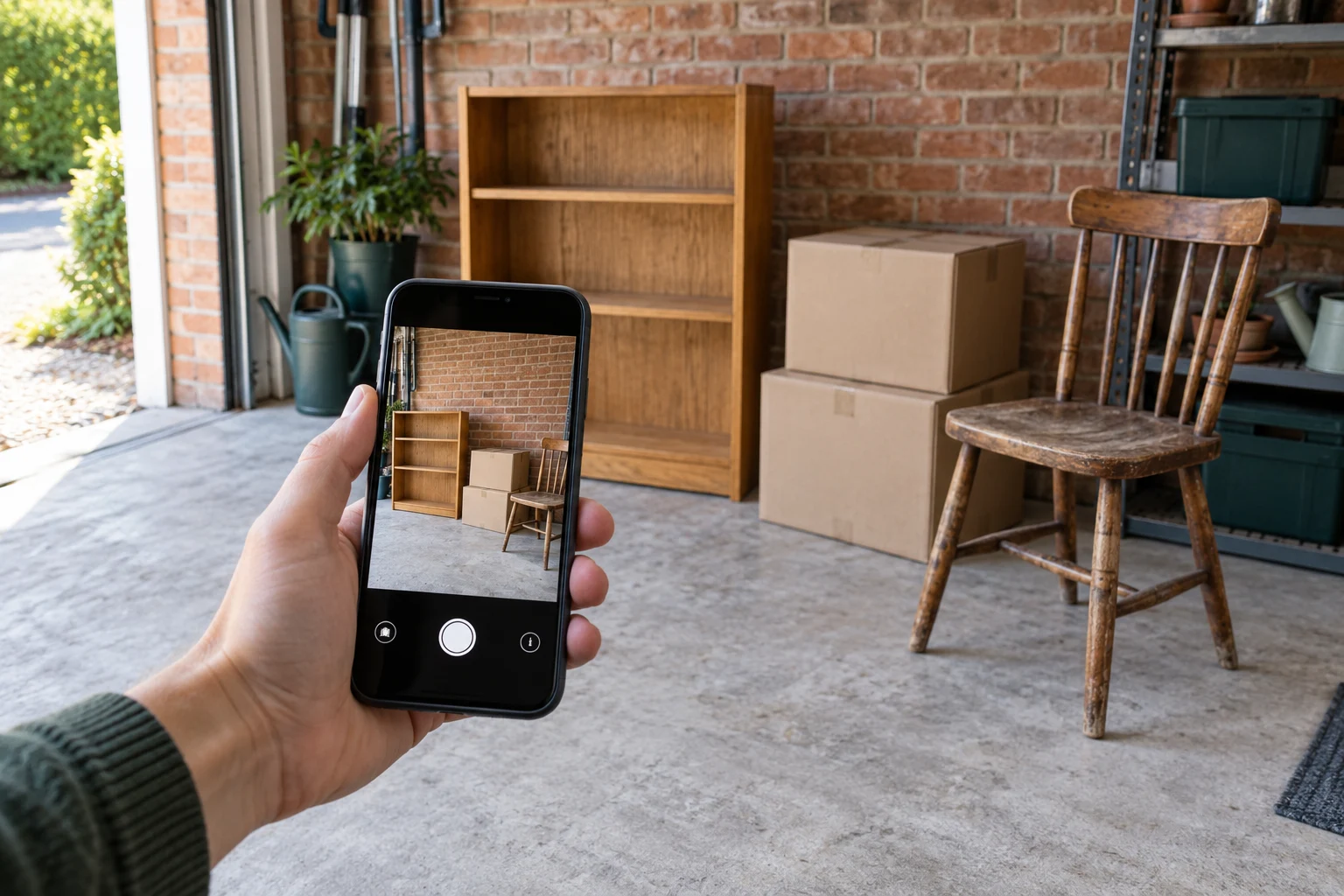
Good photographs help a waste collector understand what you want removed before discussing a price. The useful set shows the whole job, important details and the route to the collection vehicle. A close-up of one sofa is helpful, but it leaves unanswered questions if there are also bags behind it, a flight of stairs or another room to clear.
You do not need professional equipment to prepare a clear enquiry. A phone, a short written inventory and a deliberate sequence of pictures are usually a sensible starting point. The objective is to explain the collection honestly, rather than make the pile look smaller or more attractive. Photographs support an assessment; they cannot establish every item's weight, contents or disposal requirements.
This guide offers an original photo method for households and small workplaces across West Yorkshire. It covers overview pictures, scale, access, privacy, changing inventories and a practical example. It does not promise an instant final quote from images or suggest that hazardous substances can be identified by a photograph. The YWG dashboard lets you save collection details, photographs and access information in a private listing draft.
Decide exactly what the photographs need to explain
Begin with the intended collection, not the camera. Write down the items and quantities you want the business to assess. Mark anything nearby that must remain. If you are clearing several areas, give each a simple name, such as garage, upstairs bedroom or rear garden. The pictures can then follow that structure instead of becoming an unexplained gallery.
For each area, ask three questions: what is leaving, what might be hidden and how will the collector reach it? Those questions guide the overview, detail and access pictures. A neat image of the front of a pile cannot answer what is behind it. A picture taken outside cannot establish whether you expect a crew to carry another item down from a flat.
Keep uncertainties in the inventory. You may know there are six closed boxes without knowing all their contents. You may be arranging a relative's clearance and need permission before a particular item leaves. Explain those limits rather than presenting the pictures as a complete assessment. The business can then ask targeted follow-up questions or recommend a suitable visit.
If the collection is still taking shape, say that clearly. “Initial enquiry; more items may be added” describes a different stage from “final inventory ready for assessment”. That distinction helps prevent an early estimate being treated as confirmation of a later, larger job. Date the inventory so everyone can identify the version accompanying the photographs.
Photograph from a safe position
Take pictures without climbing on furniture, leaning over unstable stacks or moving a heavy object to improve the view. If a useful angle is inaccessible, explain the limitation in writing. An imperfect picture from a safe position is better than an injury caused by trying to create a more complete gallery. Leave unfamiliar containers or suspected hazardous material undisturbed.
For workplace enquiries, HSE's manual handling overview explains that employers should avoid hazardous handling where reasonably practicable, assess unavoidable risks and reduce injury risks. It also notes that the law does not prescribe specific weight limits. Photography is not a reason to bypass the workplace's handling arrangements or ask staff to move unsuitable loads.
At home, keep the same practical priority: describe the item where it stands rather than attempting a difficult lift for the camera. Do not dismantle a sofa, open an unknown drum or break a sheet of material to show its interior. If you cannot see the back of a pile safely, say that a rear section remains unassessed.
Watch your immediate surroundings while using the phone. Stand clear of roads and moving vehicles, keep entrances usable and avoid photographing from an exposed edge. If conditions are poor, wait for a safer opportunity or request another assessment method. The collector needs reliable information, not evidence that you took unnecessary risks to supply it.
Take an overview of each collection area
The overview should show the intended items together with enough surrounding space to explain their arrangement. Step back where it is safe and check that the largest object is not cropped at the top or side. For a long pile, use more than one overlapping view rather than a single distant image in which individual items become impossible to distinguish.
In a garage or shed, show the area containing the proposed collection and explain which shelves or stored belongings are excluded. In a room, include the bulky furniture and the bags or boxes beside it. If some waste is in another room, photograph that area separately. A collector should not have to infer that the first image represents the entire property.
Where practical, take a second overview from a different safe position. It can reveal depth hidden by the first angle. Keep the written inventory as the reference for quantity; two photographs of the same chair do not mean two chairs are being collected. A simple caption stating “same garage items from the side” avoids double counting.
Check the photograph immediately. If the waste is a dark silhouette against an open door, change your position or use available light so the objects are clearer. The aim is recognisable material and useful context, not a dramatic picture. Avoid decorative filters that alter colour or obscure detail needed for assessment.
Add detail where it changes the assessment
After the overview, identify the objects that need a closer view. Useful details may include the size and construction of a wardrobe, the separate parts of a dismantled table or damage that affects handling. A close-up should answer a question raised by the inventory rather than repeat the overview at a slightly different distance.
For furniture, photograph the whole object as well as any relevant detail you can show safely. If an item has already been dismantled, say how many parts are present and whether the photograph includes them all. Do not assume that a collector will recognise a pile of panels as a single wardrobe without an explanation. Keep fixings and loose components described separately where relevant.
For electrical items, identify the type in writing and provide a clear external view. Do not open equipment or perform tests just to support a waste quote. Remove private information from the scene without interfering with safe assessment, and ask the appropriate person to handle any data or asset decisions before disposal. A photograph does not establish that equipment has been cleared of information.
For an unfamiliar material, explain what you know and what you do not. The right follow-up may be specialist advice rather than a more detailed picture. A provider's ability to receive images does not prove that it can accept every substance shown. Keep such items outside a routine confirmed scope until the appropriate assessment is complete.
Give dimensions without inventing measurements
Photographs can distort apparent size. Add known dimensions for bulky items when you can obtain them safely. State the measurement and unit clearly, and describe whether it relates to the whole object or a particular part. A wardrobe's height alone does not tell the collector its width or whether it can pass through the proposed route.
Do not estimate an exact weight from appearance. If the weight is unknown, write “weight not known”. Likewise, do not convert a photograph into a confident cubic-volume figure merely because an online example uses that unit. The business should explain how it assesses the quantity and which further information it requires before confirming its pricing basis.
A nearby familiar object can provide visual context, but it should not replace a stated dimension. Avoid placing tools, rulers or personal belongings somewhere unsafe simply to create scale. If you can measure a bag or box, write the approximate external dimensions and the number of similar containers. Explain whether the containers have different contents or sizes.
Use honest precision. “Approximately one metre wide” is clearer than a spurious measurement to the millimetre when you have only estimated it. If a doorway measurement matters, the collector may need to assess the route separately. Make clear which dimensions you measured and which are approximate so a decision is not built on false certainty.
Explain bags, boxes and hidden layers
Closed containers are a common source of misunderstanding. Count them, describe their sizes and state their known contents. An image showing ten black bags does not reveal whether they contain light household belongings, dense material or something requiring a different route. Never describe unknown contents as ordinary household waste just to obtain an immediate price.
Do not empty bags or boxes solely for the photograph if doing so introduces risk or unnecessary handling. Give the information already known and let the business ask about anything material to its assessment. If a container is damaged or leaking, keep clear and seek suitable advice instead of trying to present it as an uncomplicated collection item.
Show layers where they are visible from a safe position. If there is a second row of boxes behind the first, state that explicitly and include an additional picture if possible. If a cupboard still contains objects, say whether those contents are included. A photograph of a closed cupboard alongside a list saying “cupboard only, empty” conveys a different job from a full cupboard clearance.
Mention anything outside the frame. Waste behind a shed, in a loft or at another address should not be treated as represented by the overview. Separate those areas in the inventory and ask how they should be assessed. A complete description is more useful than an apparently complete image that conceals important exceptions.
Show the access route separately
Access pictures explain work that photographs of the items cannot. Show relevant doorways, steps, passages and the intended collection point, where you can do so safely. Describe whether the business is expected to collect from indoors or whether items will be presented at an agreed outdoor position. These should be stated arrangements, not assumptions inferred from your camera angle.
For an upstairs collection, give the floor and explain stairs or lift availability. A photograph of one landing may help with orientation, but it does not assess every turn or establish that a heavy item can be moved safely. Ask the collector whether further information or a site assessment is needed. Do not promise that access is suitable on the basis of a photograph alone.
For a garden or rear yard, show the route from the items towards the access point and describe any gates. A picture can reveal a narrow passage, but the written brief should identify permissions or restrictions that are not visible. Keep gate codes and security arrangements out of general enquiry photographs; share approved instructions through an appropriate private channel.
For vehicle access, describe the proposed arrival point and known parking constraints. A map location cannot confirm that a space will be available at collection time. If you are uncertain about an entrance or loading area, ask the provider to review it before booking. This applies equally to residential streets and shared commercial yards.
Keep personal information out of the scene
Review the background as carefully as the waste. Papers, labels, computer screens and reflected faces can appear unintentionally. Frame the picture so it explains the collection without sharing information that the provider does not need. Where safe and appropriate, cover or reposition an incidental document before taking the picture rather than sending an exposed copy and hoping it will be overlooked.
Do not photograph other people to provide scale. A written dimension avoids the need to include a child, neighbour or employee in an enquiry. Check mirrors and reflective surfaces as well as the obvious background. For business premises, follow the organisation's rules about customer information, security-sensitive areas and who is permitted to share images.
If you need to crop a picture, preserve the information relevant to the collection. Removing a personal document at the edge is different from removing a second pile of waste from the frame. Tell the business about excluded material and provide another safe view if the crop makes the scope unclear. Privacy-conscious preparation should still give an honest account of the job.
Send pictures through the intended business contact or upload channel after checking you have the right recipient. Do not post an identifiable household enquiry publicly just because a social profile seems convenient. This is a practical privacy recommendation, not a claim that every provider's system has the same storage or security arrangements. Ask the business about its process if you need more information.
Turn the gallery into a small photo manifest
A manifest is simply a list explaining what each picture shows. You can include it in the enquiry message; you do not need specialist software. Match the entries to your inventory areas and make clear when different views show the same items. The following fictional set illustrates a useful sequence for a garage enquiry.
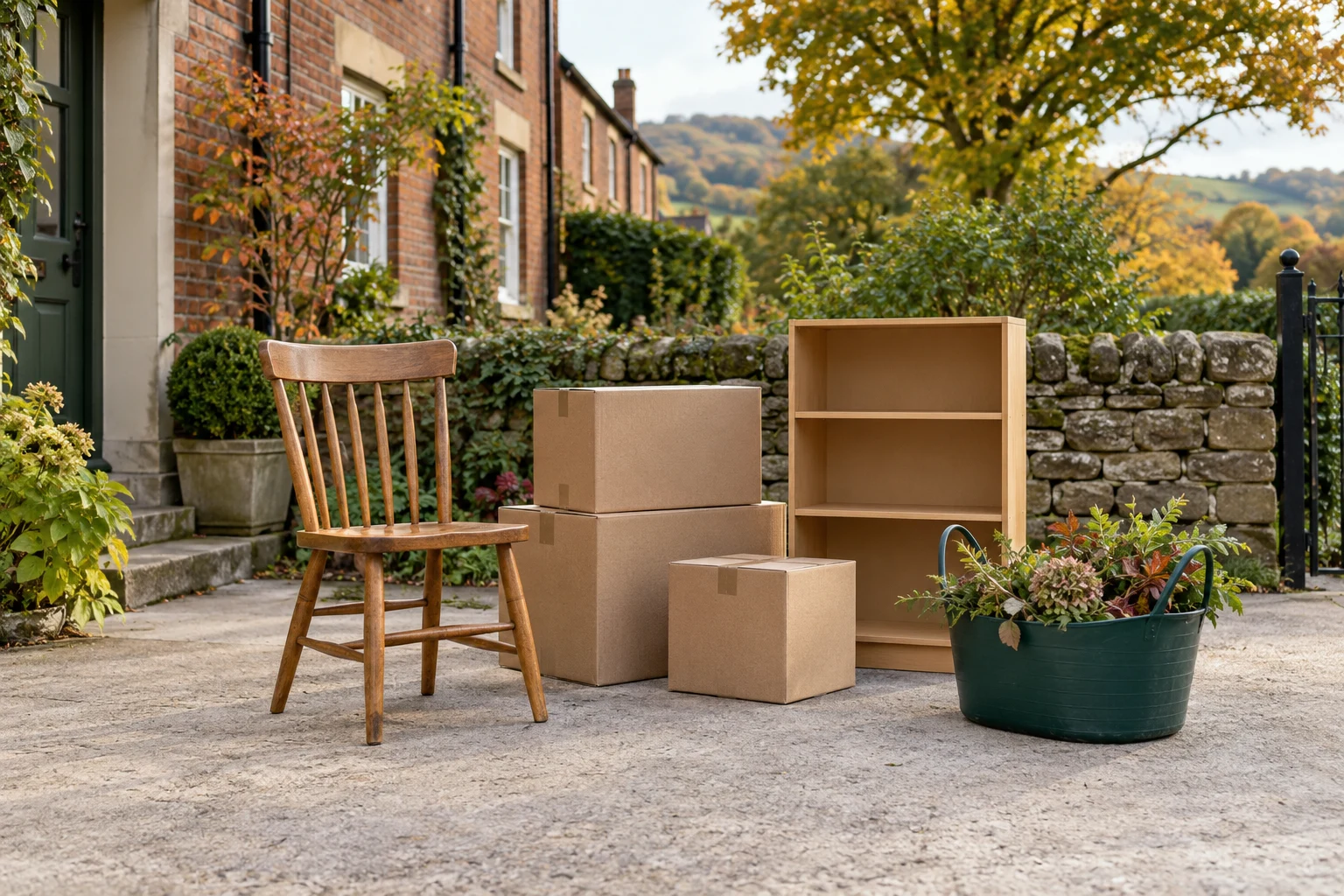
- Picture 1: whole garage collection area, showing the chair, bookcase and four closed boxes.
- Picture 2: side view of the same items, confirming the two boxes behind the front pair.
- Picture 3: bookcase detail, with its known dimensions supplied in the written inventory.
- Picture 4: doorway and threshold between the garage and the proposed loading route.
- Picture 5: route towards the arrival point, with known access restrictions described separately.
Add the collection date or enquiry version to the accompanying message. If an image includes retained items, say which they are. If you cannot safely show a particular area, put that limitation in the manifest. The purpose is to prevent misunderstanding, not to reach a fixed number of photographs for every job.
Review the set on the device you will use to send it
Open the selected photographs and check that the useful details remain visible. A tiny preview can conceal blur or a cropped edge. Make sure you have selected the intended images rather than earlier pictures of a different arrangement. If you are using a shared device, check that no unrelated files have been included by mistake.
Follow the receiving business's stated file requirements. Do not assume every website accepts the same formats, file sizes or number of pictures. If an upload fails, keep your inventory and ask for the supported alternative rather than repeatedly sending an incomplete enquiry. Explain which images have been supplied and which are still outstanding.
Keep a copy of the actual message and selected images so you can identify what the provider assessed. If someone else sends the enquiry on your behalf, give them the same final inventory and manifest. This is particularly useful when several family members or workplace colleagues are helping: one agreed version avoids separate, conflicting descriptions of the collection.
Understand what a photo quote still needs
A useful picture set reduces uncertainty; it does not remove every question. The collector may need material details, dimensions, access confirmation or a visit before deciding whether the job is suitable. Ask what remains unresolved and how that affects the offer. Treat requests for relevant clarification as part of assessment rather than proof that the photographs have failed.
Once an offer arrives, confirm that it covers the stated inventory and loading work. Our quote comparison guide explains how to compare complete scopes and payable amounts. For a workplace enquiry, the commercial manager's guide adds asset decisions, site approvals and collection records.
Photographs also do not replace provider checks. GOV.UK's household disposal guidance tells household customers using a private collection business to check the official upper-tier carrier register. Verify the actual business involved rather than assuming that a polished upload form establishes its status. This guide makes no claim about Yorkshire Waste Solutions' operating registration.
Update the evidence when the job changes
If you add items, move them to another floor or change the collection point, tell the provider before collection. Send an updated inventory and any pictures needed to explain the change. State clearly that the new version replaces the previous scope, and ask whether the offer or assessment needs to be revised.
Remove pictures that no longer describe the proposed job from the active enquiry set, while retaining your earlier correspondence for reference. A final message can simply identify the inventory version, the current pictures and the outstanding questions. That is more useful than forwarding a long gallery containing several contradictory arrangements without explanation.
You can register with YWG and save collection details, photos and access information in a private listing draft. Saving a draft stores your progress in your account; it does not reserve a collection or take payment. For any actual collection, obtain confirmation of the accepted scope, operating arrangements and price from the relevant provider before proceeding.
Sources & editorial note
Original photo sequence, manifest and privacy recommendations, supported by short current official carrier-check and workplace handling summaries read on 3 October 2026. No legal privacy advice, DIY hazardous handling, image-based material certification or promise of a final price from photographs. The garage manifest is fictional. YWG is opening soon.
AI-assisted original editorial content, checked against the sources above. No professional qualification or firsthand YWS job experience is claimed.