Sofa disposal in West Yorkshire: condition, reuse and collection
Prepare a sofa disposal enquiry with intact-item condition, seating-waste route questions, dimensions, mechanisms and access before confirming collection.
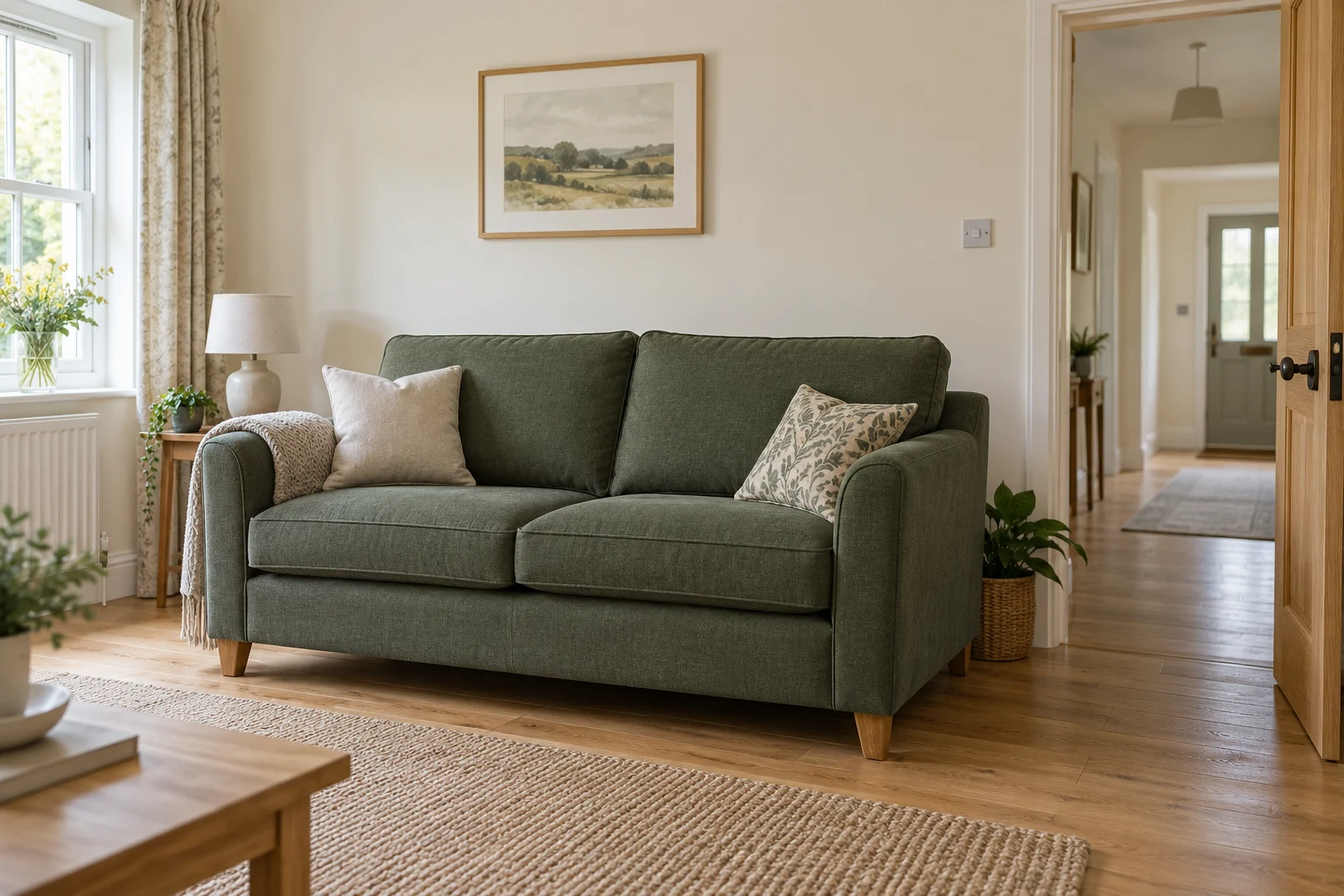
A sofa disposal enquiry needs more than a seat count. Describe the whole item, its condition, where it is standing and how it could reach an agreed collection point. Then establish whether genuine reuse is available or whether the sofa is waste needing an appropriate collection route. Those decisions belong before a confirmed price, not after someone has loaded it into a vehicle.
For households in Leeds, Bradford, Wakefield, Huddersfield and Halifax, a familiar piece of furniture can still create an unfamiliar booking problem. A corner sofa may contain several linked sections; a recliner can include a mechanism or electrical components; and an old sofa may be wider than the route used when it was delivered. The original whole-item brief below helps keep those details visible without asking a householder to perform a technical waste assessment.
GOV.UK’s household guidance outlines reuse, council, recycling-centre and private options. The Environment Agency’s upholstered domestic seating guidance adds an important material issue once seating is waste. Read the appropriate source and service conditions alongside your own description. Neither a photograph nor a general furniture price proves that a particular sofa has an accepted disposal route.
Record the sofa as a whole item first
Begin with its recognisable type: conventional sofa, corner arrangement, sofa bed, recliner or another clearly described form. Record the approximate overall dimensions and any known sections. List matching footstools or loose furniture separately. “Three-seater” can help explain use, but it does not communicate the actual width, construction or parts included in the enquiry.
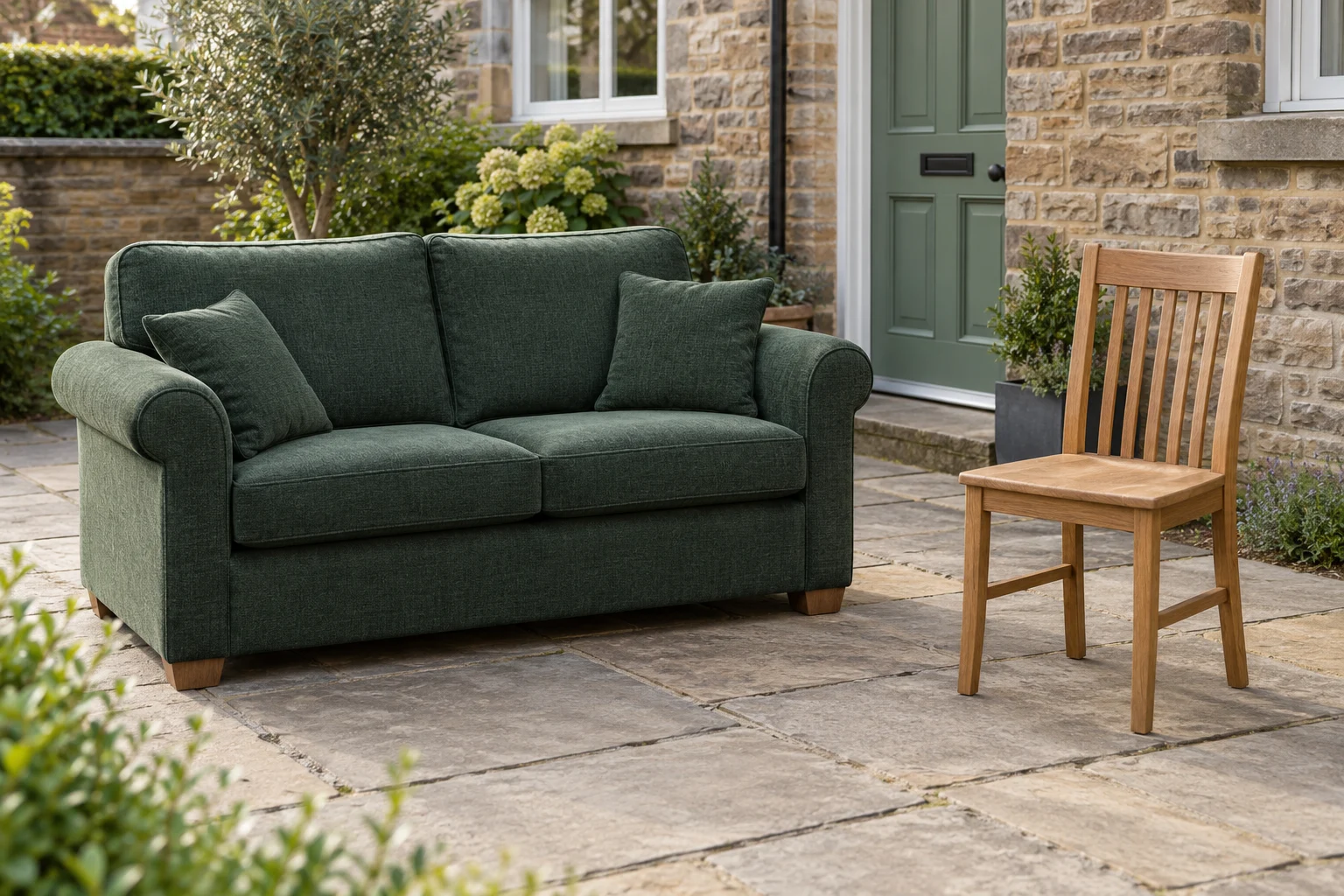
Identify what the household wants removed. A sofa photograph may show a matching chair and several cushions that are not all part of the same instruction. Give included items separate references where necessary and mark anything retained. The quotation reviewer should not have to decide whether an object in the background belongs in the load, and the collection team should not rely on that visual assumption on the day.
Describe the item as it currently exists. Do not dismantle it just to make the enquiry look like a smaller job. If it already separates into manufacturer-designed sections, explain that and provide photographs without inventing dimensions or weight. Ask the provider whether it needs further information or a site assessment before confirming acceptance and the movement task.
Decide whether reuse is a genuine option
A suitable sofa may be worth offering for reuse before a waste collection is arranged. Contact the proposed recipient with honest condition information, dimensions and available intact labels. Ask what it accepts and whether transport is offered. A charity’s general furniture donation page does not mean this sofa has been approved, and a willing recipient may still need to assess suitability before handover.
Keep the reuse enquiry status visible: information sent, further assessment requested, accepted subject to conditions or handed over. Those are suggested planning labels, not an organisation’s official system. They stop an unanswered message from becoming “sofa donated” in the household’s clearance list. A waste enquiry should describe the sofa as still present until the handover actually takes place.
If reuse is unavailable or unsuitable, record that decision and move to a waste route. Do not conceal damage in another offer or promise that a waste collector will find a new owner. Reuse is a receiving arrangement to confirm, not a reassuring word attached to every clearance. Our household planning guide explains how that decision fits the wider set of options.
Understand the upholstered-seating issue without self-testing
The Environment Agency guidance includes waste sofas among upholstered domestic seating that may contain persistent organic pollutants, commonly called POPs. Its item scope includes household-type seating from households or businesses. The material’s appearance, age estimate or collection address does not establish a pollutant-free result. Give the provider an accurate item description and ask how its waste route addresses the relevant requirements.
Keep the sofa intact pending suitable instructions and assessment. Do not cut upholstery, pull out foam or compact the item to make it fit a general load. The guidance addresses preventing release and contamination and avoiding mixing relevant seating waste with other waste. A household enquiry should support an appropriate provider’s decision rather than prescribe its treatment process or assign a waste code from an online example.
Do not use an exclusion for a different object to classify the sofa. The guidance’s mattress exclusion from its particular seating scope does not mean a sofa bed’s upholstered seating can be described as an ordinary mattress. Explain both its seating function and any bed mechanism. A clear type description is more useful than selecting the cheapest furniture category and hoping it covers the actual construction.
Describe condition without hiding handling concerns
Record visible damage, soiling, missing sections and any unusual concerns. A torn cover or exposed material should be described accurately rather than hidden behind another cushion. If there is an infestation concern or contamination, raise it before requesting an ordinary route. A routine furniture quotation should not be assumed to cover a substantially different handling problem that the provider has never been told about.
Use plain observations rather than a diagnosis. “Cover torn on the left arm, material visible beneath” describes what you can see; “safe and nonhazardous” makes a conclusion you may not be in a position to support. Photographs can help the provider assess the information, but they do not prove chemical composition or replace a specialist decision where one is required.
State whether the sofa has been outside and whether its condition has changed since the photographs. Wet or deteriorated upholstery can alter the practical collection task. Do not present an earlier image as current when the item has subsequently been damaged. Update the enquiry and ask whether the agreed route and price still apply before the collection is treated as confirmed.
Make mechanisms and electrical components visible
Tell the reviewer if the sofa reclines, opens into a bed or contains powered functions. Record any known model information available without unsafe access or dismantling. The provider needs to understand that the movement task may differ from a simple loose sofa. Do not describe an electrically powered recliner as ordinary wood and fabric merely because the motor is out of view.
Explain the current state of the mechanism, including whether it is stuck or damaged, without attempting a repair for the sake of collection. Ask the provider what assessment and preparation are appropriate. This guide does not instruct someone to force a mechanism closed, disconnect internal components or improvise lifting around damaged parts. Such uncertainty should remain part of the brief until an appropriate arrangement is agreed.
If the item was bought second-hand or its construction is unknown, say so. A missing manual or label is information the reviewer can work with. Inventing a model or guessing that the mechanism can be removed is not. A route with additional review may take longer to confirm, but it gives both household and collector a more honest basis for the job than an apparently complete form filled with assumptions.
Map the route out of the room
Measure accessible dimensions and describe doors, turns, stairs and the final collection position. Include any change since delivery: a new door, renovated hallway or fitted furniture can make the original route less useful as evidence. A sofa that entered years ago is not automatically easy to remove today. Let the provider assess the movement task from the current site information.
For flats, include floor level, lift availability and shared-area arrangements. Check with the appropriate building contact if access needs permission or a working window. Do not promise unrestricted use of a lift or courtyard that the household does not control. The provider’s method needs to fit the actual site rather than the route that happens to look convenient in a photograph.
State whether you need removal from the room or can use a confirmed external presentation point. Those are different scopes. Avoid moving a heavy or awkward sofa outside simply to satisfy a menu choice before a workable arrangement exists. Explain what assistance you can and cannot provide, then ask the provider to specify the accepted service and responsibility for movement.
Use measurements as evidence, not a lifting plan
Take useful dimensions from positions that can be accessed without unsafe movement. An overall width, depth and height helps the reviewer compare the sofa with the route. Mark values as approximate where necessary and use a consistent unit. A number copied from a retailer’s similar product may describe a different model and should not be presented as a measurement of your own item.
Record route constraints separately from sofa dimensions. The narrowest doorway, a turn at the bottom of stairs or a short landing can matter in different ways. Do not assume that one width comparison proves the task is possible. The provider should assess its handling approach and whether more information is needed. Your measurement note supports that decision rather than authorising a particular lifting method.
If a dimension cannot be obtained safely, say which one is missing. A reviewer may be able to request another view or arrange an assessment. Uncertainty is preferable to unnecessary handling solely to complete a form. The photography guide shows how overview, item detail and access images can answer different questions without turning the household into a removal crew.
Check council conditions for the actual address
A local authority may offer a bulky household route, but the current conditions determine eligibility, item acceptance and presentation. Check the official page for the collection address rather than transferring an experience from a nearby town. Leeds, Bradford and Kirklees do not necessarily offer the same preparation requirements, availability or item-count method.
Our Leeds bulky-collection guide and Bradford guide explain those household enquiries. Use their linked official pages to verify the current offer and your circumstances. A listed sofa category still needs to be read with condition, size, access and customer restrictions. Acceptance of the general item name is only part of the collection decision.
If published preparation instructions seem unsuitable for the sofa’s construction or condition, ask the authority how to proceed before acting. Do not use a general dismantling instruction as authority to cut upholstery or release material. Explain the item and concern. A different route may be needed, and the appropriate answer should come from the service and relevant competent assessment rather than a household guess.
Specify a private quote without a guessed tariff
Send the whole-item inventory, condition account and access brief together. Ask the provider to confirm which items it accepts, what movement is included and how the applicable seating-waste route is managed. State anything awaiting assessment. A quoted total should identify the actual sofa and additional pieces rather than use a vague phrase such as one load of furniture.
Ask whether the offer includes labour, transport, applicable taxes and any confirmed extra work. Find out how a changed quantity, failed access or different condition would be handled. Our quote-comparison guide helps compare providers against the same information. This article contains no invented West Yorkshire sofa price or assumed charge per seat.
If several furniture items are included, keep the sofa’s stream identifiable. A table and upholstered sofa may not follow the same handling route even when collected during one visit. The provider should explain the arrangement rather than treating the items as interchangeable. A single appointment does not remove the need for a material-specific acceptance decision.
Check the company and the confirmed scope
For private household waste removal, use the appropriate registration checks described in GOV.UK’s guidance. The carrier-check guide explains the difference between transport registration and a receiving site’s permission. Do not infer suitability for upholstered seating from a van, a logo or the availability of an online payment button.
Keep the provider’s confirmation with the inventory and agreed access description. A household receipt is useful for recording the transaction, while the provider has its own responsibilities for handling and onward transfer. Do not assume a receipt proves a particular destruction or recycling outcome unless the relevant service and evidence have actually been supplied. State only the result you can substantiate.
Give the collection-day contact a copy of the scope, especially if someone else booked remotely. They should know what is included, what remains held and who can approve a variation. A neighbour with a key should not unexpectedly be asked to agree additional work or a changed price without authority. A clear handover helps the provider follow the accepted instruction.
Keep changes visible before loading
If the sofa is moved, becomes wet or develops further damage, tell the provider. If a footstool or matching chair is added, request acceptance and any price change before treating it as included. Do not rely on a photograph taken before the changes. The item’s current state and the agreed inventory should match when the team arrives.
Use a short change note with the item reference, what changed and the provider’s response. This is a practical household record, not a mandatory form. It makes a conversation easier to follow when a family member is meeting the team. A vague message saying “a bit more furniture” leaves both quantity and material route unclear.
After collection, record what actually left and any remaining items or unresolved decision. A completed visit may still leave an excluded chair, inaccessible section or another object awaiting assessment. Keep the next action explicit rather than marking the whole room empty because the sofa was collected. The result should describe the actual service completed, without a claimed environmental outcome that has not been verified.
A fictional whole-sofa enquiry
Imagine a household in Wakefield replacing a corner sofa. Its inventory shows two linked seating sections, a separate footstool and a recliner mechanism on one section. The access note identifies a narrow turn and a shared loading area. These details are fictional and do not establish acceptance by any provider. They illustrate the information that a seat-count-only request would omit.
The household first asks a reuse organisation about the intact sofa and provides honest condition information. Acceptance is not available, so the waste enquiry keeps the same whole-item description and adds the relevant seating-route question. The provider is asked to assess movement and confirm which pieces are included. The household does not cut the sofa into smaller sections to obtain an apparently simpler booking category.
Before attendance, the coordinator confirms the inventory and access position. If the footstool has since been retained, it is removed from the scope through the agreed process. After collection, the remaining list is reconciled. That sequence protects the accuracy of the job without promising that reuse must succeed, a particular price must apply or a photographed object can be technically classified by its appearance.
Prepare a clear next step
Keep any requested follow-up information attached to the same sofa reference. If one person supplies dimensions and another reports the condition change, the reviewer should be able to connect both to the original enquiry. A single current description reduces the risk of a quotation based on one section while the collection contact expects the complete corner arrangement.
Gather a whole-sofa description, suitable photographs, approximate dimensions and the route information. Identify reuse status, mechanisms, condition changes and any other included seating. Keep uncertainties visible until the relevant provider answers them. A short accurate brief can lead to a more useful response than a long description that calls every issue ordinary furniture and omits the difficult movement task.
You can register with YWG and save collection details, photos and access information in a private listing draft. YWG is opening soon. Live collection booking and payment are not yet available. Use the process as a planning aid, then seek confirmed acceptance and a clear scope from an appropriately checked provider before the sofa leaves your home.
Sources & editorial note
- GOV.UK household waste responsibilities
- Environment Agency: upholstered domestic seating containing POPs
Current household and Environment Agency seating guidance read on 3 October 2026. Original whole-sofa, mechanism and route brief. POPs possibility not inferred absent from appearance; sofa-bed seating not reclassified by mattress exclusion. No chemical testing, cutting or handling procedure, invented tariff, service availability or recovery claim.
AI-assisted original editorial content, checked against the sources above. No professional qualification or firsthand YWS job experience is claimed.