Recliner disposal: why the mechanism and weight matter
Plan recliner disposal with an intact-chair description, mechanism and weight uncertainties, POPs route checks and agreed indoor removal responsibilities.
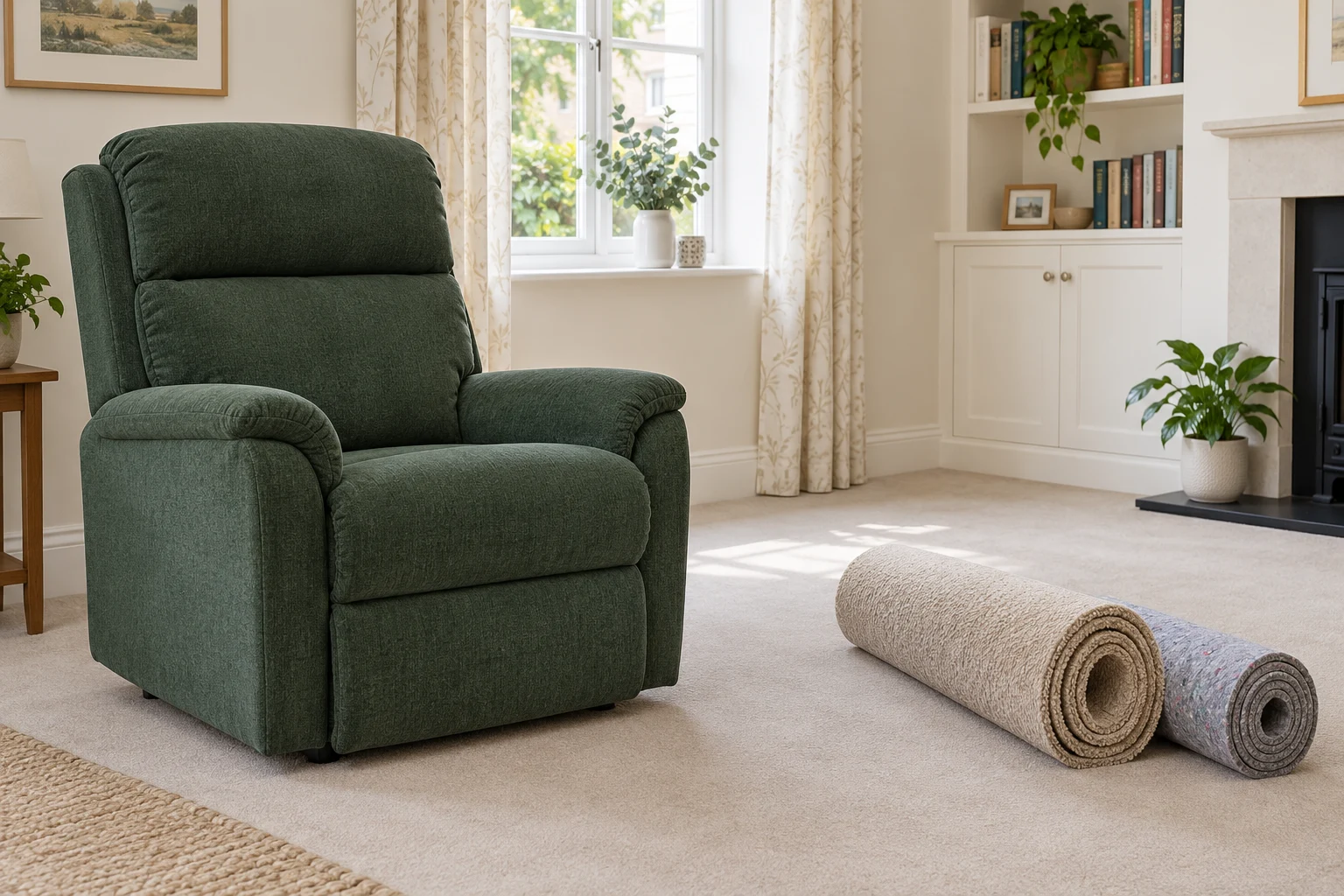
A recliner is more than a large chair. Its movement mechanism, current position, power supply and route out of the room can change the collection task. Before requesting recliner disposal, describe the whole chair and what you know about it. A useful enquiry lets the provider assess removal and the waste route together, without expecting the householder to dismantle the item first.
For households in Leeds, Bradford, Huddersfield, Wakefield and the wider West Yorkshire area, there may be reuse, council or private collection options to investigate. Their suitability depends on the actual chair and the service conditions. This guide offers an original chair-to-collection worksheet, with particular attention to mechanisms, uncertain weight and upholstered seating. It does not supply a handling procedure or promise that any provider accepts every recliner.
Decide whether the chair is being retained, reused or discarded
Start with the decision about the chair, rather than the desire to create space. Is it still needed, being offered for continued use or authorised for disposal? A family member helping with a room change should confirm the owner's instruction. If the decision is unresolved, keep the chair outside the collection scope until the appropriate person has agreed what should happen.
If reuse is being considered, describe condition and function honestly to the proposed recipient. Do not call a mechanism reliable because it moved once during an inspection, or claim that a powered chair has been electrically tested without evidence. A charity or other recipient may have its own assessment and acceptance criteria. Interest in the chair is not the same as a confirmed collection.
Set a practical decision date if a replacement is arriving. The old chair may need to remain available until the new one is delivered and its use has been settled by the household. This is a planning point, not health or mobility advice. Do not allow a speculative reuse enquiry to become an instruction to remove a chair the owner still depends on.
Identify the type without taking it apart
Record whether the recliner is manually operated, powered or unknown. Note any visible make and model information that can be read without moving or opening the chair. If it is a lift or rise-and-recline model, say so. That description helps the provider understand the equipment involved without assuming that every recliner is a simple upholstered armchair.
Describe its current position. It may be closed normally, partly extended or stuck in one position. State whether the mechanism's condition is known and whether there is visible damage. Do not operate an uncertain mechanism simply to obtain a more convenient photograph. The quote can accurately state that its movement has not been checked and needs provider review.
List separate accessories, such as a controller or detached original support component, if they are part of the intended collection. Do not describe something as detachable merely because a similar chair was taken apart in an online video. A provider should assess the actual model and scope. This article does not explain how to release a backrest, remove motors or secure moving components.
Give dimensions and weight information an honest basis
Useful measurements include the chair's present width, depth and height, together with its current position. State whether measurements were taken directly or supplied from existing product information. An advertised dimension for the open chair may not describe the item as it now stands. Keep the source of each figure visible so the provider can assess the information appropriately.
If you have an original model specification showing weight, identify it as manufacturer information rather than a measured current weight. Do not substitute a figure found for a vaguely similar chair. Accessories, repairs and construction differences can make that comparison unhelpful. An honest unknown is preferable to a precise-looking figure that encourages the provider to underestimate the task.
You do not need to weigh the chair by lifting it onto domestic scales. Explain the uncertainty and ask whether photographs or a survey are needed. Weight is one part of handling assessment, alongside shape, mechanism and access. A broad chair with difficult gripping points can present a different task from a compact item of similar stated weight.
Understand the upholstered seating issue
The Environment Agency's POPs seating guidance includes electrical and mechanical recliner chairs among upholstered domestic-type seating that may contain persistent organic pollutants. The issue is not resolved by calling a chair leather, old, valuable or suitable for ordinary scrap. Give the collector an accurate whole-item description and ask which assessment and route apply.
That guidance also addresses electrical recliner components when relevant seating is treated. A motor or cable does not make the rest of the chair disappear from the waste description. Do not strip the upholstery, remove foam or separate electronics at home to make the booking simpler. Collection and treatment decisions should remain with appropriately competent people using the applicable guidance.
POPs management should not be confused with an unsupported statement that every recliner is hazardous waste. The practical household task is to disclose the seating type, preserve the agreed distinctions and obtain explicit acceptance. A generic mixed-furniture offer needs clarification if it has not addressed the actual upholstered chair. No recovery or recycling outcome is promised by this guide.
Check the route out of the room
Walk the intended route without moving the chair. Record floor level, stairs, turns, doorways and the collection entrance. Mention any partition, fitted unit or doorway change since the chair arrived. The fact that it once entered the property does not establish that it can leave through today's route in its present condition.
Describe the narrow or awkward points and supply relevant measurements if they can be obtained normally. The provider should assess the combination of chair dimensions and route, rather than receive a guarantee that it fits based on one doorway measurement. Turning space and changes in level matter. A room photograph alone does not show the entire movement task.
State where you expect the provider to collect it: its current room, a ground-floor area or another agreed position. These are different scopes. Do not move the chair upstairs or outside to match an assumed service without checking the arrangement. Ask whether the provider includes indoor removal and whether a survey is needed before a price or date is confirmed.
Leave the handling method to the appropriate assessment
Avoid a plan that depends on friends lifting the chair because somebody believes two people should be enough. The HSE handling guidance explains assessment of unavoidable hazardous handling and reduction of risk; it does not give one universal safe weight. The collection provider should consider the actual item, task and route within its work arrangements.
Tell the provider if the mechanism is stuck, parts are loose or the chair has been moved previously in an unusual condition. Do not hold moving sections open or experiment with the frame to discover a lifting point. Information about the current condition supports assessment without turning the enquiry into a handling exercise performed by the household.
If preparation beyond ordinary description is required, ask who carries it out and whether it is included. A collection quote should not silently rely on the owner removing powered components or dismantling upholstery. Agree the boundary between household preparation, competent specialist work and collection. Anything unresolved should remain an explicit question rather than an assumed step before attendance.
Ask council services about their actual recliner arrangement
Kirklees' bulky household collection page identifies recliners among affected upholstered seating and describes separate collection from other items, potentially on different days. Check the current instructions and eligibility for the proposed job. A collection of a chair and a plain table should not be assumed to be one undifferentiated visit or stream.
Elsewhere in West Yorkshire, read the relevant council's current service page and ask about the whole item, its present location and any powered mechanism. A listed category does not confirm removal from an upstairs room or preparation work. The household route guide helps compare the wider options without transferring one council's rules to another area.
Do not interpret a council's preparation requirement as a general instruction to dismantle the recliner yourself. If the household cannot present the item as required, explain that limitation and investigate a suitable alternative. A private provider may offer a different scope, but its acceptance and movement arrangements still need to be confirmed for the actual chair.
Assess reuse against condition and a confirmed recipient
If the recliner remains suitable for continued use, a recipient may want information about upholstery condition, operation, dimensions and collection access. Provide what you know without inventing inspection results. Mention damage, odours or unresolved functional issues. A truthful description avoids a wasted visit and helps the recipient decide whether its own acceptance process can proceed.
Keep reuse confirmation separate from waste collection confirmation. An interested recipient may decline after reviewing the model or condition. If that happens, update the disposal brief rather than treating a previous offer as proof that the chair is reusable. The furniture donation guide explains how to maintain a fallback without promising charity acceptance.
Ask who moves the chair and what the receiving arrangement includes. A free offer to somebody else may still leave the household responsible for a movement task it cannot provide. Do not equate an agreed recipient with a complete transport plan. The chair's mechanism and route need attention whichever destination has been proposed.
Photograph the chair as it is
Take a clear whole-chair image showing its present position and condition. Add a visible model label or controller image where useful and accessible, without dismantling or operating anything uncertain. Include a view of the collection route's relevant constraints. These images answer different questions and are more useful than several nearly identical photographs of the upholstery.
Keep personal paperwork, family photographs and information on screens out of the enquiry images. If the recliner is part of a room still in use, frame the photographs carefully rather than rearranging heavy furniture to create a perfect scene. Our quote photography guide offers a practical structure for quantity, condition and access evidence.
Date the photo set and explain any later change. If the chair becomes stuck after the photographs or moves to another room, the original images no longer describe the full job. Send the update before confirmation. Photos support an assessment, but they do not identify chemical composition or certify safe handling from a distance.
Compare quotations for the same removal scope
Give each provider the same chair description, current position and access brief. Ask whether the price includes removal from that position, any assessed preparation and the accepted upholstered seating route. A price for an item already outside cannot be compared directly with a quote for removal from an upstairs room unless that difference is acknowledged.
Clarify VAT, exclusions, the treatment of an uncertain mechanism and the process for additional work. Ask how a variation is approved if the description proves incomplete. There is no invented standard recliner disposal price in this guide. The quote comparison guide helps assess the assumptions behind an offer rather than focus only on its headline amount.
Confirm the provider's role and relevant checks before arranging transfer. GOV.UK's household disposal guidance explains the importance of an appropriately authorised route. Our carrier checking guide expands the practical checks. Transport registration is not a substitute for acceptance of the specific item and receiving arrangements.
Coordinate replacement and collection dates
Record when the old chair can genuinely leave. A replacement delivery slot is not always the same as a confirmed release time for the existing chair. The household may need to inspect the new item or rearrange the room first. Explain any dependency to the provider and ask about rescheduling terms before choosing a collection window.
If somebody is helping the owner, nominate the person who will be present and who can approve changes. They should know which chair is included, which accessories go with it and what stays. A short handover prevents a collection crew receiving conflicting instructions from different family members, particularly when more than one similar item is in the property.
Have a communication plan for delay rather than an improvised instruction to leave the chair in the street. Ask the confirmed service where the item should remain pending attendance and what to do if the available position changes. Keep access clear within the household's normal arrangements, without undertaking unassessed movement to rescue a missed slot.
A fictional chair-to-collection worksheet
Imagine a household near Huddersfield replacing a powered recliner. The chair remains upright, but the household has not checked its movement recently and does not have a reliable weight. The initial inventory records these unknowns rather than asserting it is light and detachable. These details are fictional and do not represent a YWS customer, assessed chair or accepted load.
The household records the ground-floor room, a narrow turn in the hallway and visible model information. It asks a recipient about reuse and a collector about the waste route as separate possibilities. When reuse is not confirmed, it obtains a collection offer based on the whole chair and the actual removal position, with preparation responsibility explicitly addressed.
Before attendance, the helper checks that the approved chair, controller and current access description match the confirmation. If a mechanism change occurs, it is reported rather than hidden to preserve the quoted amount. The worksheet's value is a more accurate handover, not a predicted saving, universal handling method or guarantee that every recliner can follow that route.
Prepare a useful recliner enquiry
Keep a short decision card beside the household's collection notes. It can state the authorised chair, its current location, confirmed provider, agreed removal boundary and any excluded accessory. Do not attach private personal or medical information to the chair. The card is simply a reference for the people coordinating the job, especially if the owner will not meet the collector personally. An unresolved question belongs on the notes until it is answered, rather than being removed because a collection date is approaching.
Review four checkpoints before confirming the date: the chair is authorised to leave, the provider has accepted the whole item, the current access description has been reviewed and somebody will be available to complete the handover. If one checkpoint is missing, ask for the relevant decision. A replacement deadline does not establish acceptance, and a paid quotation does not make an inaccessible route suitable. Separating these checkpoints keeps a household helper from being left to improvise a technical or commercial decision on the day.
After collection, record what actually left and anything that remains. The confirmation may have included a controller or another accessory whose status needs checking. If a provider declined part of the scope, keep the next action visible and ask about an appropriate route. Do not describe the entire job as complete simply because the main chair has gone. Keep the receipt and relevant provider details with the household record, without claiming that a loading photograph establishes final recycling or treatment.
For a household arranging several removals, retain the recliner as a separate item line throughout the quote and handover. A chair, table and carpet may become ready together, but their acceptance questions remain different. This item-level record helps the provider explain what can be combined operationally and what must stay distinct, rather than relying on an ambiguous request to clear the whole room.
Gather the owner's decision, chair type, honest dimensions and weight information, photographs, current position and route constraints. State what remains unknown and which preparation tasks have not been agreed. A clear brief lets an appropriately checked provider discuss the actual recliner rather than a generic chair category.
The YWG dashboard lets you save collection details, photographs and access information in a private listing draft. It does not confirm a live recliner collection, mechanism preparation service, specialist route or payment. Obtain explicit acceptance and movement arrangements before treating any enquiry as a confirmed booking. The strongest starting point is accurate information, with the chair kept intact and the unresolved decisions visible.
Sources & editorial note
- Environment Agency: upholstered domestic seating containing POPs
- Kirklees bulky household waste
- HSE: manual handling at work
- GOV.UK household waste responsibilities
Official current source snapshots reviewed 3 October 2026. Whole-chair status, honest dimensions/weight basis, current mechanism position and room-to-vehicle review. POPs and hazardous classification not conflated. No DIY dismantling or universal lift weight. Original methods and explicitly fictional example, no invented price, licence, coverage, treatment outcome or live service. AI assets visually inspected. Parent build/browser/publication review pending.
AI-assisted original editorial content, checked against the sources above. No professional qualification or firsthand YWS job experience is claimed.