Wardrobe disposal: measurements and safe collection scope
Plan wardrobe disposal using current dimensions, mirror and attachment questions, route information and an explicit agreement about preparation and collection scope.
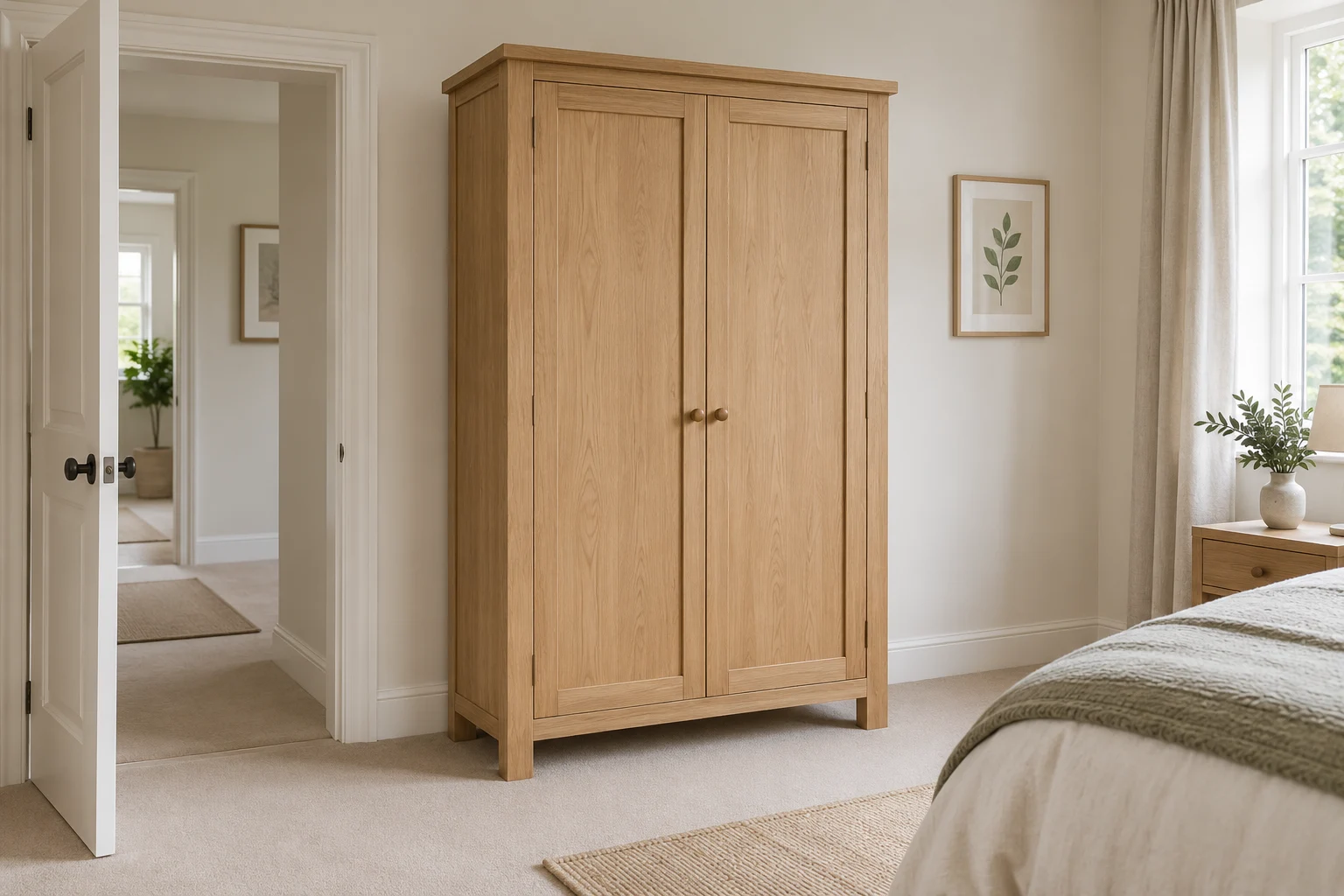
A wardrobe disposal request should identify the furniture, the route out of the room and the work needed before it can be collected. “One wardrobe” can mean a light loose cabinet, a large mirrored unit or fitted furniture attached to the building. Those are different tasks. Establish which one you have before comparing a council collection with a private room-removal offer.
Households across Leeds, Bradford, Wakefield, Huddersfield and Halifax can use a simple measurement-and-responsibility brief to make the enquiry clearer. It records what can be observed safely, what remains uncertain and which preparation tasks need an agreed answer. The method below is an original planning aid, not a dismantling tutorial or a guarantee that a particular wardrobe fits a standard collection category.
Current council conditions also matter. Leeds’ unwanted-items page refers to dismantled wardrobes and excludes items containing mirrors. Kirklees’ bulky household page has its own preparation and acceptance conditions. Do not assume an item accepted by name in one area will be accepted in the same state, from the same position or under the same count in another.
Identify freestanding and fitted furniture
Begin by stating whether the wardrobe is freestanding or part of a fitted installation. Explain visible attachments without removing them simply to prove the description. A provider assessing loose furniture collection needs to know if the task includes building alterations, fixed panels or connections with other fittings. An item’s familiar name should not conceal additional work that belongs to another trade or requires another approval.
If ownership or permission is uncertain, hold the disposal instruction. In a rented home, for example, a fixture may require the appropriate landlord or owner decision before removal. This guide does not interpret a tenancy or determine what belongs to whom. It suggests making that dependency visible so the collection provider is not asked to decide whether a fitted item may leave.
Record the current state rather than your intended future state. “Freestanding unit, still assembled in upstairs bedroom” tells a reviewer more than “panels ready to collect” if nobody has agreed who dismantles it. Keep a proposed preparation task in a separate field. That distinction prevents a quote being issued on the assumption that work has already happened when it remains an unresolved part of the project.
Describe construction and contents separately
List the wardrobe’s visible features: number of doors, drawers, shelves, mirrored surfaces and any separate top or side units. Provide approximate dimensions and photographs. You do not need to identify every board material confidently. State uncertainty rather than guessing that a heavy panel is solid timber or that a shiny surface is safe plastic instead of glass.
The contents are a separate decision. Clothing, stored documents, loose accessories and items on top are not automatically included in a furniture collection. Decide what stays, what goes through another route and what is actually part of the accepted load. A provider should be able to identify the wardrobe without assuming it is engaged to sort everything inside it.
For a fitted arrangement, photograph the overall relationship between furniture and room. Include any adjoining unit that could affect the requested task. Keep private belongings and paperwork out of images where practical. The reviewer needs evidence of the scope, not a public view of the household’s possessions. If a useful image cannot avoid personal information, explain the constraint and use an appropriate sharing method.
Use a current measurement record
Measure accessible overall height, width and depth without climbing on the furniture or moving an unstable unit. Record the unit of measurement and mark approximate values clearly. A measurement date is useful if the wardrobe is later altered or moved. Do not present dimensions from a similar online product as though they were checked against this actual item.
For a multi-part arrangement, list each recognisable unit as well as the overall size. A wide fitted wall may comprise several sections; a corner wardrobe may occupy more space than its front width suggests. Explain the layout in words and an overview image. Let the provider decide whether it needs a closer assessment rather than hiding complexity behind a single rounded dimension.
Keep missing information visible. If the depth cannot be measured without disturbing furniture or an attachment is out of sight, say so. A quote can request further information or identify an assessment dependency. A form containing an invented number appears complete but gives the provider a misleading basis for movement and labour planning.
Measure the route separately from the wardrobe
Describe doors, corners, stairs and the final collection position. Record accessible doorway dimensions where useful, without assuming a simple width comparison proves the object can be moved. A turn on a small landing, a low ceiling or another fixed item can change the practical route. The provider should assess its method against those constraints.
Include floor level and whether a lift is available. For a flat, ask the appropriate building contact about access arrangements and restrictions. Do not promise use of a shared lift or courtyard merely because it appears available during the photograph. The service needs a confirmed practical route and a contact who can resolve access questions at the agreed time.
State what has changed since the wardrobe arrived. Renovation, new doors or a different layout may make the delivery history less useful. “It came up these stairs once” is context, not proof that it can leave intact now. The current measurements and photographs should support a fresh assessment of the removal task.
Flag mirrors as an acceptance question
Identify every visible mirror and explain whether it is attached to the wardrobe, separate or already damaged. Leeds’ current household offer excludes mirrors and items containing mirrors, including a wardrobe with an attached mirror. Do not assume that covering a mirror makes the item acceptable under that offer. Its separate glass preparation wording should not be used to override the explicit mirror exclusion.
Ask the proposed service what route can accept the actual item and what preparation, if any, it requires. Do not remove or break a mirror to fit a booking category without an appropriate agreed plan. This article does not provide glass-handling instructions. An attached or damaged mirror is information that should remain visible for the provider’s assessment, not something hidden by a tidy overview photograph.
If another route is available for the mirror, keep it separate in the inventory and timetable. Collection of the cabinet does not automatically complete that second task. Confirm who is responsible for it and whether its removal changes the wardrobe’s condition or scope. A two-part arrangement should have two clear outcomes rather than an unqualified note saying the wardrobe has been dealt with.
Agree dismantling responsibility before comparing prices
Ask whether the service collects an assembled wardrobe, requires it to be prepared or offers assessment and dismantling as an agreed task. Do not infer the answer from a generic furniture price. Council preparation requirements and a private room-removal offer can represent substantially different responsibilities. The written quote should make the accepted state of the item explicit.
If preparation is required, establish who can undertake it appropriately and when it will happen. Do not start work solely because a calendar slot has been selected. Any uncertainty about attachments, instability or mirrors belongs in the assessment. A household should not be pressured into an unsafe improvised task to make an otherwise unsuitable service appear available.
Record the state on which the price is based. “Quote assumes approved panels presented at the agreed external point” differs from “quote includes assessment and removal from bedroom”. Use our quote-comparison guide to compare like scopes. A cheaper total may simply omit preparation and carrying that another offer includes.
Clarify how the chosen route counts parts
Leeds’ page says each part of a dismantled object counts as an item. An assembled wardrobe described as one object therefore does not necessarily remain one booking item after preparation. Ask how the actual components should be recorded before confirming the collection. Do not assume that a bag of fittings or a group of panels can be bundled into a convenient count without the service’s agreement.
Other councils and private providers can use different count or pricing approaches. Ask about the exact item description and include the expected state of the furniture. A wardrobe count based on doors, sections or a single complete unit is not automatically comparable with a panel-based booking rule. Keep the provider’s explanation beside the inventory so the person preparing the collection follows the same assumptions.
If the final components differ from the enquiry, update the scope. A newly discovered separate top unit or additional panel should not be silently added to the agreed load. The relevant issue is not whether the extra part looks small; it is whether the service accepted that quantity and material. Resolve the change before loading through the agreed process.
Keep condition and handling concerns distinct
Describe whether the wardrobe is intact, visibly damaged or unstable, and disclose any other unusual concern. Do not lean, climb or move it merely to improve the photograph. A reviewer can work with a statement that an area cannot be examined safely. They cannot reliably assess a condition that has been concealed behind a claim that the furniture is in good order.
Use observations rather than unqualified labels such as safe to lift. A loose door, damaged support or visible sharp edge is a specific issue to report. The provider should determine what assessment and method are needed. A household measurement brief is intended to support that decision, not to replace the collection team’s judgement or prescribe how many people must handle the object.
If the condition changes after a quotation, notify the provider before attendance. A unit damaged during other moving work may no longer match the accepted scope. Keep the revised description and response in the job record. The collection should be based on what the wardrobe is now, rather than what it looked like in a photograph taken several weeks earlier.
Consider reuse while the description is still accurate
A suitable wardrobe may be offered for reuse, subject to a recipient’s acceptance and practical transport arrangement. GOV.UK’s household guidance includes giving away or selling reusable items. Provide honest dimensions, condition and access details. Do not assume that a charity can transport an unusually large cabinet or accept one already reduced to uncertain loose parts.
Ask whether the recipient wants the complete assembled furniture and what its acceptance process involves. Keep an unanswered offer pending rather than removing the wardrobe from the waste inventory. If it is collected, record the actual handover and update the remaining collection scope. If it is declined, the furniture still needs an appropriate route and should remain identifiable in the plan.
Do not dismantle first and ask about reuse afterwards unless that was part of an accepted arrangement. Changing the item’s state can change the recipient’s ability to use it. A donation enquiry and a waste-preparation task should be coordinated rather than handled by different people with conflicting instructions. The household’s decision about its preferred route belongs before irreversible changes are made.
Choose a workable presentation position
Confirm whether the selected service removes furniture from the room or requires another presentation point. Leeds’ household offer is an external collection and does not collect from inside the property. A household unable to meet the preparation and movement requirements should ask about a suitable alternative, not select the offer while hoping the crew will provide unagreed room removal.
For any agreed external point, discuss timing, access and protection against changing condition. Do not leave furniture obstructing shared space or expose it to weather before an appropriate arrangement is in place. A provider should assess the presented item and site information, while the household should know what it is responsible for preparing and when.
If the storage point changes, update the route description. Moving panels to a garage may alter the access task from the original bedroom enquiry. It can also create confusion if the service does not collect from that location. Keep the actual final position in the confirmation rather than relying on an earlier message that describes where the item used to stand.
Take photographs that answer separate questions
Use one overall wardrobe view, relevant feature or damage views and an access view. Label them with the item reference so a quote reviewer can connect the description to the image. A mirror detail and a hallway overview answer different questions; neither should substitute for the written information about what is included and which tasks remain unresolved.
The photography guide explains how to make these images useful. Avoid repeated close-ups that omit scale or an overview that hides the most consequential feature. Do not move an unstable or uncertain item to stage an image. Tell the provider when an area cannot be photographed without a task requiring appropriate assessment.
Refresh the images after an agreed change in state if the provider needs them. A collection of loose panels should not be represented solely by the assembled wardrobe photograph. Keep both as history where useful, but identify which shows the current load. The same applies to removed drawers or retained sections: the final inventory must match the material actually offered for collection.
Prepare a quote-ready responsibility brief
Combine item type, dimensions, condition, attachments, mirrors, current location and route into one concise enquiry. Add who is expected to carry out each preparation task and which answers remain pending. This is more useful than a long email that describes furniture style but omits whether it is fitted or how it can leave the room.
Ask the provider for accepted scope, movement responsibility, price basis and exclusions. Clarify applicable taxes and the process for variations. No standard West Yorkshire wardrobe price is invented here. A dependable offer needs the actual object and task, and a provider may need more information before it can quote a firm total.
For private waste removal, carry out the appropriate checks described in the carrier guide. Registration and receiving-site permissions answer different questions from whether a wardrobe fits the vehicle or can be moved from the room. Keep all three matters visible rather than treating a familiar company or payment screen as proof of the whole arrangement.
Reconcile preparation with the final instruction
Before collection, compare the current item with the accepted scope. Has a preparation task been completed as agreed? Are all included parts identifiable? Does the confirmed contact know which pieces remain excluded? This check helps prevent the collection team arriving for an assembled item when the booking now describes loose panels, or expecting an external load that is still upstairs.
If another person has undertaken approved preparation, obtain a factual handover about the resulting parts and location. Do not rely on “wardrobe done” as a complete description. A count and a current photograph can identify what is now ready for the provider to assess. Record any unexpected feature or damage before treating the original quote as unchanged.
After attendance, record the material collected and remaining exceptions. A visit can be completed while a mirror or excluded fitted section still needs another decision. Keep that next task visible. The aim is an accurate household outcome, not a statement that every aspect of the furniture has been resolved merely because one collection vehicle left.
A fictional mirrored-wardrobe enquiry
Imagine a household in Leeds replacing a large freestanding wardrobe with mirrored doors. The owner photographs the intact unit and the upstairs route, then reads the council’s mirror exclusion. They do not assume that covering the doors makes the household bulky offer suitable. Instead they ask an appropriate provider about the actual item and any assessment needed.
The enquiry states that the wardrobe remains assembled and that preparation responsibility is not yet agreed. The provider’s response can then distinguish acceptance, room removal and any task needed before collection. If another route is required for a feature, it is kept as a separate pending decision. This fictional example shows the usefulness of the brief rather than confirming a service for a particular wardrobe.
When the arrangement is accepted, the household updates the inventory to match the confirmed state and position. A family member meeting the team receives that version and knows who can approve a change. The result is a collection instruction built around the real furniture, not a label selected because it was the first or cheapest option in an online list.
Use the online journey as a planning aid
You can register with YWG and save collection details, photos and access information in a private listing draft. YWG is opening soon. Live collection booking and payment are not yet available. Use the questions to prepare a clear enquiry, then obtain accepted scope and terms from a suitable provider.
The wider household planning guide helps compare reuse, council and private alternatives. The best route is the one that accepts the actual furniture and can perform the agreed task at your property. Accurate measurements and an explicit responsibility brief make that decision easier without expecting the household to invent a dismantling or handling method.
Sources & editorial note
- Leeds unwanted items collection
- Kirklees bulky household waste
- GOV.UK household waste responsibilities
Current primary sources read on 3 October 2026. Original measurement and responsibility brief. Leeds attached-mirror exclusion retained separately from general glass wording and dismantled-part counts; not generalised across councils. No glass or tool instructions, fitted-fixture ownership ruling, universal wardrobe price or operating service claim.
AI-assisted original editorial content, checked against the sources above. No professional qualification or firsthand YWS job experience is claimed.