Trade waste in Leeds: checking transfer-station eligibility
Check Leeds trade-waste origin, materials, account and vehicle arrangements before a transfer-station visit, with current restriction and pricing questions.

Before taking trade waste to a Leeds transfer station, check the origin of the waste, the material, the vehicle and the account arrangements. A nearby site is not automatically an available destination for your load. An accepted waste type still needs to meet the operator's current conditions, and a published price does not override a temporary restriction.
Leeds City Council publishes information for its Kirkstall and Seacroft waste transfer stations. Use the current council page to confirm the service before travelling. This guide explains how to prepare that check and compare self-delivery with a collection enquiry. It is written for businesses and tradespeople planning work in the Leeds area, rather than as a household recycling-centre access guide.
The main practical distinction is between preparing a load and confirming its destination. Do both before the journey. A loaded vehicle, an expiring hire period or an approaching project deadline does not establish acceptance. If you cannot confirm a material or condition, keep that question open and arrange the appropriate answer rather than relying on a previous visit.
Establish where the waste came from
Write down the full address where the waste arose and the activity that produced it. The Leeds transfer-station page limits the council service to waste from properties within the Leeds City Council area. A company's registered office or a driver's home address is not a substitute for the actual source address.
This matters for contractors who work across West Yorkshire. A business based in Leeds may be collecting from a job elsewhere, while a contractor based outside the city may have a project within it. Describe the actual circumstances to the operator. Do not assume that the vehicle's usual base settles the eligibility of every load it carries.
Record whether the waste comes from your own business, work for a customer or another arrangement. The GOV.UK business waste guidance explains that waste arising from commercial activity is business waste, including relevant activity at home. The appearance of a house or a small quantity does not by itself turn a trade load into an ordinary household disposal enquiry.
For a job involving several locations, keep the origin information clear enough to explain each part. Do not combine loads first and then try to reconstruct where they arose. Ask the intended receiving operator about the proposed arrangement and documentation before proceeding. A vague description such as “local building work” is not a useful source record.
Our suggested origin record has four fields: the site address, the activity, the business responsible for the waste and the person able to answer questions. Add a job reference if you use one. This is an organisational aid, not a prescribed legal form. It helps the site enquiry and the later waste record refer to the same job.
Describe the material before asking about the price
Prepare a material inventory that separates the ordinary streams from anything needing specialist assessment. Describe timber, packaging, rubble, furniture and electrical items individually where relevant. Do not use “mixed trade waste” as the only description if it conceals items that could affect acceptance or the route needed.
Use existing information to identify products and materials, such as labels, project specifications or supplier records. Do not open unknown containers, disturb suspect building material or dismantle equipment to make a guess. If the identity is uncertain, say so. The correct next step may be assessment by someone competent for that material before a disposal route can be confirmed.
Explain the condition and presentation. A clean separated stream differs from one mixed with other material, and the operator needs to understand the actual load. A photograph can support the description, but it cannot establish a chemical classification or prove that suspect material is harmless. Keep the limits of photographic evidence clear.
Ask whether each stream is accepted at the particular destination you intend to use. Do not assume that two sites operated by the same organisation have identical capabilities. If a source lists a material for only one location, preserve that distinction in your plan. Save the operator's answer or the current published instruction with the job record.
If a stream is refused, do not quietly reclassify or conceal it within something else. Seek a suitable alternative route and update the plan. The paint and solvent guide illustrates how an inventory and acceptance question can be prepared without giving DIY treatment instructions.
Read current restrictions as well as the tariff
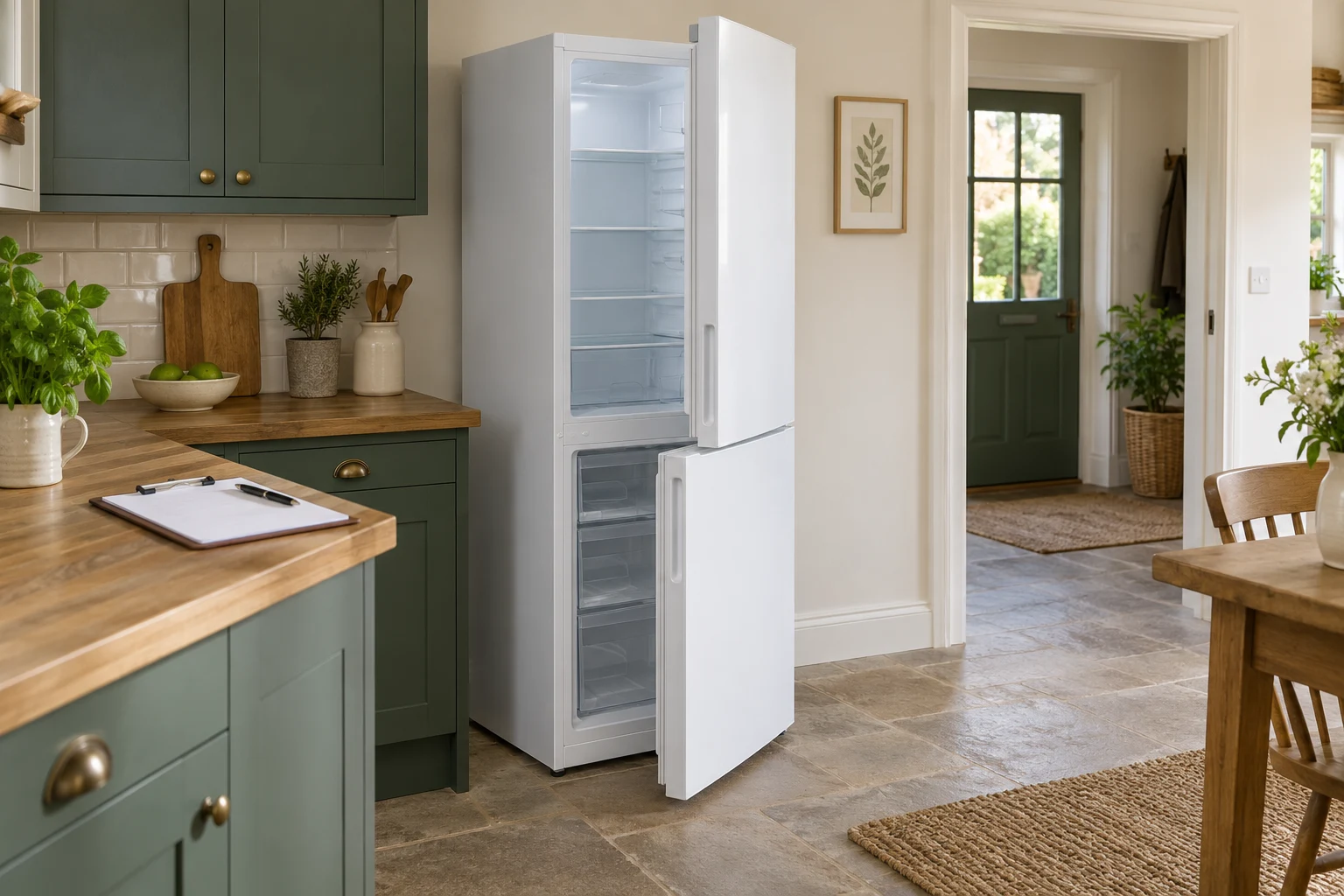
At the time of this review, the Leeds page carries a temporary notice that fridges and freezers cannot be accepted at either council transfer station, although those appliances still appear in its tariff information. The notice is a clear reason to reconfirm availability. A price row is not proof that a service is operating on the day you intend to visit.
Apply the same approach whenever a page contains both standing information and an operational update. Read the page from the top, check the relevant material section and look for current notices. If information appears inconsistent, ask the operator to clarify the actual service before loading or hiring equipment. Do not select the sentence that best fits the planned trip and ignore the rest.
Keep a dated note of your check. Record the page used, the material in question and any direct answer received. That note helps explain why a plan changed and gives a colleague a starting point if they take over the job. It does not guarantee that circumstances will remain unchanged until arrival.
Recheck when a visit is delayed or the load changes. An earlier confirmation for ordinary timber does not cover electrical equipment discovered later. Likewise, an instruction from a previous project may have been appropriate for different material or a different site. Keep the acceptance decision connected to the specific load.
If you are arranging a private collection instead, ask the collector to confirm its accepted scope and route. Do not infer its capacity from the council's temporary restriction, or assume it can accept an appliance immediately because it is a specialist business. The fridge-freezer disposal guide sets out the relevant enquiry questions.
Resolve account and vehicle arrangements before travelling
Leeds requires customers to register before using its transfer-station service and to keep account information current. The page also specifies vehicle categories, site rules and protective equipment requirements. Read those conditions for the planned visit and complete the required arrangements in advance; a registration enquiry should not be treated as an approved account until confirmed.
Prepare the information the operator requests through its official channel. Use the business and vehicle details that actually apply, and check whether a hired or replacement vehicle changes the arrangement. Do not send identity or vehicle documents to an unverified contact found in an unrelated advertisement. Use the contact route on the operator's current official page.
Keep vehicle acceptance separate from safe loading and legal operation. A site admitting a particular vehicle type does not establish that your load is within that vehicle's limits or suitably secured. Arrange the appropriate competent checks for the journey. This guide does not calculate a safe load or provide loading instructions from a photograph.
Tell the person making the journey which account and job references apply. Ensure they can identify the waste and answer reasonable questions about its origin. A driver sent with only an address may be unable to resolve an acceptance query. Provide the essential facts without including unnecessary customer or employee information.
If somebody else is delivering the load on your behalf, clarify their role and relevant authorisations. The waste-carrier checking guide explains why a name or registration claim needs to be checked against the actual business. Do not treat an approved receiving account as a substitute for the duties of the transporter.
Understand a minimum charge before using a tonne rate
A per-tonne rate does not necessarily mean a small load will cost a proportionate fraction of that rate. A tariff may also have a minimum charge, an item charge or another condition. Read the headings and notes together. Ask the operator how the current price applies to your particular material and quantity if the calculation is unclear.
For illustration only, suppose an imaginary tariff were £180 per tonne with a £50 minimum. A 0.10-tonne load would produce £18 from the tonne calculation, but the stated minimum would make the base charge £50. These numbers are invented to explain the arithmetic; they are not the Leeds tariff or a quotation for any service.
Do not reverse-engineer an actual tariff from an assumed minimum weight when the published minimum price is separately stated. Ask how the operator charges instead. Additional material, a different accepted category or mixed presentation may change the basis. Keep the calculation tied to the operator's confirmed treatment of the actual load.
Confirm whether the quoted or published figure includes VAT and any other applicable charges. The purpose is to establish the payable basis, not to guess a tax position from the appearance of a price list. This article does not claim a VAT treatment where the source does not make it clear. Retain the answer with your estimate.
A disposal tariff is also not the same as a full collection price. Self-delivery involves your own arrangements for loading, transport, time and access. A private collection quote may include some of those services as well as disposal. Compare the scope before deciding which route suits the job, using the quote comparison guide where helpful.
Compare self-delivery and collection using the same job
Start with one material inventory and one origin record. For self-delivery, list the tasks your business would undertake and the receiving arrangement that has been confirmed. For collection, state the same items, condition and access to the provider. This gives both options a common basis without pretending that they are identical services.
Record known costs separately from estimates. A confirmed vehicle-hire charge is different from an estimate of staff time, and both differ from an unconfirmed disposal charge. Label the source of each number. Avoid adding an invented “average waste cost” to make a comparison look complete when the actual category has not been accepted.
Consider the schedule as well as the arithmetic. A transfer-station journey needs a workable visit and contingency for operational changes. A collection needs confirmed availability and access at the premises. Neither route should be described as faster without evidence for the actual job. Ask what must happen before each option can proceed.
Identify the decision that would change the comparison. It might be a material requiring a separate route, a vehicle restriction or a collection position inside a building. Resolve those important uncertainties first. Refining an estimated fuel cost is less useful if the intended destination has not accepted the load at all.
Keep the selected option and its assumptions in the project record. If the load changes, revisit the decision rather than forcing the new circumstances into an old quote. A simple note that explains why self-delivery or collection was selected can save time when another manager reviews the job later.
Prepare the documentation and retain the result
The GOV.UK duty-of-care code explains the responsibility to describe and transfer waste appropriately. Determine the documentation relevant to your material and role before travelling. Hazardous waste has additional requirements; an ordinary non-hazardous record should not be used as a substitute where a different document is required.
For applicable non-hazardous movements, the business transfer-note guide helps organise the relevant information and retention. Keep the record tied to the actual load, destination and date. An estimate used for pricing should not silently replace a measured quantity or other information recorded during the transfer.
After the visit, reconcile the receipt or invoice with the material and job reference. Note any part not accepted and the next action for it. If a record contains an apparent error, raise it through the operator's process and keep the correction trail. Do not alter somebody else's document without an agreed basis.
Store the evidence somewhere another authorised person can retrieve it. A photo left only on a driver's phone is easily lost when staff or devices change. Use a consistent folder or system reference with access appropriate to the information. Keep the document useful for an operational or regulatory query without making it publicly accessible.
A fictional contractor's acceptance check
Imagine a contractor based in Leeds completing work at two separate properties. Before combining anything, the manager records each source address and asks the intended operator about the proposed loads. One project's material is ordinary described waste; the other includes an unidentified container that needs a specialist decision. The uncertain item stays outside the ordinary transfer-station plan.
The manager confirms the receiving arrangement and account details for the accepted load, checks the vehicle and current site instructions, and asks how the charge will be calculated. The driver receives the job reference and material description. After the visit, the manager files the actual transfer evidence and follows up the separate unresolved material.
This example is fictional and does not establish acceptance for a real load. It shows why origin, material and journey arrangements should be checked before the vehicle is filled. The process leaves uncertainty visible instead of turning a convenient destination into an assumed entitlement.
Use a departure check for the actual journey
Before the vehicle leaves, compare the plan with the load that is actually ready. Check that the source address and inventory still match, that the intended destination has been confirmed for those materials, and that the person travelling has the relevant reference and instructions. This is a coordination check; it does not replace competent vehicle, loading or material assessments.
Ask whether anything has changed since the enquiry. An extra item found during clean-up, a replacement vehicle or a different source property can invalidate an assumption used earlier. Refer the changed fact to the operator or appropriate adviser before departure. It is easier to resolve a question while the responsible people and source information are available than at the entrance to a receiving site.
Keep the accepted and unresolved material visibly distinct in the project record. Do not use the final departure check to pressure a driver into accepting responsibility for something the manager has not identified. Give the driver an escalation contact and authority to raise a mismatch rather than improvising a destination.
Plan the return information as well. Tell the person travelling where to save the receipt and how to report material that remains. A completed journey is not the same as a fully reconciled job if part of the load was refused or a record is missing. Assign the follow-up to a named person so the issue does not remain with whoever happens to find the vehicle keys next.
For repeated visits, keep the checklist short and specific. Reuse the structure, but confirm the facts for each journey. Repetition is useful for organisation; it is not evidence that the same acceptance conditions will always apply. A current load deserves a current check.
Prepare a useful Leeds trade-waste enquiry
Gather the source address, material inventory, quantity evidence, vehicle details if self-delivering, and the date constraints. Ask about acceptance first, then the applicable account, documentation and price arrangements. Use current official information and reconfirm any temporary restriction before relying on the route.
You can register with YWG and save collection details, photos and access information in a private listing draft. YWG is opening soon. Live collection booking and payment are not yet available. Whether you choose an accepted transfer-station visit or a confirmed collection, the useful outcome is a documented route that fits the actual waste and job.
Sources & editorial note
- Leeds City Council: transfer-station charges and acceptance
- GOV.UK business waste responsibilities
- Waste duty of care code
Leeds origin and registration checked; temporary fridge refusal overrides tariff availability. No VAT assumption. Fictional180/50minimum example not council tariff. Original departure/origin method. Primary sources reviewed 3 October 2026. YWG is opening soon. Live collection booking and payment are not yet available.
AI-assisted original editorial content, checked against the sources above. No professional qualification or firsthand YWS job experience is claimed.