
Television disposal: protect screens and check collection acceptance
Prepare a television disposal enquiry with screen condition, wall-mount preparation, accounts, collection acceptance and the actual carrying route.
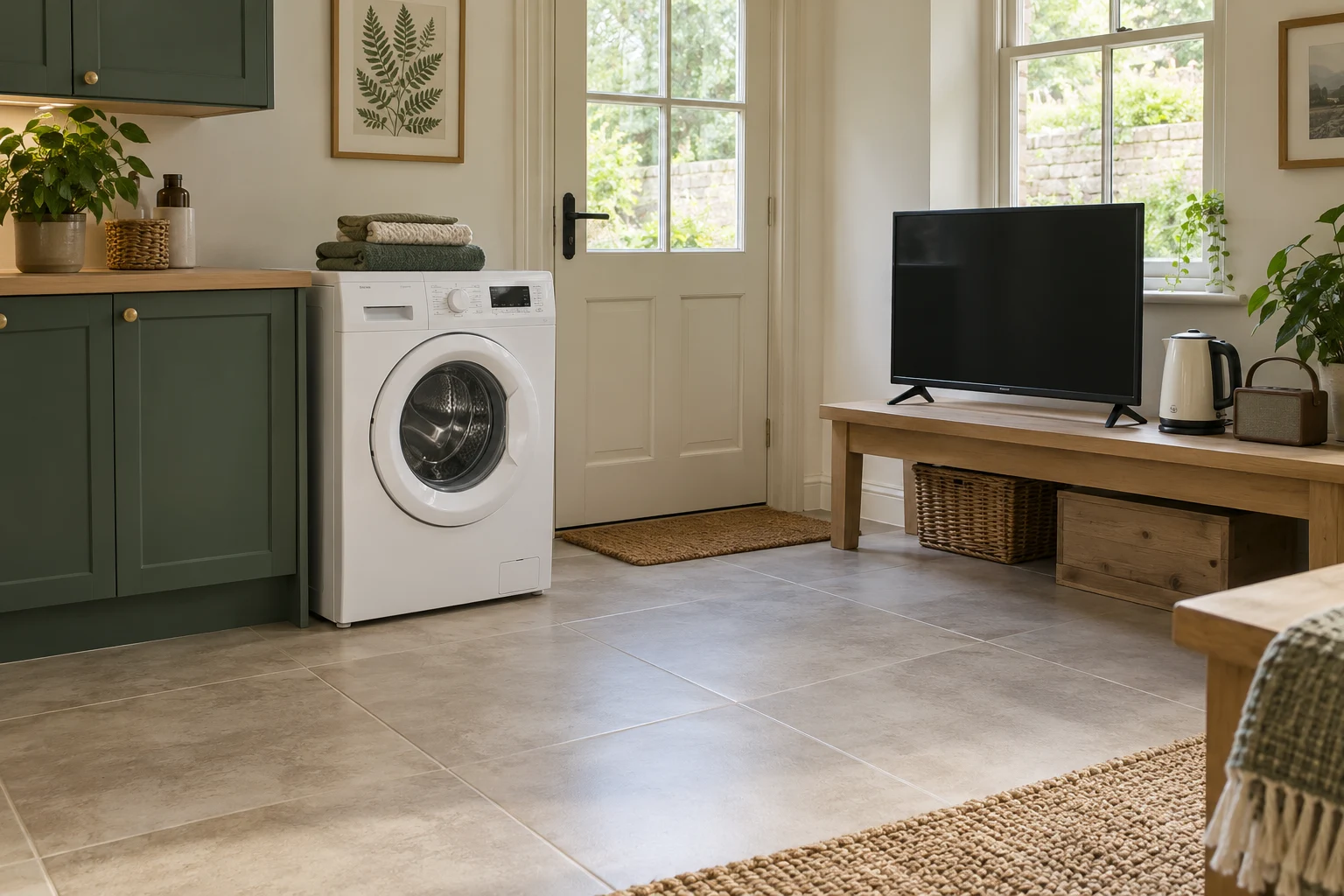
Television disposal begins with the actual screen, not a generic electrical item category. A working flat-screen on its stand, a wall-mounted television awaiting competent removal and a damaged older set can present different collection questions. Describe type, condition, present location and preparation responsibility before asking a retailer, council or private provider to accept it.
For households in Leeds, Bradford, Huddersfield, Wakefield and the wider West Yorkshire area, the useful plan has three parts: decide what is leaving, confirm an appropriate route and agree how it becomes ready for handover. This guide offers an original screen-condition and access record. It does not explain dismantling, wall-mount removal, repair or damaged-screen treatment, and it does not promise universal collection acceptance.
Identify the television without opening it
Record whether it is a flat-screen, an older bulky set or an uncertain type. Add make and model information if it is visible through normal access. Approximate dimensions can help a provider understand the item, but identify the basis. Do not move a heavy set or take off its cover simply to read a label for a quote.
Distinguish the television from its stand, wall bracket, remote control and other equipment. A receiver box, games console or soundbar may have a separate owner, data question or intended route. An instruction to take the TV should not automatically include everything on the surrounding furniture. Ask the household to decide which items leave before making the collection list.
Note whether the television is freestanding, fixed to a wall, already removed through an appropriate arrangement or awaiting a preparation decision. The provider's work boundary depends on this status. A photo of the screen front does not show whether removal involves a fixture or competent preparation that has not been agreed in the offer.
Describe visible condition before choosing the route
State whether the screen appears intact, visibly cracked or affected by another concern. Describe loose or damaged external parts and what is known about operation without testing an uncertain set. Do not describe it as harmless because it no longer switches on. The receiver needs the actual condition to determine whether its usual route and instructions apply.
If damage or unknown condition creates a handling question, contact the appropriate service for instructions before transport or ordinary collection. This guide gives no procedure for containing fragments, opening the casing or separating materials. A condition report can accurately say that the item needs review. It should not turn the householder into a technical assessor of a damaged television.
Keep the initial acceptance question clear: can this service receive this type of television in this condition through the proposed arrangement? A listed category such as TVs is a starting point, not confirmation of every damaged item. Ask about the exception before attendance rather than expect the crew to resolve it beside a vehicle with other booked material.
Protect the decision as well as the screen
Confirm the owner's instruction before release. A television may belong to a relative, remain part of a furnished property or be waiting for another household member's decision. If permission is unresolved, mark it pending rather than count it in a disposal quote. Physical presence in a room does not prove that the person arranging a collection can dispose of it.
Separate retained accessories and equipment from the approved list. A remote or stand may be included with the set, while an external device may stay. Record those choices so the person meeting the collector can identify them. A clear handover avoids asking the crew to judge which cables or devices have value to the household.
If reuse is proposed, obtain a confirmed recipient and describe condition honestly. An expression of interest does not establish acceptance, and a working screen is not proof of a complete suitability assessment. Agree the recipient's requirements and transport arrangements before counting reuse as the chosen route. Keep a fallback decision visible if the enquiry remains speculative.
Plan wall-mounted sets as a separate preparation task
Tell the provider if the television is fixed to a bracket or connected through a fitted arrangement. Ask whether its service includes assessed removal or starts with a unit already prepared by the appropriate competent person. Do not assume that a waste collection crew is engaged to work on walls, fittings or installed electrical arrangements because it accepts televisions.
Decide what happens to the bracket, associated fixtures and external equipment through the household's authorised process. A bracket may remain for another set or require a separate removal task. Keep that decision in the scope rather than instructing the provider to strip the whole area. This article does not give a bracket-release technique or claim that every mount works in the same way.
Coordinate the preparation date and collection date. The television is not ready merely because the room has been booked for a visit. If the competent preparation is delayed, tell the collector before attendance and review the arrangement. A clear readiness handover is more useful than expecting somebody on the day to improvise the missing task.
Check retailer take-back when buying a replacement
GOV.UK's consumer electrical recycling guidance describes like-for-like retailer take-back when a new electrical product is bought, including online purchases. Ask the television retailer how that arrangement works for your old set. The acceptance route and transport service need practical confirmation, not an assumption drawn from a recycling symbol on the order page.
The retailer responsibilities guidance distinguishes free in-store take-back from possible home transport charges. Do not read free acceptance as a promise of free wall removal, upstairs carrying or attendance at a particular delivery time. Ask what the retailer includes, the readiness it expects and how the old television must be handed over.
If the retailer offers a delivery-linked service, confirm the sequence and what happens when the old item is not ready. A new screen arriving does not establish that the wall-mounted one has been removed competently or accepted in a damaged condition. Keep the response with the order and investigate another route if the complete arrangement does not fit the household.
Read council collection conditions for the actual set
Leeds' unwanted-items collection page lists TVs among electrical items. Check current eligibility, presentation and operational notices before considering a booking. Do not interpret that list as acceptance of every condition or an offer to remove a set from a wall. Describe the proposed job if the standard instructions do not answer those questions.
Kirklees' bulky household page also lists TVs and small electrical items. Check the Kirklees conditions separately, including the collection position and household eligibility. A familiar item name does not remove the need to describe a heavy older set, visible damage or an unresolved access task.
For Bradford, Wakefield or Calderdale, consult the relevant authority's current information rather than reuse another council's booking assumptions. A household recycling centre may be another option to investigate, with material acceptance, resident access and transport checked. The household planning guide helps compare these routes without implying one combined Yorkshire service.
Keep televisions within an appropriate electrical route
The consumer guidance explains that unwanted electrical products belong at an appropriate collection point rather than in household rubbish. A television should not disappear into an anonymous mixed bag or be described only as loose plastic and metal. Keep the whole item identifiable for the provider's acceptance assessment and follow its confirmed presentation instructions.
Do not take the screen apart, remove internal components or attempt to reduce its size to match a small-electrical category. The proposed receiver should assess the actual set and condition. A mixed clearance can still contain separately described electrical items, but a general offer to take rubbish does not establish that the television's route has been confirmed.
If other devices are leaving too, give each an entry with its own condition and questions. Our small electrical recycling guide explains retailer and collection distinctions. A small radio and a large television may have different practical arrangements even when both are unwanted electrical equipment.
Address accounts and stored information separately
A connected television or associated device may hold accounts, viewing information or other data. Identify that question before reuse or disposal and refer it to the appropriate household member or competent support. An electrical collection should not be assumed to include account removal or a data destruction service. Equipment handover and information protection are different decisions.
Use the actual device guidance or suitable support rather than assume that unplugging it removes stored records. This article does not guarantee that a reset, logout or app deletion clears every item of information. The office clearance guide explains the broader separation of authorised release and data-related evidence, without claiming a household television wiping service.
Keep account screens and personal information out of quote photographs. The provider needs the item type, condition and access description, not passwords or login access. If a data decision is unresolved, mark the set pending while other accepted items are considered. A collection date should not silently override the owner's information decision.
Map the carrying route without moving the television
Record the present room, floor level, doorways, stairs, turns and intended handover point. Include shared entrances, lift arrangements or loading constraints that affect the task. An older bulky set upstairs needs a different scope from an intact flat-screen already at an approved ground-level point. Give that distinction to every provider asked to quote.
Supply available dimensions with their basis, but do not guarantee fit from one doorway measurement. Equipment shape, turning space and movement method need review together. If the provider needs a survey, discuss it before insisting on an instant price. The household's role is to describe the current situation accurately, without performing an unassessed movement test.
The HSE handling guidance discusses assessment and risk reduction rather than one universal safe weight. Do not assume friends can carry a heavy television because a collection starts outside. State when the household cannot provide an assumed carrying task and ask about a suitable assessed service boundary.
Photograph the condition and route clearly
Take a whole-set image in its present position and selected detail images of visible condition or an accessible model label. Do not touch damaged areas or remove panels to improve the picture. Include the relevant route separately. A close image of the screen cannot show a staircase, while a doorway photograph cannot describe the set's condition.
Use a dated photo set matched to the item list. Remove personal paperwork and people from the frame where practical, and avoid displaying account information. Our quote photography guide explains how overview, detail and access photographs support an enquiry. They do not certify safety or guarantee acceptance from a distance.
Tell the provider if condition or location changes after the photos. An old image of an intact freestanding set cannot describe a later damaged or differently located one. Keep the final confirmation tied to the current scope, rather than rely on the first photo to preserve a headline quote that no longer matches the job.
Compare complete collection offers
Ask each offer to describe item acceptance, collection position, carrying responsibility, preparation boundary and exclusions. Confirm VAT wording, timing and the process for a changed condition or additional task. A kerbside offer and removal from an upstairs room are different services. The quote comparison guide helps evaluate those assumptions before comparing totals.
For a private route, check the collector and receiving arrangements appropriate to the actual television. GOV.UK's household disposal guidance explains authorised transfer, and our carrier checking guide gives practical detail. A transport registration does not, by itself, confirm acceptance of a damaged set or its final destination.
There is no invented television disposal tariff, scrap-value promise or recycling percentage in this article. A useful commercial offer rests on the real item and scope. Ask for clear answers where information is uncertain, and avoid accepting a general assurance to take anything as a substitute for the condition-specific route discussed in the enquiry.
A fictional screen-condition decision
Imagine a household in Bradford replacing a wall-mounted television. The old set appears intact, but competent removal and the account decision remain unresolved. Its first enquiry calls the item ready for collection. The household corrects the status before asking a provider to confirm the scope. These details are fictional, not an actual assessed screen or YWS customer case.
The retailer explains its take-back arrangement while another provider discusses removal from the eventual prepared position. The household keeps those scopes distinct and arranges the appropriate preparation. If the set's condition changes, the acceptance question is reopened rather than treating the original offer as permission for any later state.
At handover, the available contact identifies the authorised screen, included remote and retained external equipment. The final record states what left and what remains pending. The method does not prove a particular recycling outcome or that every stored record has been removed. It helps the household align its decisions with a confirmed, appropriate collection arrangement.
Prepare your television enquiry
Use a screen release record if several people are helping. It can state the authorised set, present condition, preparation status, included accessories, retained devices and accepted handover point. Keep sensitive information and access codes within an appropriate private communication process. The record should allow the collection-day contact to identify the agreed television without deciding which neighbouring equipment is unwanted. That matters when a replacement set or another family member's device is already in the same room.
Before confirming attendance, review the record against the provider's offer. Has it described the current location, the visible condition and the preparation that must be completed? Is the agreed handover position available at the proposed time? A missing answer should become a question to resolve. Do not treat an accepted electrical category as agreement to unmentioned wall work, uncertain damage or carrying through a shared building whose access has not been arranged.
Coordinate the screen swap without confusing the old and new sets
Record when the old television can leave and when the replacement will be delivered or installed. The household may want to confirm the new arrangement before releasing the existing set. State that dependency in the collection enquiry. A supplier's estimated delivery date is not the same as a completed installation or a confirmed collection slot, so keep the dates and responsible contacts separate until the actual sequence is agreed.
If the same room contains both screens, make the authorised item unmistakable in the inventory and handover. Include model information or another clear description without publishing personal serial records unnecessarily. Do not rely only on size or colour when the sets look similar. A helper should have an instruction identifying what leaves and what remains, rather than be expected to infer the decision from packaging beside the replacement.
Ask about changes before a timing problem occurs. If delivery slips or preparation is not complete, use the provider's agreed notice and rescheduling process. Do not move the old screen to an unapproved outside position solely to preserve a collection date. A reviewed handover arrangement is more useful than a rushed physical change that leaves the provider with a different condition or access task from the one it accepted.
Check the final exception list
After handover, record the television and accessories that left and any equipment still pending. If part of the scope was declined, give it a next action rather than mark the whole electrical clear-out complete. Keep the provider confirmation with the current inventory. This closes the practical household task honestly, without claiming that a picture of an empty TV stand proves downstream recycling, safe treatment or completion of a separate information-protection decision.
Gather the set type, visible condition, ownership decision, present location, preparation status, data question, photographs and carrying route. State exclusions clearly and make unresolved issues visible before confirmation. The YWG dashboard lets you save collection details, photographs and access information in a private listing draft. It does not confirm a live TV collection, wall-removal service, damaged-screen capability or payment. Obtain explicit acceptance of the actual item and service boundary before treating any enquiry as booked.
Sources & editorial note
- GOV.UK: consumer electrical waste recycling
- GOV.UK: electrical retailer take-back responsibilities
- Leeds unwanted items collection
- Kirklees bulky household waste
- HSE: manual handling at work
- GOV.UK household waste responsibilities
Official current source snapshots reviewed 3 October 2026. Screen-condition record, mount preparation versus collection boundary, old/new screen release identity and final exception check. Damaged set acceptance not assumed; no unsafe handling or treatment procedures. Original methods and explicitly fictional example, no invented price, licence, coverage, treatment outcome or live service. AI assets visually inspected. Parent build/browser/publication review pending.
AI-assisted original editorial content, checked against the sources above. No professional qualification or firsthand YWS job experience is claimed.