Garden waste collection: branches, grass and clean green material
Prepare garden waste collection in West Yorkshire: separate green material from soil and timber, check local bin rules, record quantity and agree the collection scope.
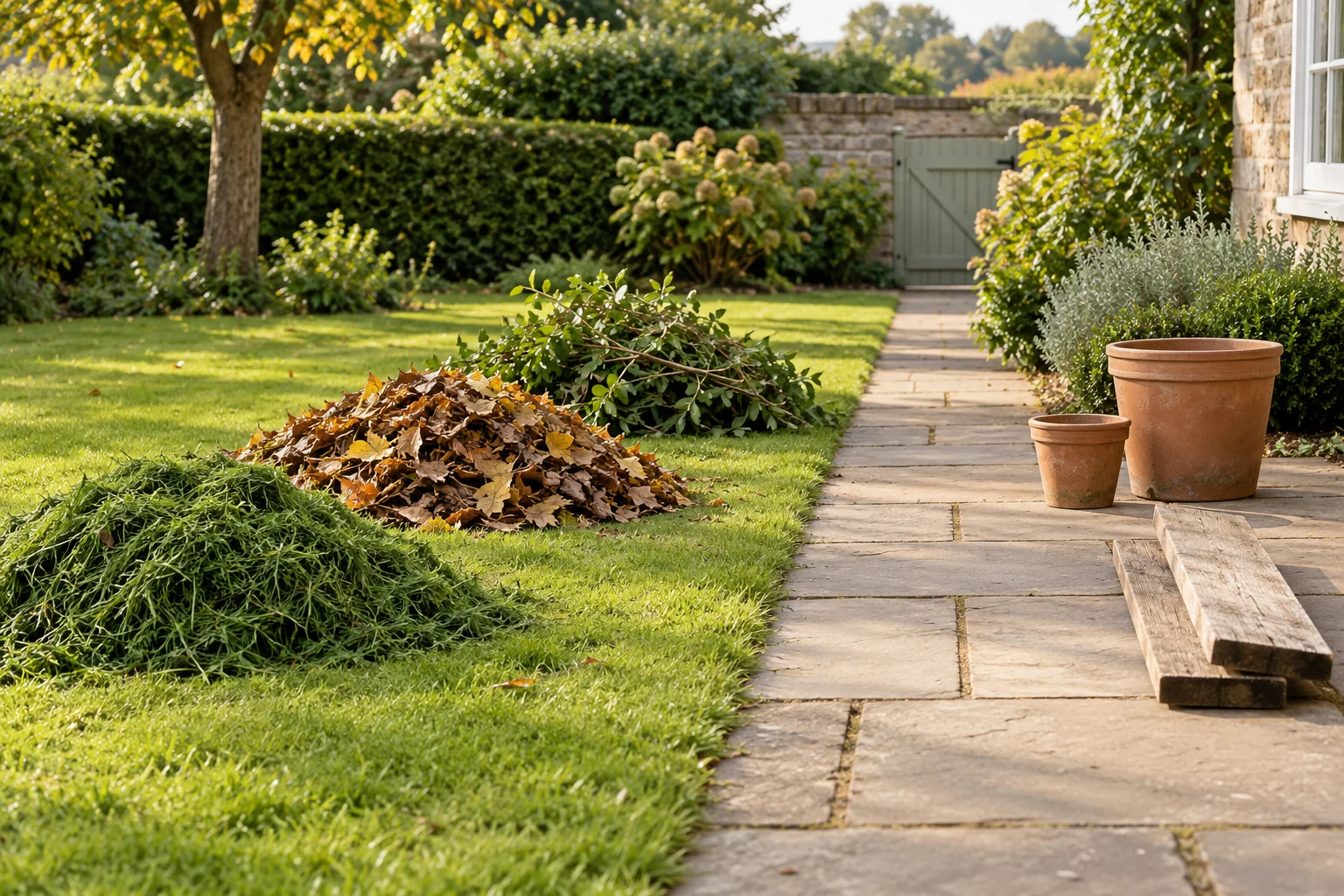
A garden tidy-up can produce several different disposal jobs at once. Grass cuttings, hedge trimmings and fallen leaves may sit beside broken pots, old fence panels and soil from a new border. Calling everything “garden waste” is convenient, but it does not tell a collection service what it is accepting. For households across West Yorkshire, the better starting point is to describe the materials separately and choose a suitable route for each.
This guide explains how to create a practical material map, check council instructions and prepare an accurate private collection request. It focuses on ordinary household gardening, with clear boundaries around uncertain materials. It does not provide invasive-plant treatment instructions, a regional collection tariff or a promise that every load will become compost. Your chosen service must confirm acceptance, presentation and access for the actual material at your address.
Begin with the job you did, not the name of the pile
Think back to what created the waste. Mowing the lawn, pruning an ordinary hedge and gathering leaves produce a different request from replacing a patio or dismantling garden furniture. If several jobs happened over the same weekend, describe them separately. This helps prevent a collection being assessed as a clean green load when it also contains manufactured items or heavy landscaping material.
A useful first message might say that you have grass cuttings and hedge trimmings, with separate pots and timber that also need a disposal route. It should not hide the additional materials inside the word “mixed”. A provider can ask follow-up questions about a clear list. They cannot reliably assess a pile whose contents have been described only as general garden rubbish.
You do not need to identify a legal waste code yourself. Ordinary descriptions, photographs and an honest account of uncertainty are more useful at this stage. If you do not know what a material or plant is, say so. A booking form should leave room for that uncertainty rather than forcing you to select a confident classification you cannot support.
Create a three-part material map
For planning purposes, divide the request into three groups. The first is ordinary green material that your selected route explicitly accepts. The second is separate landscaping or manufactured material, such as soil, rubble, pots or timber. The third is anything uncertain that needs assessment before it can be included. These are practical enquiry groups, not official waste classifications or instructions to handle suspect material.
Record what you can safely see without disturbing a questionable pile. If materials have already been combined, tell the provider that they are mixed and explain the known contents. Do not describe the load as separated merely because that would make the quote easier. Nor should you dig through unknown material to satisfy a form. Acceptance needs to reflect the condition of the load that will actually be handed over.
Where ordinary materials can be kept apart safely during the gardening job, doing so makes later decisions easier. A clearly described group of leaves is different from leaves covering stones, plastic ties and broken pots. Keep additional items visible in the inventory. The aim is to prevent misunderstandings about scope and destination, rather than to make the garden look organised for a photograph.
Check the exact council service for your address
A brown bin does not have one universal set of rules across West Yorkshire. Check the current council page for your address and the service you use. Leeds, Bradford, Kirklees, Calderdale and Wakefield are separate authorities. Even within one council area, a trial or particular collection arrangement can change the instructions applying to a household. Bin colour alone is not a reliable acceptance guide.
The standard Leeds garden-bin page lists ordinary grass, leaves and hedge material, with branches limited to no more than 3 cm thick. It requires loose material rather than plastic bags and excludes soil, compost and rubble, among other items. Read the full current list before presenting waste. This is a specific service rule, not a size threshold for every collector.
The Kirklees brown-bin page specifies small branches under 4 inches in diameter and also requires loose material without plastic bags. Its exclusions include soil, turf, rubble, pots and ties. The branch instruction differs from Leeds. Do not copy whichever limit suits your pile and assume your own council or a private business must accept it.
These examples show why an address and chosen route matter more than a generic promise to collect garden waste. Check collection dates, service eligibility and presentation requirements separately from the material list. An accepted material may still be presented incorrectly or offered through a service you are not eligible to use. Resolve those questions before deciding that the council route is unavailable or unsuitable.
Keep the Leeds food-waste trial in context
Food-waste instructions are changing in some places, so older advice needs care. Leeds' combined food and garden waste page describes a 2026 trial for notified households in the Wetherby area. Participating households receive specific instructions and a start date. That does not mean every Leeds brown bin accepts food, or that a household outside the trial should adopt its arrangements.
Check your own notification and current address-specific service. If you have trial instructions, follow those rather than borrowing a neighbour's summary of the standard service. If you have not been included, do not infer eligibility simply because you live near one of the named places. A guide can explain the distinction, but the council's household instructions determine the actual presentation arrangement.
For a private garden collection request, describe any food or other material separately instead of assuming it belongs with green waste. A council trial is not evidence that another provider accepts the same mixture. Keep the request specific: what material is present, what service is proposed, and what has that service confirmed? This avoids turning a local service change into an unsupported general rule.
Separate soil and hard landscaping from green material
Removing a border, lifting turf or replacing paving can leave a pile that looks like part of the garden clearance but has different contents. List soil, turf, stones, concrete or paving separately from grass and leaves. Do not conceal them beneath green material or describe them as a small incidental addition when they form a substantial part of the job.
Tell the provider whether the material is loose, already in containers or combined with something else. Give known container counts and approximate dimensions if you can do so safely. Avoid converting a photograph into a precise weight or assuming every bag has the same capacity. A half-filled small bag and a full large container are not equivalent measures simply because both count as one item.
If the material's history is unclear or you suspect contamination, explain that before choosing a route. This guide does not tell you how to test soil or classify a potentially contaminated load. The appropriate next step is assessment by a suitable service. An ordinary garden-waste booking should not quietly become a specialist disposal request without somebody reviewing the change.
Give manufactured garden items their own entries
Garden furniture, planters, fencing, artificial turf, packaging and timber are not interchangeable with fresh plant material. Describe each item and its visible condition. Say whether it is intact or already dismantled, without undertaking unsafe dismantling just to make it fit an advertised category. The provider needs to know the actual item, not the smaller item you hope it might become.
For timber, explain what it came from if you know: a fence panel, shed, pallet or other manufactured item. Do not label painted or treated wood as clean green material. A provider may have different acceptance arrangements for different types of wood. Ask rather than assuming that anything once grown as a tree belongs in the same route as fresh hedge clippings.
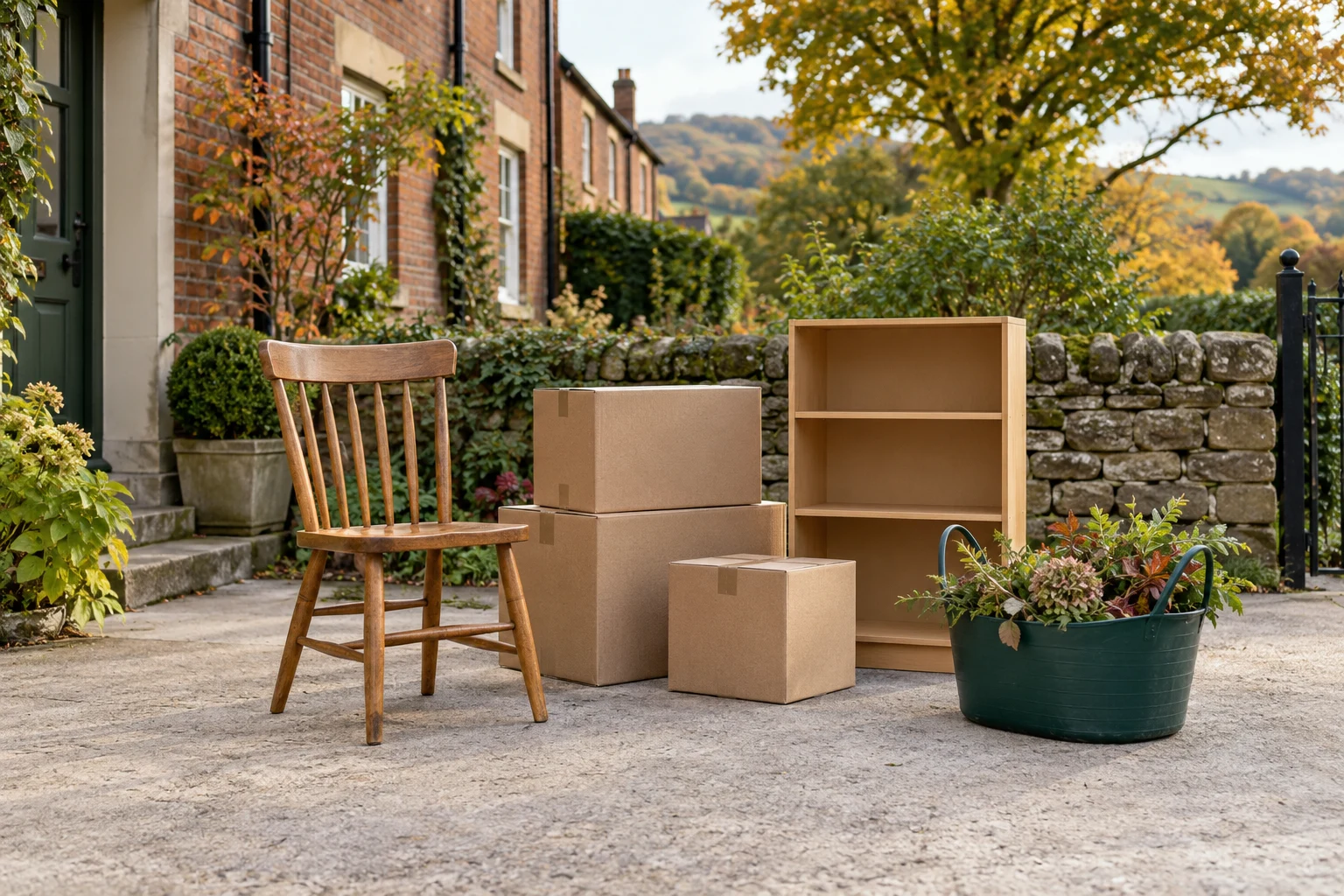
For pots and containers, state the material if it is obvious and whether they contain soil or other contents. Keep packaging and plant ties in the request where they are part of the waste. This is particularly useful when a photograph shows a mixture of garden equipment and green material. Mark what is staying as well as what is leaving, so the proposed collection has clear boundaries.
Pause when plant identity or acceptance is uncertain
Council garden-bin lists exclude particular plants. Read the chosen service's current exclusions and disclose anything that may need specialist advice. Do not assume that all weeds can be handled through an ordinary green route. Equally, do not use a general article or an automated photograph result as a definitive identification of an unfamiliar plant.
If there is a concern about a plant or material, pause the ordinary collection request and seek appropriate assessment. This guide does not provide cutting, chemical treatment or transport instructions for invasive plants. Do not mix suspect material with a known ordinary load in the hope that it will be accepted unnoticed. Give the provider the concern explicitly and wait for a suitable arrangement.
The same principle applies to unknown containers, chemicals or other unexpected items found during a clearance. Describe the concern without opening, emptying or investigating something unsafe. The collection enquiry should have a way to hold those items outside the ordinary scope. A confirmed route for grass cuttings does not establish a route for everything discovered behind the shed.
Record quantity without pretending to know the weight
Choose a description another person can understand. For a loose pile, give approximate length, width and height if visible and safely measurable. For bags or bins, give the known count, their approximate size and whether they are full. Say when the estimate includes empty space or when the material is spread across several locations. This makes the description more useful than an unsupported tonnage.
Mention whether the waste will remain loose or needs an agreed container arrangement. Ask the selected service what it requires before repacking. Packaging can affect access, acceptance and the work involved. Do not compact material or fill containers beyond your ability to handle them because you want the request to look smaller. A compact description should not conceal an awkward or heavy collection.
Update the quantity record if more gardening is planned before the appointment. A quote for today's pile may not include tomorrow's additional work. Either complete the agreed preparation first or clearly explain the expected change and ask how it will be assessed. A final photograph or short update can help the provider confirm that the collection still matches the original scope.
Match packaging to the route, not to a habit
Instructions can differ even between services operated by the same council. Leeds' separate booked garden collection is aimed at households without a brown-bin service and specifies double-bagged waste or appropriate manageable bundles under its published conditions. Existing brown-bin users cannot simply treat that booking as an overflow service. Check the current eligibility and instructions before applying.
That separate booking should not be confused with the standard brown bin's loose-material rule. Nor does either arrangement establish what a private provider wants. Ask the service you are actually using whether waste should be loose, bagged or otherwise presented, and what happens to any packaging. Avoid preparing a whole load based on a rule copied from a different collection route.
Keep presentation questions in the same record as acceptance. If someone else prepares the waste, share the confirmed instructions with them. This is especially helpful when a household member has used a different council service previously. Familiar habits can be sensible in one setting and unsuitable in another; the current agreement needs to take priority over a remembered routine.
Photograph contents and access as separate questions
Take an overview showing the known material groups and a closer view where it helps explain ordinary contents. Photograph manufactured items separately when they are also part of the request. Do not arrange a photograph to hide additional materials. A provider should be able to see the distinction between the green load and the other items needing their own acceptance decision.
Add an access view showing the route from the waste to the agreed collection point, without revealing unnecessary personal details. Mention gates, steps, narrow side passages and shared entrances. Do not enter an unsafe area or disturb questionable material for a better image. Our photo quotation guide explains how overview, detail and access images support a clear request.
Photographs should be accompanied by words. State what you know, what you estimate and what remains uncertain. Images cannot reliably establish every plant identity, chemical treatment or hidden item. A sensible quotation workflow uses them to ask better questions rather than promising that a photograph automatically proves the load is accepted or fixes its final price.
Compare the complete work, including access
Ask what the proposed collection includes: loading from the present location, carrying through the access route, agreed material groups and any required preparation. A collection from the front of a property is different from work involving several trips through a narrow passage. Explain that difference before accepting a price, especially if you cannot present the waste at the provider's preferred point yourself.
Use the same material map when comparing offers. Our quote comparison guide helps you identify differences in scope rather than choosing only by the headline amount. This article supplies no invented West Yorkshire average, disposal-site charge presented as a home collection price, or approved YWS garden tariff. Request an offer for your actual materials and handling requirements.
Check the identity of a private waste business through the appropriate official route. Our carrier-check guide explains how to match identities and record the result. Keep that check alongside the provider's acceptance confirmation. A registration search and a material assessment answer different questions, and neither should quietly substitute for the other.
A fictional garden weekend with two distinct loads
Imagine a household mowing a lawn and trimming an ordinary hedge while also replacing a small paved area. This is a fictional planning example, not a completed YWS job. The household first describes everything as garden waste. Their material map then separates the known grass and hedge material from paving, soil, broken pots and old timber that require different acceptance questions.
They check their own council service and discover that its green route does not cover the entire weekend's waste. Instead of squeezing additional items into that description, they request separate acceptance information. Their photographs show the groups and the side-gate access. The selected collection agreement lists exactly what is going, what must be prepared and what remains outside the booked scope.
The benefit is an accurate decision before arrival. The provider is assessing the actual work, and the household can choose suitable routes for the remaining items. There is no fictional saving figure or guaranteed composting outcome. The improvement comes from avoiding the assumption that one garden project necessarily creates one uniform waste load.
Finish with a route and handover record
For a tidy-up covering several parts of the garden, give each material group a location reference in your notes, such as front hedge or rear border. Link that reference to its photograph and confirmed route. This helps the collection contact recognise which group the provider accepted without relying on an instruction to take the pile by the gate. If another gardening task adds material later, record it as a new or changed group for review. The location reference explains the scope; it does not ask anyone to move, sort or inspect uncertain contents.
Before the appointment, confirm the material descriptions, quantity estimate, packaging, access and contact person. Tell the provider about changes and retain the booking information. If an item is not collected, establish why and agree its next route. Do not describe the whole clearance as complete while uncertain or excluded material remains without an arrangement.
You can register with YWG and save collection details, photos and access information in a private listing draft. YWG is opening soon. Live collection booking and payment are not yet available. For now, use this material map and our household planning guide to prepare a clear request. A reliable garden collection begins with an agreed load, not a hopeful label.
Sources & editorial note
- Leeds Council: standard garden-bin materials
- Kirklees Council: brown-bin accepted and excluded materials
- Leeds Council: separate garden collection eligibility and presentation
- Leeds Council: notified household food and garden waste trial
Current original council snapshots reviewed on 3 October 2026. Different branch thresholds, loose-bin versus booked-collection packaging, and notified Wetherby trial scope preserved. Practical three-group material map is not a legal classification. No invasive-plant treatment instructions, tariffs, measured weights, operational YWS coverage or composting guarantee.
AI-assisted original editorial content, checked against the sources above. No professional qualification or firsthand YWS job experience is claimed.