School furniture disposal: a planned collection specification
Prepare a school furniture collection specification with room inventories, disposal approval, safeguarding access, quotation checks and a controlled handover.
School furniture disposal works best when the school decides exactly what can leave, who can authorise it and how collectors can reach it without disrupting the site. A classroom full of old desks is a collection project, not simply an item count. Furniture may belong to different departments, some pieces may be retained, and the route through a school can change completely between a teaching day and a holiday period.
For a school in Leeds, Bradford, Wakefield, Huddersfield or Halifax, the useful starting point is a written collection specification. It should connect the inventory to the rooms, the approved access arrangements and the person responsible for handover. This guide offers an original planning method for that specification. It does not replace the school's safeguarding procedures, procurement requirements or competent assessment of unusual waste.
The objective is straightforward: the right items leave through an agreed route, the school retains suitable records and teaching spaces are handed back ready for their next use. There is no universal school clearance price or guaranteed holiday availability. Accurate information makes a meaningful quotation possible and reduces uncertainty for everyone involved.
Start with a release decision, not a pile
A school may have furniture that is unwanted in one room but useful in another. Before asking for disposal, give each group a decision: retain where it is, relocate within the school, offer for an approved reuse route, or release as waste. A fifth status, awaiting approval, is valuable when ownership or future use remains uncertain. It prevents an undecided cupboard from quietly entering the collection list.
Record who made each release decision. The person taking photographs may know the room well but may not have authority to dispose of the contents. A department head might approve classroom chairs while a trust estates team controls larger assets. Use the school's actual approval process rather than assuming that one signature covers every item on the premises.
Separate a reuse proposal from a confirmed recipient. An organisation expressing interest is not the same as a booked collection with accepted items. Note the recipient's acceptance conditions and the latest date by which the school needs a decision. If reuse cannot proceed, return the items to the approval process rather than automatically combining them with a waste load.
This release stage also helps staff understand the project. A clear list protects furniture intended for the next academic year and avoids arguments when similar desks are stored together. Keep the approved version available to the site team, not only in an email held by someone who will be away on collection day.
Build a room-by-room furniture register
Give each room or storage location a reference that makes sense to the school, such as an existing room number. Within it, group genuinely similar items: pupil desks, plain chairs, upholstered chairs, shelving or filing cabinets. Count the groups separately. Describing everything as classroom furniture makes it difficult to assess the load or recognise items requiring a different acceptance decision.
For each group record the approximate dimensions, visible condition, whether it is freestanding and whether the quantity is confirmed. A measured sample is useful for identical desks, but say when it represents a group. If five cabinets differ in size, list them individually. Do not treat a rough estimate taken through a crowded doorway as a final inventory.
Include the current room and the intended handover point. These can be different. A quote for removing furniture from upstairs classrooms is a different scope from collecting items already safely presented at an agreed ground-floor location. The specification should say who is responsible for moving them between those points and whether that work has been assessed and authorised.
Use three quantity fields if needed: seen, approved and ready. For example, a room might contain twenty chairs, eighteen approved for removal and fourteen currently accessible. Those figures reveal a preparation issue before a collector is asked to confirm a date. They also help explain why a photograph and a release list do not yet match.
Keep ordinary furniture separate from exceptional items
A furniture clearance often uncovers other materials: computer screens in a cupboard, cleaning products behind shelving, lamps, broken display boards or stored maintenance supplies. Record these discoveries outside the ordinary desk-and-chair list. Their presence does not mean that the selected furniture provider can accept them, nor that they belong in the same container.
Ask the responsible school staff to review unknown items. Do not open unidentified containers, disturb suspect materials or dismantle equipment to find out what is inside. A useful inventory entry can simply state that an item is excluded pending specialist assessment. That is a better description than an unsupported claim that everything in the room is harmless general waste.
Upholstered seating also deserves an explicit description rather than being hidden among plain chairs. Give photographs and available product information to the proposed provider and ask what route applies. This guide does not classify every school chair or advise cutting furniture apart. A provider's acceptance decision must cover the actual item, not only the label used on a booking form.
For a wider project involving computers and records, use the separate office clearance guide. It explains how a release register can distinguish furniture from data-bearing equipment and confidential material. An ordinary furniture collection should never be treated as permission to dispose of pupil records or school IT assets.
Understand the workplace context
School waste needs to be planned as an organisational responsibility. Defra's current England guidance expressly includes schools and other educational settings in workplace recycling. It requires separation of dry recyclables, food waste and residual waste before collection, with a later compliance date of 31 March 2027 for qualifying micro-firms. The detailed guidance explains the scope and employee calculation. A school should assess its actual organisation rather than infer eligibility from the number of people in one room. Read the workplace recycling guidance.
Those routine collection streams do not automatically provide a route for bulky furniture. A paper recycling contract may take cardboard packaging associated with a refit while excluding desks and cabinets. Ask the provider to identify precisely which parts of the project its service covers. Existing contracts and a one-off furniture collection should fit together without leaving an unallocated waste stream.
The official waste duty of care code explains responsibilities for preventing escape, transferring waste to authorised people and providing an accurate description. Build those checks into the school's approval and handover process. A carrier registration and a site's permission to receive particular waste are different checks; neither is a blanket acceptance promise for every school item.
Agree access with the school before seeking a date
A collector needs a practical access brief, but the school controls the site. Identify the gate to use, the staff contact who will meet the vehicle, the agreed arrival window and the areas that are permitted. Do not publish sensitive security details in an open quotation attachment. Share necessary operational instructions through the school's approved communication route.
School safeguarding and visitor procedures should be confirmed by the school's responsible lead. Do not assume that a holiday date removes them, or that a waste carrier's registration replaces site permission. Clarify what the provider and its staff must do on arrival and which school representative must remain available. This is a planning recommendation, not a claim about a single legal visitor procedure applying to all schools.
Think about simultaneous activities. Holiday clubs, examinations, cleaning contractors, deliveries and building works can occupy a site even when normal lessons have stopped. A gate that looks clear in a photograph may be unavailable during the proposed collection slot. Ask the site team to check the operational diary before a quotation is approved.
If the school has more than one entrance, use an annotated site sketch approved for sharing rather than relying on a postcode alone. State any known access restriction that the provider must assess, including gate width, overhead limits or a vehicle turnaround issue. Measurements and site observations should be identified as supplied information, not a guarantee that a particular vehicle will fit.
Describe the route from room to vehicle
The internal route can be the most important part of a furniture job. Record stairs, doors, corridors, changes in level and any lift proposed for use. A lift should not be assumed available merely because the building has one. Its suitability and the school's permission to use it need checking for the planned movement.
Distinguish removal from disassembly. If desks are assembled, state that condition. If an approved team will disassemble them before collection, describe what will be ready and when. Do not promise that a collector can dismantle fixed fixtures, disconnect equipment or remove wall-mounted units unless those activities are explicitly assessed and included in the agreed scope.
Give the provider enough information to plan the work safely. The HSE manual handling guidance sets out an approach to avoiding hazardous manual handling where possible, assessing unavoidable tasks and reducing the risk. A school manager should not translate that into a universal safe weight or ask staff to move awkward cabinets simply to make a quotation cheaper.
Mark responsibilities in ordinary language: school preparation, provider removal, separate contractor work or undecided. When a task is undecided, pause that part of the booking. A project becomes unreliable when everybody assumes that somebody else will bring the equipment, unlock the room or prepare the access route.
Use photographs that answer collection questions
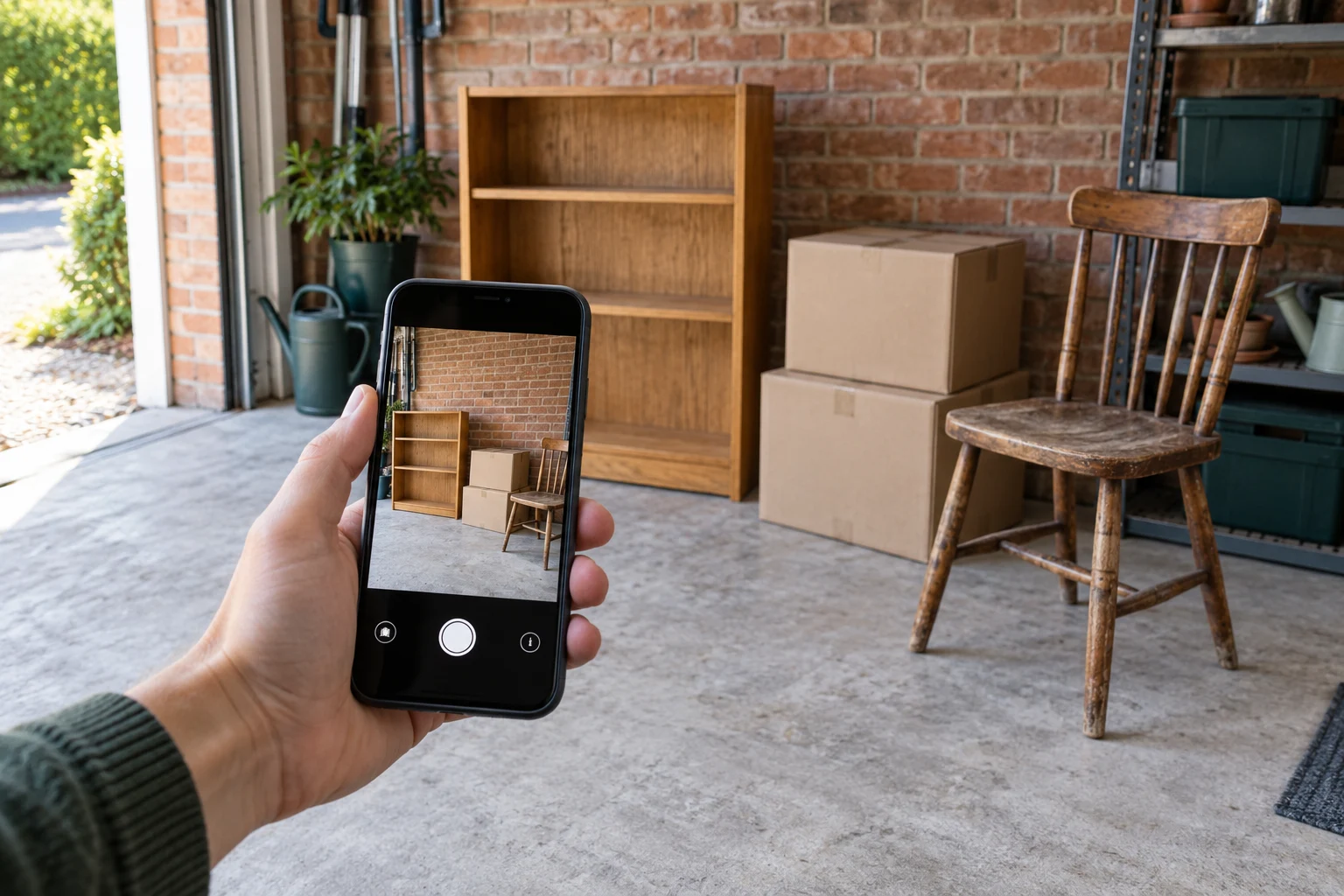
Photographs should show the furniture, the scale of the groups and relevant route constraints. One image of a desk is useful for identifying its design; another showing the full group helps verify quantity. Include different sizes and conditions rather than photographing only the tidiest example. Explain whether the photo shows all approved items or only a sample.
Avoid images containing pupils, personal information, visible class records or sensitive security arrangements. Move confidential paperwork out of the shot through the school's approved process, or frame the image so it is not captured. A quote needs evidence of the waste and access, not a visual record of school users or confidential documents.
Date the photo set and link it to the inventory version. If furniture is moved after the photographs, explain the new location. An old photo of an empty corridor does not establish that the collection route is clear today. The waste photography guide provides a useful structure for showing quantity and access without treating photographs as a final classification.
Ask whether a survey is needed where the photographs leave important questions unresolved. A large multi-floor school clearance may justify a different assessment from a few freestanding tables. There is no benefit in forcing complex removal into an instant price if the provider has not understood the scope.
Compare quotations against the same specification
Send the same approved inventory and access brief to each provider. Ask them to describe what is included, what is excluded and which assumptions affect the price. A quotation for furniture already presented outside cannot be directly compared with a quotation covering removal from several classrooms unless that difference is made explicit.
Useful questions include whether the price covers the listed quantity, the agreed location, the proposed time window and the identified material groups. Ask how a variation will be authorised if the school discovers additional items. Separate any optional work from the base scope so that the approver can see what they are actually buying.
Confirm the financial wording appropriate to the school's purchasing process, including VAT treatment, payment arrangements and cancellation terms. This article does not provide a market average for school clearance: building access, item type, load and handling can change the job materially. The quote comparison guide helps identify gaps without inventing a standard tariff.
Before committing, make sure the chosen provider has accepted the current specification rather than a previous draft. If the school adds upholstered seating or an upper-floor store after approval, request a reviewed scope. An email saying that the job is booked should refer to the version the school and provider actually agreed.
A fictional classroom-refit example
Imagine a fictional primary school preparing two classrooms for new furniture. The first room contains sixteen identical desks and thirty-two plain chairs. The second has six cupboards, two upholstered staff chairs and a locked cabinet containing files. These quantities are illustrative only; they are not a YWS job or a recommended load size.
The school initially asks for everything to be cleared during a holiday morning. Its release review changes the plan. Four desks will be retained, the files are excluded pending the school's records process, and the upholstered chairs require a separate acceptance decision. One cupboard belongs to a neighbouring department and remains on hold until its owner agrees.
The site manager then checks access. A holiday club uses the nearest entrance at the proposed time, so the school discusses a different window and gate with the provider. The cupboards are freestanding but remain upstairs. The quotation must cover that location unless an authorised preparation team changes it before handover.
The resulting specification is smaller and clearer than the first request. It records the approved furniture, excluded items, unresolved chair route and school contact. Its value is not an assumed discount. It gives the school a way to check that the quotation, collection and completion record describe the same work.
Control changes on collection day
Have the current release list ready when the provider arrives. The designated school contact should walk through the approved groups and excluded areas. If a staff member requests an extra cupboard, treat it as a proposed change rather than a verbal extension that bypasses the person authorised to approve costs and disposal.
Record variations before the affected items leave. The provider may need to reassess acceptance, handling or capacity, and the school may need another approval. If agreement cannot be reached, retain the disputed item safely under the school's arrangements and continue only with the agreed work where practical. A partial completion can be accurately recorded without pretending the entire project is finished.
Use a room checklist for handback. Note which groups were removed, which remain and why, and any access or site issue requiring attention. Completion photographs can help demonstrate the agreed areas have been addressed, but should follow the same privacy restrictions as quotation photos. They do not replace waste documentation or the school's own acceptance of the completed work.
Keep the handover record usable
Bring the quote, release list, changes and relevant waste documentation into one retrievable project record. For applicable non-hazardous transfers, the official transfer note guidance explains the required information and retaining copies for two years. Different rules can apply to other waste, so do not use one ordinary furniture form for an unassessed specialist load.
Store the records where the school can access them after a staff change. A procurement reference, collection date and building reference make retrieval easier than a vague folder called summer clear-out. Keep confidential school information out of documents shared beyond the people who need it. The original release register can remain an internal record while the provider receives the necessary collection scope.
After handback, compare the planned and actual quantities. A small difference may reveal a counting issue; a large one may show that the approval or room survey was incomplete. Use that learning for the next refit. A repeatable specification helps schools make better purchasing decisions without treating every clearance as the same job.
Prepare the next step
Before requesting school furniture disposal, settle three points: what is approved to leave, which materials need separate acceptance and how the provider will work within the school's site arrangements. Then gather the room inventory, route information and privacy-conscious photographs. That is the practical foundation for a quotation that a school can assess and a provider can fulfil.
You can register with YWG and save collection details, photos and access information in a private listing draft. It does not confirm an operational school collection, available date or payment service. When a live service is available, submit the specification for review and obtain explicit acceptance of the furniture, location and access arrangements before treating the job as booked.
Sources & editorial note
- Defra: workplace Simpler Recycling
- Waste duty of care code
- HSE: manual handling at work
- GOV.UK waste transfer notes
Original official sources and current collected snapshots checked 3 October 2026. Original practical workflow and labelled fictional example; no invented price, licence, coverage, outcome or operational YWS service. Parent publication/browser review pending.
AI-assisted original editorial content, checked against the sources above. No professional qualification or firsthand YWS job experience is claimed.