Mattress disposal: keeping bedding separate from other furniture
Plan mattress disposal in West Yorkshire with a clear bedding inventory, useful photographs, agreed access and replacement timing before arranging collection.
Replacing a mattress should be a straightforward improvement to your home. The awkward part often arrives afterwards: the new bed is in place, the old mattress is leaning against a wall, and nobody has agreed who will remove it. A collection described simply as “one bed” can also mean different things to different people. Does it include the mattress, the base, the frame, the headboard and everything stored underneath?
For households in West Yorkshire, a better starting point is to describe the bedding accurately before choosing a disposal route. Keep the mattress separate in your inventory from other furniture, check what the receiving service actually accepts, and agree the handover arrangements. This guide explains how to build that inventory, prepare useful photographs and coordinate a replacement without turning your hallway into a temporary storage depot. It does not promise a particular collection price, recycling outcome or service area.
Start with four separate questions about the bed
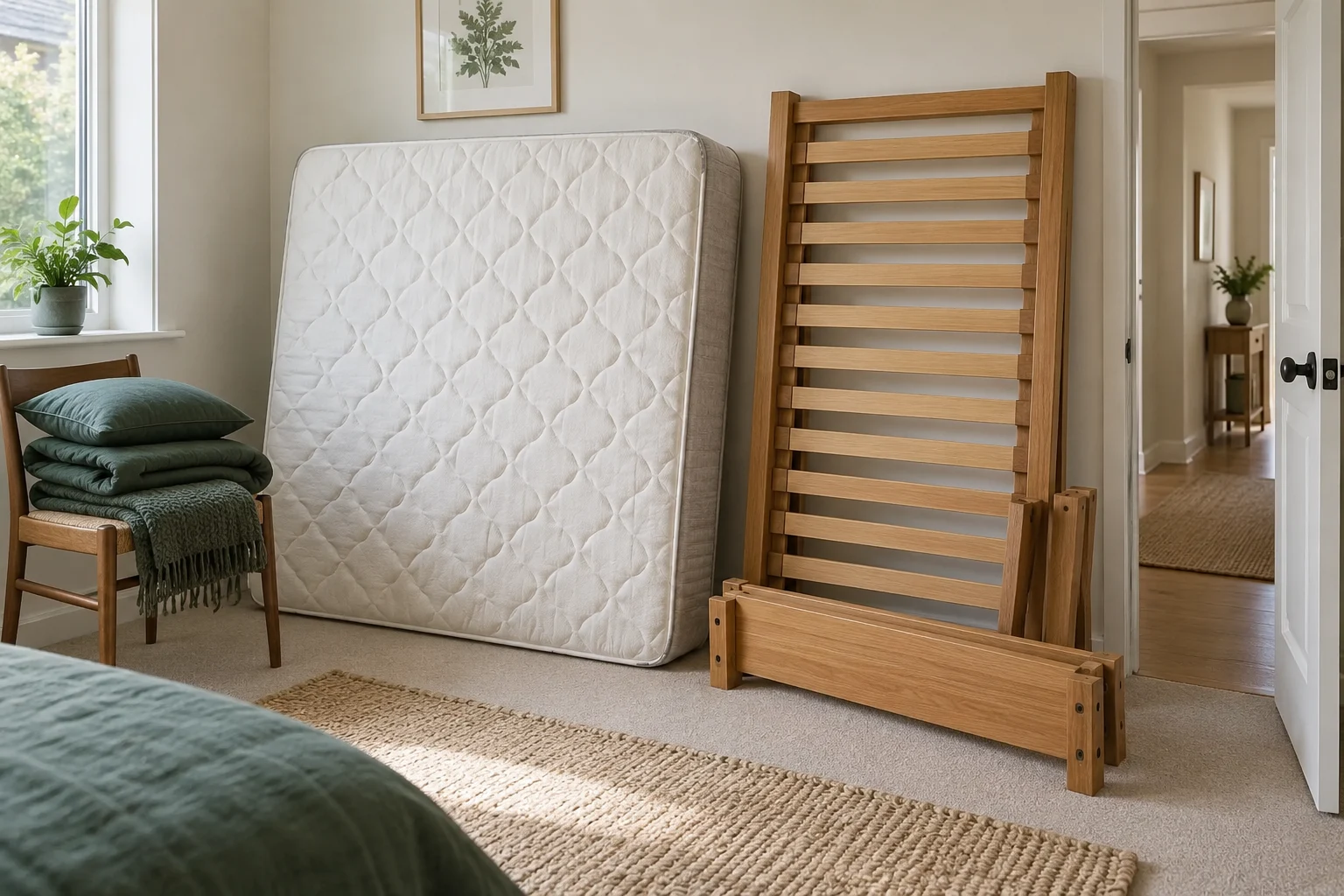
First, what is the item? A mattress is different from a divan base, a wooden frame or an upholstered headboard. Even when they were bought together, they may need separate entries in a collection request. Use ordinary descriptions that another person can understand: double mattress, two-part base, separate headboard, or dismantled frame with its slats. Include the number of each component rather than relying on the phrase “complete bed”.
Second, what is its condition? A worn mattress that you no longer want is a different proposition from an intact spare that someone has specifically agreed to take. Explain visible damage, staining, dampness or other concerns honestly. Do not describe an item as suitable for reuse simply because you would prefer that outcome. The person or organisation receiving it needs to decide whether it meets their requirements.
Third, where is it now? An item upstairs inside a flat is not ready for the same handover as an item already at an agreed accessible collection point. Record the floor, staircase, lift and any narrow passages. If you cannot move the mattress safely yourself, say so before booking. A collection agreement needs to make clear whether removal from inside is included or whether you must prepare an outside handover.
Fourth, who has authorised its removal? Your own mattress can usually be described without an ownership dispute. Bedding left in a rented room, a shared property or a furnished accommodation arrangement deserves a conversation first. Confirm what belongs to you and what the owner expects to remain. A convenient collection slot is not a reason to dispose of another person's possessions without agreement.
Why mattresses should not be labelled as sofas
Waste terminology can make a simple household task feel unnecessarily technical. You may have seen references to persistent organic pollutants, usually shortened to POPs, in discussions of old sofas and upholstered chairs. The Environment Agency's domestic seating guidance specifically excludes mattresses and beds from that particular seating scope. However, it also warns that items outside the scope can still contain POPs and need appropriate assessment and management.
The useful household conclusion is therefore quite narrow: tell the collector that the item is a mattress, rather than assuming every padded item is governed by the same seating instructions. This is not evidence that every mattress is free of pollutants, and it is not permission to use any disposal destination. Classification and treatment decisions belong with the suitably authorised people handling the waste, using the relevant information.
A council or commercial collector may group mattresses with other bulky items for booking, handling or charging purposes. That practical grouping does not establish that all the items have identical waste characteristics. If a form offers a mattress option, use it. If a provider's category is unclear, ask where the mattress belongs instead of selecting a sofa merely because both are large and upholstered.
Keep the household preparation proportionate. You do not need to cut the mattress open to identify its construction or guess a waste code from a photograph. Give the provider a clear item description and disclose relevant concerns. If you also have seating to remove, list it separately. This helps the provider decide what can be accepted and how the collection needs to be arranged.
Make a bedding inventory before requesting prices
An inventory need not be complicated. Write down each item on a separate line and then add its approximate dimensions, current location and visible condition. For example, you might list one mattress in the upstairs bedroom, one two-piece base beside it, and one separate headboard. If you are keeping the base, say that explicitly. Otherwise, a photograph of the whole bed can accidentally suggest that everything shown should be taken.
Count dismantled components carefully. Leeds Council's unwanted-items collection instructions explain that dismantled parts are counted individually and illustrate this with bed components. Check the current service rules before submitting an item list. Our Leeds bulky collection guide explains the wider choice between council and private routes; this guide concentrates on describing the bedding correctly.
Treat bedside furniture, packaging and bedroom clutter as additional items. A bag of old bedding or a broken bedside cabinet does not automatically become part of a mattress collection. Write “not included” beside things staying in the room, especially if they appear in the photographs. That small clarification helps stop a provider quoting for the wrong scope or arriving without enough capacity for an unmentioned addition.
The inventory also gives you a useful comparison document. Send the same item list to every service you approach, and update it if your plans change. If one quote includes the frame and another only includes the mattress, you are comparing different jobs. Resolve those differences before concentrating on the headline amount. Clear scope is usually more useful than a long message explaining how urgently you need the room back.
Photograph the mattress without disturbing it
Take an overview photograph showing the whole item as it stands, followed by a detail photograph if there is a condition issue the provider should understand. You can include a wider view of the access route without photographing private paperwork, family photographs or people unnecessarily. The aim is to explain the collection, not to share a complete record of your bedroom.
Photograph bed components separately when possible. If the base is in two sections, show both. If a frame has already been dismantled, show its organised parts without spreading them across a walkway. Say whether slats, fittings and the headboard are included. Do not take furniture apart just to obtain a better image if doing so would leave it unstable or create a handling problem.
Visible dimensions help, but you should not struggle to lift or balance the mattress to measure it. Give the familiar bed size and approximate dimensions if you know them. Tell the provider when a measurement is an estimate. A useful photograph plus an honest description is better than a precise-looking number guessed from an image. The collector can ask for more information where their assessment requires it.
Our waste photography guide covers the overview, detail and access approach in more depth. For a mattress request, the distinctive point is to show what belongs to this collection and what does not. A single image of a furnished room may leave too much open to interpretation, even when the mattress itself is clearly visible.
Choose a route that accepts your actual item
Possible routes include an agreed reuse recipient, a retailer's removal service, a council bulky collection, an appropriate household recycling centre or a private collection business. Availability and acceptance conditions differ. Start with the item and your circumstances rather than assuming one route will suit every household in Leeds, Bradford, Huddersfield, Halifax or Wakefield. Check the current instructions for the actual address and service you intend to use.
If you are considering reuse, ask whether the recipient accepts mattresses in the stated condition before offering delivery or moving it outside. Acceptance of other furniture does not establish acceptance of bedding. Be candid about any concerns and wait for an explicit agreement. Do not book a waste collection on the assumption that the provider will find a charity recipient after arrival.
If you are buying a replacement, ask the retailer what any removal service includes. Does it cover only the old mattress, or also the base? Must the old item be prepared in a particular way? Is removal on the delivery day or a separate visit? These are questions to settle with the retailer, not universal promises about how mattress deliveries work.
For a council route, read the item, eligibility and presentation instructions on the live council website. Kirklees' bulky household collection page lists mattresses specifically; use the current booking guidance rather than assuming an old furniture booking covers the same arrangement. For recycling-centre visits, check the receiving site's current acceptance and access conditions before loading a vehicle. A general recycling label does not guarantee every material is accepted through every entrance.
Plan replacement and removal as two appointments
The delivery and collection are separate commitments unless a provider has expressly combined them. Put both dates in your calendar and identify which one is actually confirmed. An enquiry, a provisional quote and a completed booking are different stages. Do not remove your existing mattress from use simply because you have requested a slot that has not yet been agreed.
Work backwards from the confirmed handover arrangements. If the collector requires an accessible item, decide who can prepare it and when that can safely happen. If the agreed service includes inside removal, keep the access route available instead. Allow for ordinary household needs: people sleeping in the room, school or work schedules, pets, and the delivery team needing space to bring in the replacement.
Avoid using the pavement or a shared escape route as a fallback storage area. Agree a suitable holding location and keep entrances, corridors and access routes clear. If there is no safe space for both mattresses, raise the timing problem before booking. It may be easier to change the appointment sequence than to improvise once a large item is blocking the doorway.
Weather also matters when a handover involves an outside point. Ask the receiving service how and when they want the item presented, including whether any protection is required. Do not assume every service wants the same wrapping or preparation. Keep the item identifiable and explain if its condition changes between the quote and collection, particularly if it becomes wet or damaged while waiting.
Agree handling responsibilities before collection day
A mattress can be awkward even when it is not especially heavy. It can bend, catch on corners and obscure the person carrying it. Stair turns, narrow doors and loose items on the floor can make a familiar route difficult. Describe those constraints in the request and ask the collector to confirm the handling arrangement. Do not assume one person arriving means they can safely complete any indoor removal.
You should not feel obliged to cut a mattress into pieces, expose springs or drag it downstairs to make a quote cheaper. If the item cannot be presented safely under the service's conditions, choose a suitable arrangement or discuss another route. An agreed collection should fit the real access situation. Household preparation is about clarity and readiness, not performing specialist dismantling or taking on a task beyond your ability.
If the property has shared access, explain parking restrictions, entry systems and the route from the agreed collection point to the vehicle. Ask who needs to be present and how the driver will contact them. Give useful directions without promising a parking space you cannot control. A small access note can prevent a large amount of confusion when a collector arrives at an unfamiliar building.
Compare the complete mattress collection agreement
Use the inventory to confirm the final scope in writing. Ask whether the price includes the stated mattress and additional components, the agreed handling, and the known access conditions. Ask how changes are dealt with if the item list or circumstances differ on arrival. Our quote comparison guide provides a broader method for comparing collection offers without hidden assumptions.
Be cautious about treating a disposal-site charge as the price of a collection from your home. Transport, staff, access and the receiving arrangements can make these different services. A published amount from another district also does not establish a fair quote for your address. This article therefore gives no invented regional average or YWS mattress tariff. Request a price for the actual work rather than a price for an undefined category.
When using a private waste business, check its identity and the relevant official registration route before handing over the waste. Our carrier-check guide explains how to match the proposed collector to an official record without making unsupported assumptions. Registration checks and acceptance arrangements answer different questions; both deserve attention when you are deciding who should take the item.
A household example with an avoidable misunderstanding
Imagine a household replacing a double mattress while keeping its existing base. This is a fictional planning example, not a completed YWS job. Their first message says “bed removal” and includes a photograph of the assembled bed. A collector reasonably asks whether the whole bed is going. The household then clarifies that only the mattress should leave and sends a photograph that identifies it separately.
They also explain that the mattress is upstairs and that they cannot prepare it at the entrance themselves. Instead of assuming the arrival team will solve this, they request confirmation of inside removal and describe the staircase. The final agreement states the item, the handling arrangement and the appointment. They retain that confirmation alongside the replacement delivery details, so everyone knows what is expected.
On the day, they keep the route clear and confirm that the retained base is staying. No one needs to guess which belongings to remove. The lesson is not that every mattress requires an elaborate plan. It is that three short clarifications—what is going, where it is and who handles it—can prevent an apparently simple booking from becoming a different job when the vehicle arrives.
Your final mattress handover checklist
If the replacement and old mattress are in the same room, make their identities clear in the handover notes. State which item is approved to leave and which has just arrived, using a description or photograph reference the household contact can recognise. Do the same for a retained base or headboard. A helper meeting the collector should not have to infer the decision from where packaging has been placed. Check this note against the final item list before attendance, particularly when the person who arranged the collection will be absent or several similar bedding items are present.
Before the appointment, review the item list and any updates. Confirm that the mattress, base, frame and headboard are listed separately where relevant, that the receiving service has accepted the described condition, and that the collection point or inside handling is agreed. Keep the booking reference and contact details available. If the scope has changed, raise that change before arrival rather than adding items at the door.
After handover, retain the agreed booking information and any completion record supplied by the service. If an item remains, establish why and agree the next step. Do not describe a collection as recycled merely because it has left the property; ask the provider about the actual route if that outcome matters to you. Honest descriptions protect your expectations and make future bookings easier.
You can register with YWG and save collection details, photos and access information in a private listing draft. YWG is opening soon. Live collection booking and payment are not yet available. Until a live collection is expressly agreed, use the preparation steps here to create a clear request and compare suitable options for your West Yorkshire household.
Sources & editorial note
- Environment Agency: upholstered domestic seating and the limits of its scope
- Leeds Council: unwanted-items collection and dismantled components
- Kirklees Council: bulky household waste collection
Original sources reviewed on 3 October 2026. Mattress exclusion from the particular seating guidance is expressly distinguished from pollutant-free status. No mattress tariff, universal reuse acceptance, recycling outcome or operational YWS service promised. Bedding inventory, timing method and unnamed household example are original practical editorial suggestions.
AI-assisted original editorial content, checked against the sources above. No professional qualification or firsthand YWS job experience is claimed.