
Carpet and underlay removal: quote and collection preparation
Prepare a carpet and underlay collection brief: distinguish installed removal from loose material, agree fitter responsibilities and check local presentation.
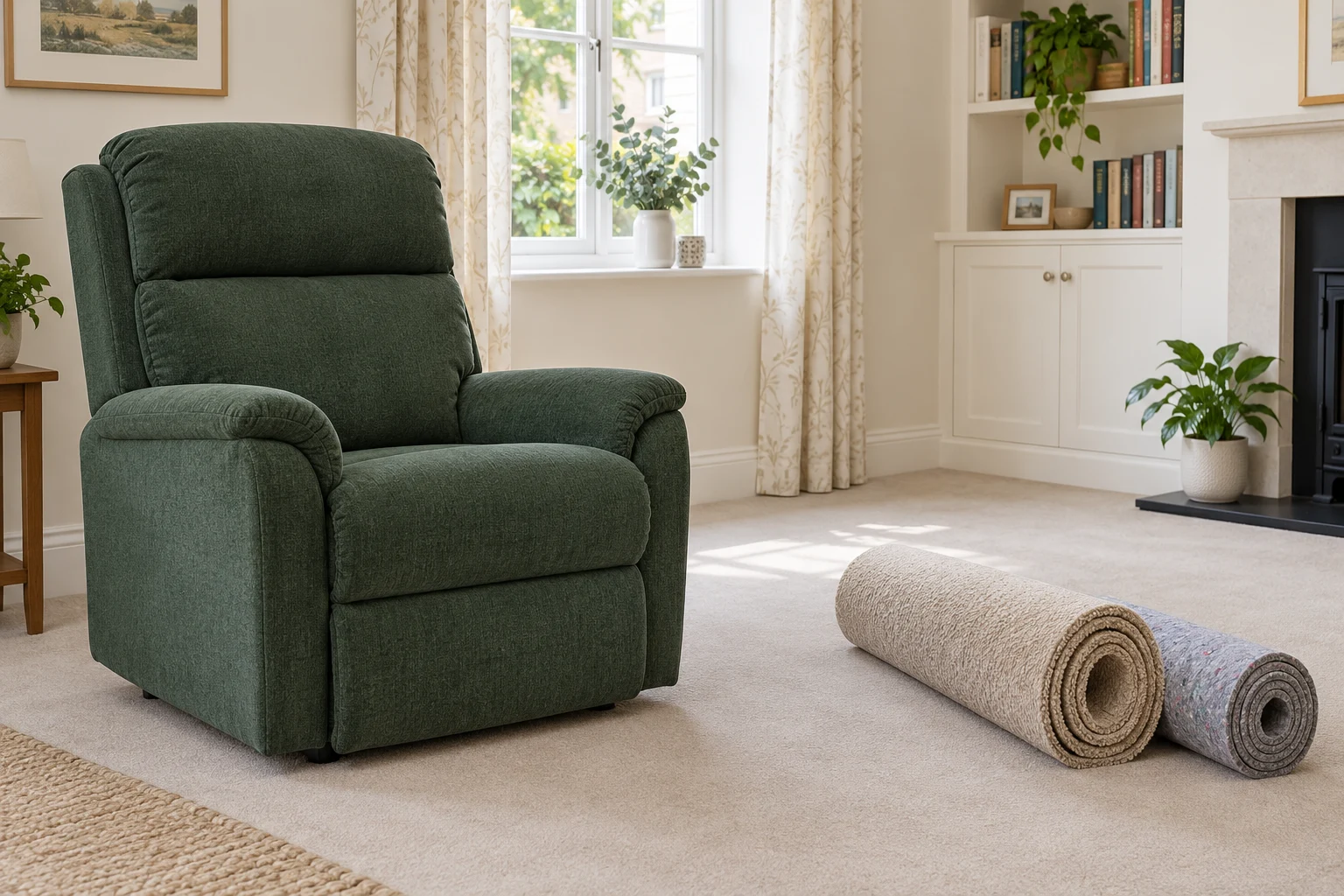
Carpet collection and carpet removal can describe different jobs. One household has already loose flooring waiting for an accepted collection. Another needs a fitted carpet lifted, furniture moved and the underlay assessed before anything can leave. Tell the provider which situation applies before asking for a price. Otherwise a cheap collection offer may cover only the final stage of a much larger project.
This guide helps households in Leeds, Bradford, Huddersfield, Wakefield and across West Yorkshire prepare a useful flooring enquiry. It offers an original installed-to-loose inventory, a timing plan for fitters and collectors, and questions about presentation and access. It does not give a stripping procedure, prescribe how to cut or handle materials, or promise that every flooring type can enter one waste stream.
Define the work you are actually requesting
Write the job in ordinary terms: collection of already removed carpet, removal of installed flooring, or a combination with clearly assigned responsibilities. State whether underlay, fittings and other materials are included. A provider may offer only one part. Ask for explicit confirmation rather than assume that the word removal includes everything from a furnished room to an empty floor.
Record the present condition for each room. The carpet may still be fitted, partly removed by a contractor, loose in a room or held at another collection point. These stages imply different work. If a fitter will prepare material later, identify the planned release date and who confirms completion. A quote should describe what the collector will find, not what you hope might be ready.
Keep furniture movement, fitting work and waste collection separate when they are separate services. A collector should not inherit an unmentioned need to shift heavy wardrobes or detach fixed coverings. Resolve those responsibilities through the appropriate people. If the scope is uncertain, ask for an assessment rather than treating an online item selection as a complete agreement for the room.
Make a room-by-room flooring inventory
List each affected room with an approximate area, flooring type as known, current state and intended collection position. Area can help explain the project, but it is not a direct weight measurement or guaranteed vehicle-load calculation. State whether dimensions were measured or estimated. A small room containing dense or several-layered material can differ from another room of similar area.
Identify carpet and underlay separately, including where the underlay type is unknown. Keep spare clean offcuts, already removed flooring and material still in use distinguishable. A provider assessing waste should know what is authorised to leave. Useful spare material retained by the owner does not belong in the disposal quantity simply because it sits beside the removed flooring.
If several rooms become ready at different times, give each its own release entry. A whole-house refit may produce material over several days while the collector is offered one date. Explain that schedule early. The original room inventory remains useful after removal because it helps reconcile what was produced, where it is held and which parts have been accepted for collection.
Describe condition and unknown layers honestly
Tell the provider whether material is dry, wet, heavily soiled or affected by an unusual concern. Do not call everything clean because it has been swept. Describe what is visible and what remains unknown. If a smell or condition needs specialist review, state it before requesting ordinary collection. Acceptance may depend on more than the fact that the material came from a domestic room.
Unknown backing, adhesive, tiles or layers exposed during work should be referred to the responsible contractor or a competent assessor. Do not disturb suspect materials, scrape residues or take samples based on this article. The collection inventory can identify those items as excluded pending review. An uncertainty should not be hidden under the broad word underlay simply to obtain an instant price.
Keep the existing product information if available, but distinguish it from verified waste composition. A receipt may identify the original carpet without describing every later layer or treatment. Give the provider the information that genuinely applies. This is a description task, not a request for the householder to make technical waste classification decisions from colour or texture.
Agree the fitter's waste boundary
Ask the flooring contractor what it will remove, retain and take away. A new-floor installation offer may include old carpet collection, offer it as an extra or exclude it. Confirm the actual terms before arranging another provider. Two companies each assuming the other will take the material can leave the household with flooring waste after the fitting is finished.
GOV.UK's household waste guidance distinguishes waste produced by tradespeople's work and their responsibilities from a householder's own waste. Explain the arrangement accurately to anyone quoting. Do not assume that the residential address makes every contractor-generated stream eligible for a household service. If responsibilities or service eligibility are unclear, obtain an appropriate explanation before booking.
Ask what condition the contractor will leave the material in and where it will stand. Do not promise a particular roll size or preparation method without agreement. The collector needs an achievable presentation, and the contractor needs to know which route has accepted it. Capture the boundary in the project notes so that a later crew does not work from an informal assumption.
Read Leeds' carpet instructions as Leeds instructions
Leeds City Council's unwanted-items page describes carpet and underlay presentation, including keeping them dry and separating them; it states that loose carpet pieces will not be collected. Read the current booking conditions and eligibility alongside that description. The offer is for qualifying private residents and excludes landlords and businesses.
Those conditions do not create a universal presentation standard for every Yorkshire provider. If your material is already in many loose pieces, explain that before considering the Leeds route. Do not assume a collection will accept it because carpet appears on the list. Ask about an appropriate alternative rather than disguising the actual condition in the item selection.
The Leeds bulky collection guide gives broader household context. A private service may assess another presentation or include a different carrying task, but that needs confirmation. Compare the accepted scope rather than using a household council headline price as a benchmark for an entirely different flooring removal project.
Check Kirklees' stated presentation separately
Kirklees Council's bulky household page gives specific carpet conditions: dry, rolled and tied, with stated length and weight limits and a carrying requirement. Check the current details for the particular booking. These are service acceptance conditions, not an instruction that any roll within a published number is safe for every person to lift.
If the household cannot meet those conditions through an appropriate arrangement, say so. Do not start cutting or lifting material merely to force a booking into the accepted category. Ask the council or another suitable provider what route and preparation scope can work for the actual flooring. The question is about a complete feasible arrangement, rather than whether carpet is theoretically listed.
Keep Kirklees and Leeds instructions distinct. One service's rules about loose pieces or roll size should not be copied into another council's booking notes without checking. For a property in Bradford, Calderdale or Wakefield, use that authority's current information. West Yorkshire is the editorial focus of this article, not one combined bulky collection service with shared conditions.
Describe the collection quantity without pretending to weigh it
When material is already loose, record the number of rolls or packages and their actual sizes, together with the original room inventory. Say whether the count is complete. A description such as six rolls is useful only if the provider also understands their differing dimensions and condition. Avoid treating a roll as a standard unit independent of its contents.
If weight is unknown, leave it unknown and explain the available observations. Do not use a generic kilograms-per-room figure or an unsupported density conversion. Carpet, underlay and contamination can vary. Ask the provider how it wants an uncertain quantity assessed, and whether a survey or later confirmation is needed once the material has been released by the contractor.
Separate final quantities from future estimates. A collector may quote one room already prepared and another still awaiting work. Clarify the price basis and how changes are approved. The quote comparison guide helps make those assumptions visible without inventing a standard carpet disposal rate for Leeds or Huddersfield.
Plan storage before flooring is released
Choose an agreed temporary position through the household and contractor's normal arrangements. It should not obstruct the route needed for work or daily access. If collection is later than fitting, calculate the timing gap and tell the provider. A plan that relies on immediate collection without confirmation can leave the material in the least convenient part of the property.
Keep material identifiable and in the condition required by the accepted route. If the service requires dry presentation, outdoor exposure may change the job before attendance. Ask about protection and storage instructions rather than improvising a method that nobody has accepted. Do not mix uncertain flooring layers or another contractor's debris into the carpet inventory to save temporary space.
Identify what happens if fitting or collection is delayed. The household should know who contacts the provider, where material can remain and how a revised scope is approved. Do not treat leaving rolls in a street or shared entrance as an automatic fallback. The practical contingency needs to fit the property, permission and actual material.
Explain the carrying route and service boundary
Record the room, floor level, stairs, doors and final collection point. A quote for material already presented at an approved ground-level point differs from collection inside several rooms. Ask who performs each carrying task. Do not assume that the household will make a large load accessible without assessing what that preparation involves.
Provide information about narrow turns, shared entrances and parking or loading constraints. Measurements are useful if their basis is clear, but they do not guarantee that a particular method will work. The provider should review the actual route and load. If the material is still upstairs, the enquiry needs to say so rather than show only a photograph of the front door.
The HSE handling guidance explains avoiding hazardous handling where possible, assessing unavoidable tasks and reducing risk. It does not give a universal safe roll weight. A published council limit and a safe handling assessment answer different questions. Keep the movement decision with the appropriate responsible people rather than instructing friends to lift material based on an acceptance limit.
Photograph materials and timing, not just an empty floor
Useful pictures show the present material, its separate groups and the relevant collection route. If material remains installed, state that the image shows the room before release. If it is already loose, provide an overview and a representative detail. Match the images to the room references so the provider does not accidentally count one group several times.
Keep personal information and household members out of the enquiry images. Do not lift unknown layers to photograph their underside or disturb a suspect area for a better view. The quote photography guide explains how to give useful evidence without creating a handling task. Images support assessment; they do not establish composition or acceptance by themselves.
Update the provider when the material changes from fitted to loose. The release may reveal additional underlay, another layer or a different package count. A photograph taken before work is not a final collection inventory. Agree which version will be used for confirmation and keep the earlier estimate labelled as an estimate rather than quietly replacing it.
Compare removal, preparation and collection as separate costs
Ask each offer to identify the work included. Does it cover only accepted material at the collection point, indoor carrying, flooring lifting or another assessed task? Clarify any exclusion for underlay, fixings, unusual condition or contractor-generated debris. A broad phrase such as full removal needs an explanation before it can be compared with a limited collection offer.
Confirm VAT wording, collection timing, access assumptions and the variation process. If a price depends on the household providing a preparation step, assess whether that step is actually available. A cheaper offer may require work that has not been quoted elsewhere. Compare the complete agreed project rather than count the collection charge as the entire cost of changing the flooring.
Check the proposed private collector and receiving arrangements appropriate to the material. Our carrier checking guide explains relevant distinctions. No YWS registration, tariff or guaranteed flooring recovery is claimed in this article. Acceptance and commercial terms need to be agreed before a load is treated as ready for transfer.
A fictional two-room flooring change
Imagine a household in Bradford replacing carpet in a bedroom and hallway. The bedroom material remains fitted, while the hallway material has been removed by a contractor. The household's first enquiry says two rooms of carpet, but that description conceals different release stages and an underlay whose information remains incomplete. This example is fictional and does not establish a typical load or measured local cost.
The household asks the fitter to clarify its preparation and waste responsibilities, records both rooms separately and identifies the collection position. The provider is asked to assess the loose material and the later release, with unknown layers excluded pending review. The household then compares offers for the same actual tasks instead of assuming every carpet collection includes lifting the installed bedroom floor.
Before attendance, the room list is reconciled with the prepared groups and the accepted route. A timing change is reported through the agreed contact, rather than leaving material outside to preserve the original date. The benefit is a clearer project handover. There is no guaranteed discount, recycling result or promise that any council or private collector accepts this fictional arrangement.
Prepare your flooring enquiry
Keep a release register during a larger refit. Each room can have four entries: work completed, material described, accepted route confirmed and current collection position. Record the person confirming each entry and the latest date. This original project aid avoids assuming that a room marked finished is automatically ready for the waste provider. A fitter can complete installation while a separate material question or collection instruction remains unresolved.
For a household coordinating several people, issue one final collection summary rather than forwarding an entire message thread. State the current inventory version, material included, exclusions, address entrance and available contact. If a helper meets the crew, they should be able to identify those groups without making new technical decisions. A later addition requires review through the agreed variation process; it should not be included merely because it is near the prepared rolls.
After collection, compare the remaining material with the original room list. Record any excluded underlay, later offcuts or another stream still awaiting an answer. That closes the flooring project's waste task honestly. An empty room or successful new installation does not prove all waste has left through an accepted route. Keep relevant provider details and collection confirmation retrievable, so a question can be answered from the actual scope rather than somebody's recollection of a busy fitting day.
Gather the installed-or-loose status, room inventory, material condition, contractor responsibilities, current count, photographs and carrying route. Give unknown layers and unresolved preparation a visible status. Before confirming, check that the provider has accepted the actual presentation and that each separate task has an owner. A clear enquiry can be concise without hiding uncertainty.
The YWG dashboard lets you save collection details, photographs and access information in a private listing draft. It does not confirm operational flooring removal, material acceptance, collection availability or payment. Obtain explicit acceptance and the agreed service boundary before treating a booking as confirmed. The useful starting point is a real inventory and an achievable plan from installed flooring to its appropriate collection route.
Sources & editorial note
- Leeds unwanted items collection
- Kirklees bulky household waste
- GOV.UK household waste responsibilities
- HSE: manual handling at work
Official current source snapshots reviewed 3 October 2026. Installed-to-loose room register, fitter/collector responsibility boundary, Leeds/Kirklees conditions separately scoped. No stripping, cutting or unknown-layer sampling instruction. Council limits are acceptance conditions, not universal safe weights. Original methods and explicitly fictional example, no invented price, licence, coverage, treatment outcome or live service. AI assets visually inspected. Parent build/browser/publication review pending.
AI-assisted original editorial content, checked against the sources above. No professional qualification or firsthand YWS job experience is claimed.