Cafe waste planning: bins, cardboard and busy service periods
Plan cafe waste collection with a daily stream map, packaging checks, practical bin placement and access arrangements around busy service in West Yorkshire.
A cafe needs a waste arrangement that still works when the coffee queue reaches the door. Choosing a bin from a catalogue is only one part of that arrangement. The useful starting point is a picture of what arrives, what becomes waste, where it appears and when somebody can move it without interrupting service. This guide explains how a West Yorkshire cafe can turn that picture into a practical collection brief.
A small counter in Leeds, a neighbourhood cafe in Bradford and a bakery cafe in Huddersfield may produce different mixtures of cardboard, coffee grounds, food leftovers and takeaway packaging. Their trading patterns matter more than a general label such as small business. The methods below are original planning tools, rather than a waste tariff or a promise that every material can be accepted together.
Establish which workplace requirements apply
Defra's workplace recycling guidance includes cafes. In England the separation requirements came into force on 31 March 2025, with micro-firms having until 31 March 2027. The micro-firm threshold is fewer than ten full-time equivalent employees across the business, rather than at each individual branch. A manager should check the current guidance and their organisation's position before treating a small premises as exempt.
The central collection distinction is between food waste, dry recycling and residual waste. Paper and card have their own collection requirement, although a collector may have an appropriate written co-collection assessment. Ask the provider to explain the actual arrangement offered. These points do not establish a universal number of bins for every cafe. Your layout and the accepted materials determine how separation can work in practice.
Describe the business accurately when asking for waste collection in West Yorkshire. Household bin arrangements are not a substitute for a cafe's commercial service. If the cafe operates within somebody else's building, establish whether an existing contract covers its waste and who controls the shared containers. Start with our business waste planning guide if responsibility for the premises is unclear.
Draw a daily stream map
Walk through the cafe from the delivery door to the customer exit. Make a short entry for each point where material becomes waste: delivery unpacking, food preparation, espresso preparation, washing up, customer tables, takeaway counter and staff break space. Keep the list specific. Coffee grounds and outer delivery boxes need different handling arrangements even when both appear before opening.
For each entry record the material, its condition, its usual container and the person who empties that container. Record when it appears, too. A delivery at half past seven may create most of the day's clean cardboard, while customer leftovers accumulate around lunch. This is more useful than estimating everything from the number of covers. It shows which working area needs capacity at which time.
The map should also identify materials needing a separate decision. Broken equipment, cleaning products, unusual packaging and building waste should not disappear into an entry called miscellaneous. Give these items a holding status until acceptance is confirmed. A cafe manager does not need to guess a waste classification from appearance. They need to provide enough information for an appropriate route to be assessed.
Observe a representative trading week
Use a simple daily log over a period that includes your ordinary variation. A weekday cafe near an office may peak at lunch, while a market-town cafe may see its busiest period on Saturday. Record whether a day was typical, affected by an event or unusually quiet. The aim is a useful operational picture, not a polished statistic that hides the busiest shift.
At agreed times, note the fill level of each working container and how often it was emptied into external storage. Use consistent descriptions such as quarter full, half full and close to its agreed limit. Note any overflow, rejected material or unnecessary second trip. Do not climb into containers or handle unfamiliar material to obtain a more precise estimate. Observations should fit safe normal working practices.
Look at deliveries separately from sales. A large packaging arrival can fill the cardboard space on a slow customer day. Record the delivery frequency and whether suppliers take any returnable packaging away. This lets you explain a predictable packaging surge to the collector instead of requesting a larger general waste container because one delivery created temporary pressure.
Keep coffee grounds and food decisions clear
Food waste in a cafe can appear in several small containers rather than one obvious kitchen bin. Grounds collect beside the coffee machine, preparation scraps appear on a workbench and uneaten food comes back from tables. Map the route from each point to the main food storage container. A plan that relies on staff remembering to carry material across a busy service line is likely to need revision.
Ask the collector what liners and containers they accept and how they expect material to be presented. Explain whether your waste includes liquids or cooking oil, rather than assuming all kitchen outputs belong in the same container. Defra's guidance covers food waste arrangements, but a provider's practical instructions still matter. Avoid creating an improvised oil or liquid collection method from a generic online checklist.
Choose an internal emptying routine that relates to actual service. For example, a supervisor might check preparation and coffee containers before the lunch rush and again after it. That is an illustrative scheduling idea, not a universal hygiene rule. Food safety, cleaning and pest management procedures remain part of the cafe's own operation and should be reviewed with the responsible people.
Check packaging by item, not by slogan
Takeaway service creates packaging that looks similar but may have different acceptance requirements. A cup, lid, sleeve, food tray and delivery pouch should each have an entry in your accepted-material list. Ask about the particular products you use. A recycling symbol or a supplier's marketing description does not tell you that an item belongs in the collection available at your premises.
Defra's guidance distinguishes compostable packaging from food waste collection. Do not assume a compostable cup can go with coffee grounds. Keep packaging descriptions or supplier specifications where they help the provider answer an acceptance question. If a product changes, review the bin instructions before the first busy shift using it. This avoids staff following a label designed for yesterday's packaging.
Make the accepted list short enough to be used at the counter. It can state the product, destination and an exception requiring a supervisor's decision. A photograph of the actual packaging is often clearer than an abstract icon. If two products look alike but use different routes, consider whether procurement can simplify the choice. Good waste planning sometimes begins with buying fewer confusing packaging variants.
Give cardboard a workable home
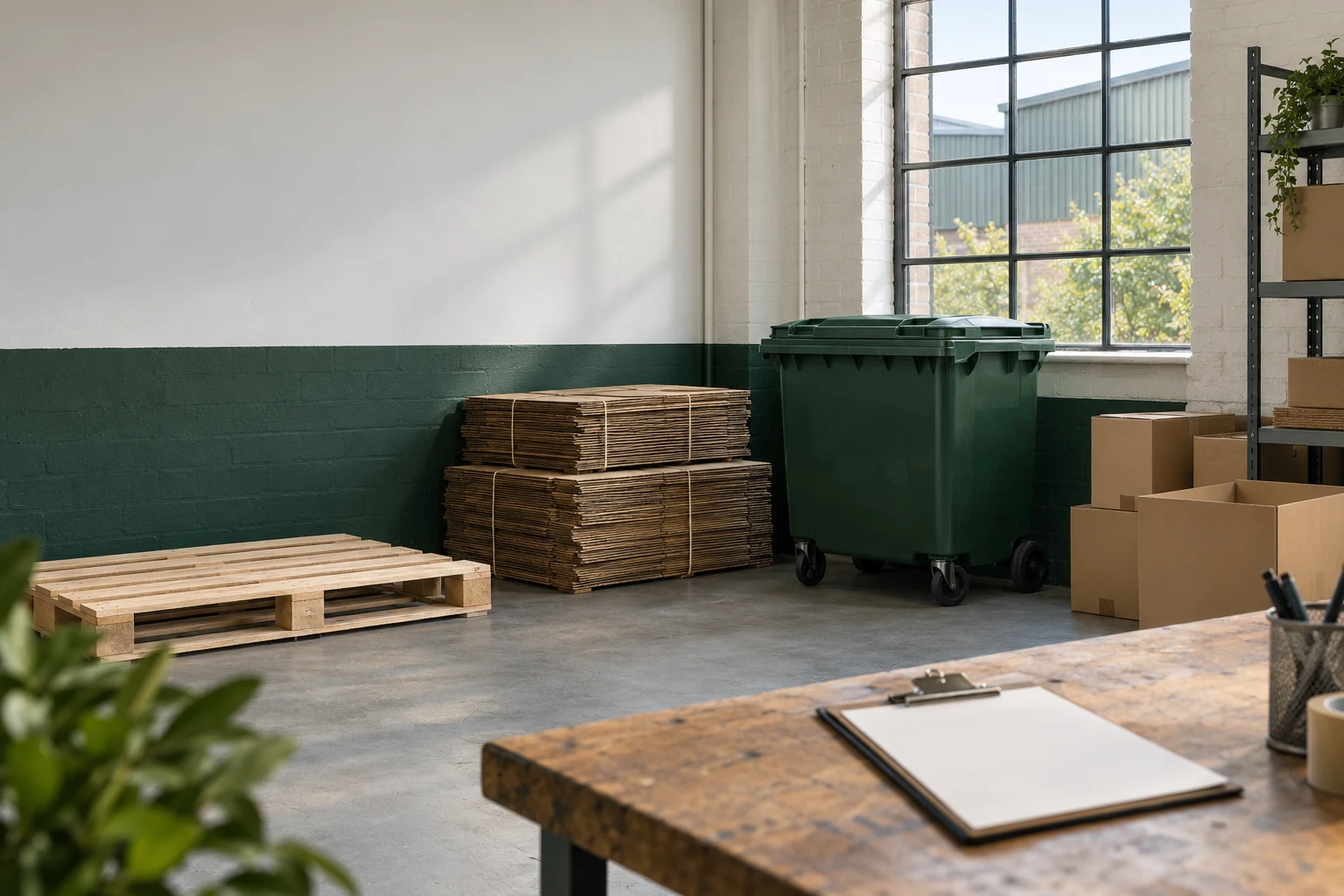
Cardboard storage is often squeezed between deliveries, stock and a rear exit. Identify the route from unpacking to the agreed collection point before assigning that corner to waste. The area needs to serve the cafe's normal operation; keeping a box beside a door because it will leave tomorrow may interfere with access today. Have the appropriate site manager confirm the storage position.
Separate clean delivery packaging from food-soiled packaging when recording your stream. Ask the collector how flattened boxes should be stored and presented, whether bags are accepted and whether there are limits that affect the service. Do not assume all cardboard collections accept the same presentation. If a box contains protective inserts, check those separately rather than leaving them hidden inside the flattened cardboard.
Consider weather and space together. An outside location may relieve internal pressure but expose material to rain or allow loose pieces to spread. An indoor position may protect cardboard but restrict stock movement. Put the real constraint into the collection brief. The provider can then discuss an appropriate arrangement instead of discovering on arrival that the advertised collection point cannot accommodate the material.
Design customer bins around the decision people make
Customers should be able to understand the disposal choice while holding a tray, a cup or a child's hand. Place the relevant options together where possible and show recognisable examples of the cafe's own waste. A distant food bin beside the kitchen will not help a customer clearing a table if the only visible option is a mixed bin by the exit.
Observe what actually goes wrong. A label may be unreadable, a lid opening may suit cups but not trays, or the arrangement may be convenient for seated customers and awkward for takeaway visitors. Review misplaced items as evidence about the system. Blaming customers does not tell you which change would make the next disposal decision easier.
Keep customer communication consistent with staff practice. A sign promising that everything in a tray is recycled would be misleading if staff must separate several items later. Use plain material instructions and avoid unsupported environmental claims. Staff can help with an uncertain item, but the plan should not require a long explanation for every ordinary coffee purchase.
Test a proposed layout during an ordinary shift before treating it as settled. Ask the opening and closing teams whether they can explain the same accepted-material choices. Watch whether full containers are noticeable before they interfere with service, and whether emptying them requires crossing the queue. Record the observations and make one practical change at a time. That makes it easier to tell whether a revised sign, position or emptying time solved the particular problem. Keep the provider's acceptance instructions as the reference throughout the trial, so convenience does not become a reason to combine streams that were agreed separately.
Fit movement around service and access
Map when deliveries, staff breaks and collection vehicles compete for the same route. A narrow rear yard may work early in the morning and become unavailable when another tenant receives stock. Explain the shared use, gate arrangements and permitted collection window to the provider. A postcode and a photograph of a bin do not show these timing conflicts.
Include the route from the internal store to the pickup point. Steps, ramps, thresholds, gates and parked vehicles can change what collection method is workable. Do not promise that staff will carry heavy containers to the street without agreeing the arrangement and assessing the task. Ask whether the service includes moving the supplied container, and from which exact position.
Record who is available if access fails. A driver should not have to ask a barista serving a queue to find the only gate key. Use a role and an appropriate business contact rather than exposing personal details on a public sign. If an access code changes, make updating the collection instructions part of the manager's handover.
Write a collection brief that can be answered
The brief should explain the cafe's trading pattern, observed material streams, existing containers and space constraints. Include the collection address and the actual entrance to use, which may be different from the customer-facing address. State whether you want a recurring service, a one-off packaging clearance or a review of an existing arrangement. Those requests should not share an ambiguous subject line.
Ask the provider to specify accepted materials, container provision, collection frequency, access responsibilities, contamination arrangements and the process for extra collections. Request a clear price basis and any conditions that could change the charge. Our quote comparison guide helps turn different service descriptions into comparable offers without inventing a local market price.
Keep photographs focused on the waste and access. Remove customer information, staff rotas and supplier paperwork from the frame. A wide view of the storage area and a close view of unfamiliar packaging can answer different questions. Our waste photography guide explains how to make those images useful without turning a busy cafe into a staged inspection.
A fictional morning-to-evening example
Imagine a cafe in Halifax receiving boxed ingredients before opening. The supervisor notes a predictable cardboard surge, grounds during breakfast service, food preparation waste before lunch and customer leftovers during the afternoon. These are illustrative observations, not measured data from a Yorkshire business. They show why the plan needs several decisions even though the premises occupies one small shop unit.
The cafe initially records every external container as nearly full on Friday. On closer inspection, much of the pressure comes from loose delivery boxes in the wrong stream. The manager confirms the cardboard presentation with the provider, changes the unpacking routine and checks the resulting space use over another representative period. No saving is assumed before that second observation.
The same cafe notices cups in the food container. Rather than adding a vague recycle sign, it labels the current cup and grounds separately and checks the provider's acceptance instructions. It then keeps an exception log for unfamiliar items. The useful result is a clearer daily routine, not a claim that every takeaway product now has a recycling route.
Review the arrangement without disrupting the team
Choose a small set of observations for a regular manager review: unexpected fullness, wrong materials, missed access, additional collections and changes in packaging or trading hours. Compare like periods where possible. A school holiday or festival weekend can make a service appear inadequate when the immediate issue is a temporary change that should have been communicated in advance.
Ask staff which part of the routine takes unnecessary time. Repeated trips may indicate poor container placement, while uncertainty at one bin may reveal an acceptance question that has never been answered. Keep improvements practical. A short illustrated induction note and a named escalation contact are often easier to maintain than a long procedure nobody can find during service.
Review provider checks and collection records through the person responsible for the contract. If the cafe adds another location or changes ownership, revisit the employee-count and responsibility questions as well as the physical bins. A familiar daily routine should not conceal a change in who produces the waste or which agreement covers it.
Prepare your next enquiry
Keep a backup plan for the day the normal collection cannot happen. Identify how much approved storage remains, who contacts the provider and which manager can authorise an additional service. This is a communication and capacity plan, rather than permission to leave extra bags outside or move business waste into somebody else's containers. Ask what information the provider needs when reporting a missed collection.
Include the closing shift in that plan. The employee locking up should know whether a container is waiting for collection, whether an access instruction has changed and where to record an unresolved exception. A brief handover can state the affected stream, current position, action already requested and next responsible person. That prevents the morning team from discovering a problem only after the first delivery arrives.
You do not need a perfect waste audit to make a useful enquiry. Gather your stream map, representative observations, storage photographs, access window and the questions you still need answered. State uncertainties honestly. The provider should be able to distinguish an ordinary recurring cafe service from an unusual clearance or material requiring a separate route.
The YWG dashboard lets you save collection details, photographs and access information in a private listing draft. YWG is opening soon. Live collection booking and payment are not yet available. The practical next step is to prepare a clear brief for an appropriately checked provider, with acceptance and commercial terms agreed before collection.
A cafe's waste system works best when it supports ordinary service rather than demanding constant rescue. Start with the actual flow of materials, keep the accepted routes visible and review the exceptions. That gives a manager a repeatable way to plan commercial collections in Leeds, Bradford, Huddersfield and elsewhere in West Yorkshire without relying on a guessed bin size or a generic promise.
Sources & editorial note
Primary snapshots and current original sources checked on 3 October 2026. Original morning-to-evening stream map, service-period observation log, customer-bin decision review and closing-shift handover. Cafe-specific packaging and coffee grounds questions; short England rule summary only. No fabricated prices, licences, coverage, operational YWS service or ranking promise. YWG is opening soon. Live collection booking and payment are not yet available.
AI-assisted original editorial content, checked against the sources above. No professional qualification or firsthand YWS job experience is claimed.