
Warehouse waste: pallets, packaging and loading arrangements
Prepare a warehouse waste brief with pallet status, packaging streams, stock release controls, vehicle access and loading arrangements in West Yorkshire.
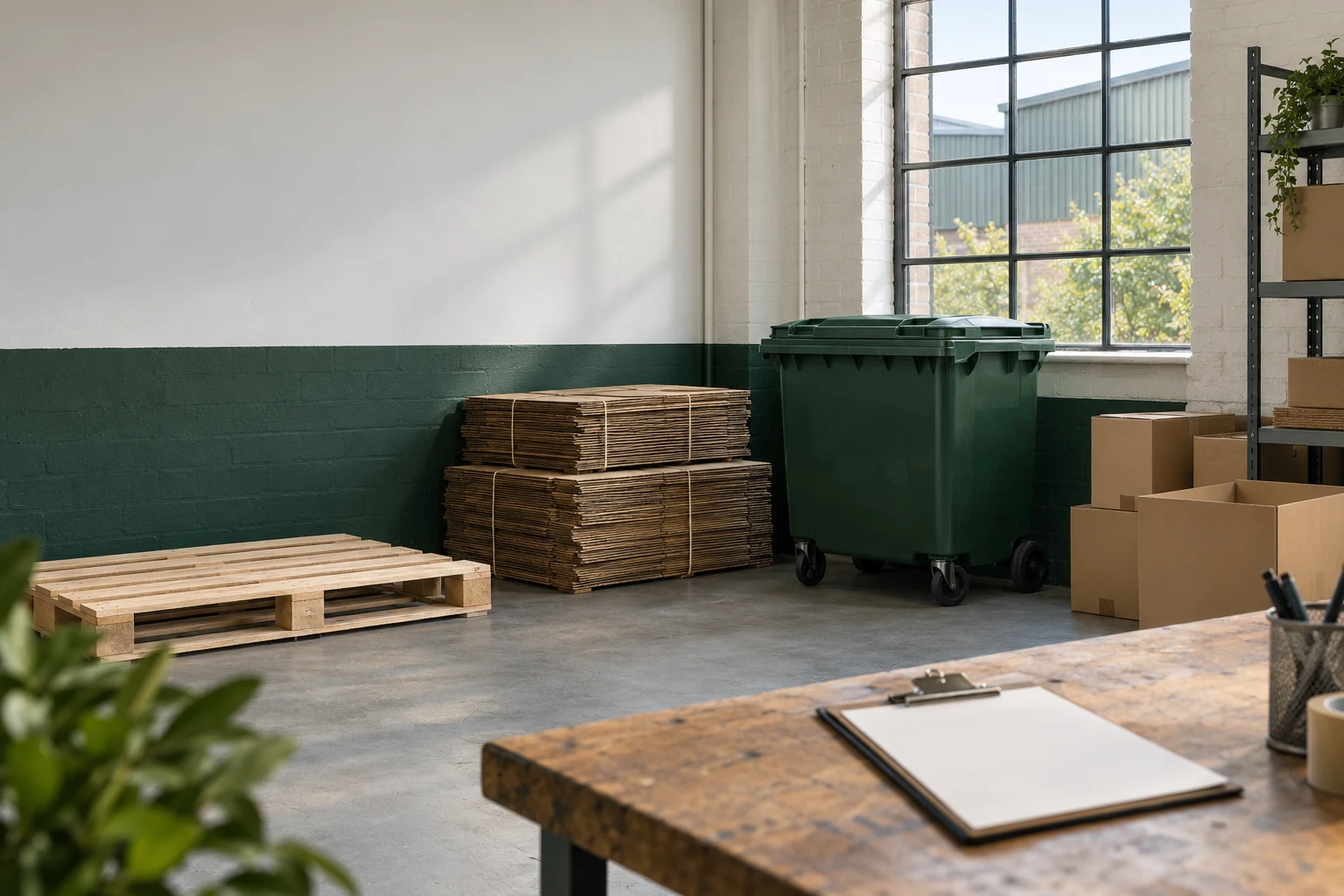
Warehouse waste collection works best when it follows the movement of goods through the site. Delivery packaging appears at intake, damaged stock may be held for a decision and pallets can belong to somebody else's return system. Treating these materials as one pile of warehouse waste hides the details a collector needs to plan the job. Start with a material and responsibility map before requesting a price.
This guide is for managers planning commercial collections in Leeds, Bradford, Wakefield, Huddersfield and the wider West Yorkshire area. It offers an original workflow for pallets, cardboard, wrapping and other warehouse clearances. It does not provide a local price list or establish that every waste type is accepted by Yorkshire Waste Solutions. Each proposed route still needs appropriate checks and confirmation.
Follow the material through the building
Walk the route from delivery intake to storage, order preparation and dispatch. Record where packaging is removed, where reusable containers are returned and where damaged goods are held. Include staff areas as a separate observation rather than assuming all warehouse waste comes from stock. A small food waste container and a large cardboard storage area answer different collection questions.
For each point, identify who makes the disposal decision. Goods awaiting a supplier claim may not be authorised for clearance even when they are stored beside waste. Returned packaging may be managed by logistics, while maintenance materials belong to another team. Clarify responsibility before moving anything to a common collection area. A tidy site should not come at the cost of losing an unresolved claim or asset.
Use this map to find recurring streams and one-off exceptions. The routine arrangement might cover delivery cardboard and wrapping, but a racking replacement or damaged chemical product requires a separate brief. Record the exception at the point it appears. An item should not become ordinary packaging waste merely because it has spent several weeks in the same corner.
Check current workplace recycling requirements
Defra's workplace recycling guidance includes warehouses. England's separation requirements started on 31 March 2025, with micro-firms having until 31 March 2027. The relevant threshold is fewer than ten full-time equivalent employees across the business. A small warehouse within a larger organisation should not assume that its site headcount gives it the temporary exemption.
The guidance distinguishes food waste, dry recycling and residual waste, with a separate paper and card requirement unless the collector has an appropriate written co-collection assessment. Confirm the arrangement with your provider. A container labelled mixed recycling does not by itself tell you which materials the service accepts or how its paper and cardboard collection has been assessed.
Do not assume routine dry recycling covers every warehouse material. Identify pallet timber, bulky plastics, electrical items and packaging associated with unusual products separately. The ordinary stream instructions are not an acceptance decision for an entire stock clearance. The business collection guide can help establish the manager's wider responsibilities before a specific warehouse collection is arranged.
Separate pallets by status and condition
Make a pallet list that distinguishes returnable assets, pallets retained for site use, candidates for an agreed reuse route and pallets authorised as waste. Check supplier and pooling arrangements before release. A mark on a pallet may help identify its origin, but do not guess ownership or permission from a colour or logo alone. Ask the relevant logistics contact to resolve it.
For waste pallets, record quantity, dimensions, visible condition and any known contamination or unusual treatment information. Keep damaged pallets distinguishable from sound ones in the description. Explain whether they are individually accessible or within a stack whose movement needs specialist equipment. Do not dismantle an uncertain item just to make the quote sound like a simpler timber collection.
Ask the proposed recipient what they accept and how the pallets must be presented. A provider offering reuse may have different criteria from one accepting damaged pallet waste. Confirm the route before claiming an environmental benefit. The word wooden is not enough to prove that an item can be reused, recycled or burned safely, and this guide does not prescribe any treatment method.
Count pallets without hiding uncertainty
A pallet estimate should show when and how it was obtained. If pallets move daily, use a count at a defined time and explain the expected additions before collection. An estimate of around fifty needs a clear basis if procurement wants a firm offer. Give the provider a reasonable change process rather than presenting a moving quantity as a fixed load.
Photograph the accessible stack and describe anything hidden behind it. If staff cannot verify the full count safely, state that limitation. Do not ask somebody to climb on unstable material or disturb a stack for a quote photograph. A site visit or a revised count after authorised movement may be a better way to resolve the uncertainty.
Use the same unit across the enquiry and final instruction. A quote for pallet quantities, one for a container and one for a vehicle load can reflect different assumptions. Ask how additional items affect the charge and what limit applies. The quote comparison guide explains why matching descriptions matters more than comparing headline prices.
Use a final count reconciliation before the load is released. Start with the enquiry count, add authorised arrivals, subtract confirmed returns or retained items and state the resulting collection quantity. Keep the reason for each adjustment visible rather than changing the number without explanation. The calculation is an internal stock control suggestion, not a waste weighing method or pricing rule. If quantities cannot be confirmed until loading, agree how the provider will record them and obtain approval for any commercial variation. That helps accounts distinguish a genuine scope change from a different description of the original estimate.
Give cardboard its own intake routine
Record which deliveries create cardboard, how often they arrive and where boxes are unpacked. Distinguish clean packaging from contaminated material and protective inserts that need another decision. A container filled with whole boxes may reflect presentation as much as the quantity generated. Ask the provider about the accepted preparation rather than assuming every site should use the same method.
Choose a storage position approved through the warehouse's own site arrangements. It should not consume a loading lane, obstruct access or become an unofficial extension of the fire exit area. If outside storage is proposed, consider weather and the risk of loose material spreading. Record the constraint so the collector can discuss an appropriate container and collection pattern.
Look for peaks at receipt of goods rather than relying solely on dispatch volumes. A quiet sales week can still have a large packaging arrival. Note supplier returns or reusable delivery containers where these are genuinely part of the operation. Do not count a possible supplier take-back as a confirmed reduction until the arrangement has been agreed and used.
Describe wrapping and protective packaging precisely
Warehouse wrapping can include different films, straps, foams and rigid components. Keep product or material information where it helps the provider assess acceptance. An entry called plastic does not distinguish clean wrapping from a mixed bag containing tape, labels and protective foam. Provide representative photographs and explain whether materials are already separated in normal operation.
Ask about the specific collection route and presentation. The provider may accept some packaging through a specialist stream rather than the ordinary workplace recycling service. Do not copy instructions from another warehouse with a different contract. If an item is not accepted, record the confirmed alternative instead of encouraging staff to hide small amounts in a general packaging load.
If equipment such as a baler or compactor is used, keep its operation within the site's authorised procedures and competent staff arrangements. This guide does not recommend installing equipment or provide operating instructions. Tell the collector the form in which material is presented and whether a collection requires equipment or a particular loading method. That information changes the practical job specification.
Keep stock decisions separate from waste decisions
A warehouse may hold damaged stock, customer returns, obsolete promotional goods and goods waiting for investigation. Create a release control that records who approved each group for disposal. If an insurer, supplier or customer has an interest, the responsible business team should resolve that before collection. A waste contractor cannot infer permission from the fact that goods are not currently saleable.
Describe contents rather than using outer packaging as the only information. Electrical products, batteries, liquids or other unusual materials should not be represented as cartons simply because they remain boxed. Keep unidentified goods out of an ordinary packaging collection until their contents and route are assessed. Product information can assist that assessment without making the warehouse manager a technical waste classifier.
If stock has commercial sensitivity, agree the required evidence and handling arrangement with an appropriate provider. Do not assume an ordinary collection includes secure product destruction or a particular certificate. Record the agreed service separately from routine waste documentation. A photograph of a loaded vehicle does not prove the final destination or that a sensitive product was destroyed.
Build a vehicle and loading brief
Identify the exact arrival point, not just the postal address. Warehouses may have a staff entrance, visitor gate and goods yard on different roads. Give the provider the correct gate, arrival reporting process and site contact. Explain whether vehicle size, turning space or shared yard use affects the service. Do not promise unrestricted access without checking the normal site activity.
Specify the loading method under discussion. Will the collector load loose items, exchange a container or receive material moved by the site's authorised equipment operator? State who supplies equipment and who controls the work area. Do not assume a collection crew will use the site's forklift or that warehouse staff will operate the collector's equipment without an agreed arrangement.
Record any loading dock, height, surface or route constraint that matters. Photographs can show the relationship between storage and vehicle position, but they should be supported by accurate descriptions. The provider should assess their own method against the site information. The manager's task is to make the constraints visible rather than prescribe how a crew must perform the handling.
Schedule collection around goods movements
Review the proposed window against deliveries, dispatch peaks and shift changes. A collection may technically fit into the yard but still compete with a booked delivery for the same bay. Discuss realistic access windows and how arrivals are coordinated. If a waiting arrangement exists, tell the provider before attendance rather than relying on the gate team to negotiate it on the day.
Avoid treating an empty period on one day's schedule as a permanent collection slot. Check recurring deliveries and known seasonal changes. If the site operates across several shifts, identify which shift can provide the authorised collection contact and loading support. A driver arriving at the wrong shift may find the material ready but nobody able to release it.
Agree the communication route for delays. The site should know whom to contact if goods movement changes, and the provider should know whom to contact if their arrival changes. Ask about notice, waiting and rescheduling terms in the written offer. These are commercial questions to confirm, not charges that can be assumed from an average Yorkshire collection price.
Keep specialist exceptions outside the routine load
Maintenance waste, electrical equipment, batteries, damaged chemical stock and unknown containers need clear identification and acceptance. Explain known contents and visible condition without opening, testing or mixing material to simplify the enquiry. Ask an appropriately competent provider to assess unusual streams. The routine packaging collector may not be the right route even when the item originated at the same warehouse.
Give uncertain items a clear holding status through your site's own procedures. Do not place them into an agreed ordinary load while waiting for a response. If the collector excludes an item, note that exclusion in the loading brief so a different shift does not add it later. The useful control is a visible decision boundary at the collection point.
Keep refurbishment or construction work identified as a separate project where applicable. Agree which contractor is responsible for the waste they produce and how it will leave the site. Do not let a warehouse's recurring waste contract quietly absorb materials it was never specified to collect. A new stream should lead to a reviewed acceptance decision and, where necessary, a separate arrangement.
Prepare the records before attendance
The waste duty of care code covers accurate descriptions and transfer to appropriately authorised people. Check the proposed collector and the receiving arrangements for your material. Registration to transport waste and permission for a site to receive it answer different questions. A familiar company name does not replace the relevant checks for the agreed route.
Connect the approved inventory, quote and collection reference to the relevant waste documentation. For applicable non-hazardous transfers, review the information and retention requirements explained in our transfer-note guide. Keep specialist records distinct where another regime applies. A warehouse dispatch note may support internal stock control without being sufficient waste transfer documentation.
Record quantity changes and exclusions at the time they occur. If the final load differs from the agreed list, have the responsible people resolve the scope and records rather than leaving procurement to reconcile them later. Keep a clear note of remaining material so the next enquiry does not repeat an old count that included items already collected.
A fictional intake-to-collection example
For a recurring service, keep a short exception review alongside the ordinary collection log. Record unexpected material, missed access, quantity changes and occasions when the loading arrangement did not match the brief. Use this record when discussing the next service review. It can reveal whether the recurring contract needs a change or whether a one-off project should have been specified separately.
Connect that review with purchasing and logistics where useful. A change in supplier packaging may create a new stream, while a delivery schedule change may move the weekly peak. Ask those teams to notify the waste contract owner before the first changed delivery reaches the site. The bin arrangement should reflect the current operation rather than a specification copied from an earlier trading year.
Keep the approved collection instruction available to every relevant shift. It should state what is ready, what is excluded and who can approve a change. A shift handover is particularly important if the supervisor who prepared the enquiry will not attend the collection. That avoids a well-researched specification being replaced by an informal instruction to take whatever is in the yard.
Imagine a warehouse near Wakefield holding returned pallets, clean delivery cardboard and damaged boxed equipment. Its first request calls everything packaging waste. A material walk reveals that some pallets belong to a return arrangement and the equipment requires a separate release and acceptance decision. These details are fictional and illustrate a workflow rather than a measured result from a real business.
The manager creates three lists, confirms the pallet returns and asks providers about the remaining waste streams. The collection brief identifies the goods gate and a window outside dispatch activity. Before attendance, the shift supervisor confirms the count and exclusions. The improvement is a more controlled specification; no price saving, recycling percentage or acceptance outcome is assumed.
Make the next warehouse enquiry useful
Gather your material map, approved waste inventory, count date, photos, loading method and available window. Explain uncertain materials and ownership decisions before seeking confirmation. The YWG dashboard lets you save collection details, photographs and access information in a private listing draft. A precise warehouse brief gives an appropriately checked provider a practical basis for discussing acceptance, access and commercial terms.
Sources & editorial note
Primary snapshots and current original sources checked on 3 October 2026. Original intake-to-dispatch material map, pallet ownership/status decisions, count-date method and shift loading instruction. Pallet return/reuse is conditional; no inferred ownership or treatment route. No fabricated prices, licences, coverage, operational YWS service or ranking promise. YWG is opening soon. Live collection booking and payment are not yet available.
AI-assisted original editorial content, checked against the sources above. No professional qualification or firsthand YWS job experience is claimed.